“Stop worrying about growing old. And think about growing up.”
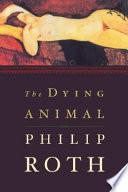
Philip Roth book The Dying Animal
Source: The Dying Animal
Philip Milton Roth is an American novelist.
He first gained attention with the 1959 novella Goodbye, Columbus, an irreverent and humorous portrait of American Jewish life for which he received the U.S. National Book Award for Fiction. Roth's fiction, regularly set in his birthplace of Newark, New Jersey, is known for its intensely autobiographical character, for philosophically and formally blurring the distinction between reality and fiction, for its "supple, ingenious style" and for its provocative explorations of Jewish and American identity. His profile rose significantly in 1969 after the publication of Portnoy's Complaint, the humorous and sexually explicit psychoanalytical monologue of "a lust-ridden, mother-addicted young Jewish bachelor," filled with "intimate, shameful detail, and coarse, abusive language."
Roth is one of the most awarded American writers of his generation. His books have twice received the National Book Award and the National Book Critics Circle award, and three times the PEN/Faulkner Award. He received a Pulitzer Prize for his 1997 novel American Pastoral, which featured one of his best-known characters, Nathan Zuckerman, a character in many of Roth's novels. The Human Stain , another Zuckerman novel, was awarded the United Kingdom's WH Smith Literary Award for the best book of the year. In 2001, in Prague, Roth received the inaugural Franz Kafka Prize.

“Stop worrying about growing old. And think about growing up.”
Philip Roth book The Dying Animal
Source: The Dying Animal
“Life is just a short period of time in which you are alive.”
Philip Roth book American Pastoral
Source: American Pastoral
“The truth about us is endless. As are the lies.”
Philip Roth book The Human Stain
The Human Stain (2000)
Context: There is truth and then again there is truth. For all that the world is full of people who go around believing they've got you or your neighbor figured out, there really is no bottom to what is not known. The truth about us is endless. As are the lies.
“He had learned the worst lesson that life can teach - that it makes no sense.”
Philip Roth book American Pastoral
Source: American Pastoral
“How easy life is when it's easy, and how hard when it's hard.”
Source: The Professor Of Desire
“In my childhood I led the life of a sage, when I grew up I started climbing trees”
Philip Roth book The Ghost Writer
Source: The Ghost Writer
Philip Roth book The Facts: A Novelist's Autobiography
Opening letter to Nathan Zuckerman
The Facts: A Novelist's Autobiography (1988)
Paris Review Interview (1986)
Context: You ask if I thought my fiction had changed anything in the culture and the answer is no. Sure, there's been some scandal, but people are scandalized all the time; it's a way of life for them. It doesn't mean a thing. If you ask if I want my fiction to change anything in the culture, the answer is still no. What I want is to possess my readers while they are reading my book — if I can, to possess them in ways that other writers don't. Then let them return, just as they were, to a world where everybody else is working to change, persuade, tempt, and control them. The best readers come to fiction to be free of all that noise, to have set loose in them the consciousness that's otherwise conditioned and hemmed in by all that isn't fiction.
Philip Roth book Goodbye, Columbus
Source: Goodbye, Columbus (1959), Chapter 2
Context: We came back to the chairs now and then and sang hesitant, clever, nervous, gentle dithyrambs about how we were beginning to feel towards one another. Actually we did not have the feelings we said we had until we spoke them-at least I didn't; to phrase them was to invent them and own them. We whipped our strangeness and newness into a froth that resembled love, and we dared not play too long with it, talk too much of it, or it would flatten and fizzle away. So we moved back and forth from chairs to water, from talk to silence, and considering my unshakable edginess with Brenda, and the high walls of ego that rose, buttresses and all, between her and her knowledge of herself, we managed pretty well.
“No one I know of has foreseen an America like the one we live in today.”
Comparing Charles Lindbergh's leadership of an "America First" movement with that of Donald Trump, in responses to being asked about foreseeing an America such as now exists in his earlier writings, including his alternate-history novel The Plot Against America (2004) where Lindbergh defeated FDR for the presidency in 1940, as quoted in "No Longer Writing, Philip Roth Still Has Plenty to Say" by Charles Mcgrath, in The New York Times (16 January 2018) https://www.nytimes.com/2018/01/16/books/review/philip-roth-interview.html <br class="br">Context: No one I know of has foreseen an America like the one we live in today. No one (except perhaps the acidic H. L. Mencken, who famously described American democracy as “the worship of jackals by jackasses”) could have imagined that the 21st-century catastrophe to befall the U. S. A., the most debasing of disasters, would appear not, say, in the terrifying guise of an Orwellian Big Brother but in the ominously ridiculous commedia dell’arte figure of the boastful buffoon. How naïve I was in 1960 to think that I was an American living in preposterous times! How quaint! But then what could I know in 1960 of 1963 or 1968 or 1974 or 2001 or 2016? … However prescient The Plot Against America might seem to you, there is surely one enormous difference between the political circumstances I invent there for the U. S. in 1940 and the political calamity that dismays us so today. It’s the difference in stature between a President Lindbergh and a President Trump. Charles Lindbergh, in life as in my novel, may have been a genuine racist and an anti-Semite and a white supremacist sympathetic to Fascism, but he was also — because of the extraordinary feat of his solo trans-Atlantic flight at the age of 25 — an authentic American hero 13 years before I have him winning the presidency. … Trump, by comparison, is a massive fraud, the evil sum of his deficiencies, devoid of everything but the hollow ideology of a megalomaniac.
Comparing Charles Lindbergh's leadership of an "America First" movement with that of Donald Trump, in responses to being asked about foreseeing an America such as now exists in his earlier writings, including his alternate-history novel The Plot Against America (2004) where Lindbergh defeated FDR for the presidency in 1940, as quoted in "No Longer Writing, Philip Roth Still Has Plenty to Say" by Charles Mcgrath, in The New York Times (16 January 2018) https://www.nytimes.com/2018/01/16/books/review/philip-roth-interview.html <br class="br">Context: No one I know of has foreseen an America like the one we live in today. No one (except perhaps the acidic H. L. Mencken, who famously described American democracy as “the worship of jackals by jackasses”) could have imagined that the 21st-century catastrophe to befall the U. S. A., the most debasing of disasters, would appear not, say, in the terrifying guise of an Orwellian Big Brother but in the ominously ridiculous commedia dell’arte figure of the boastful buffoon. How naïve I was in 1960 to think that I was an American living in preposterous times! How quaint! But then what could I know in 1960 of 1963 or 1968 or 1974 or 2001 or 2016? … However prescient The Plot Against America might seem to you, there is surely one enormous difference between the political circumstances I invent there for the U. S. in 1940 and the political calamity that dismays us so today. It’s the difference in stature between a President Lindbergh and a President Trump. Charles Lindbergh, in life as in my novel, may have been a genuine racist and an anti-Semite and a white supremacist sympathetic to Fascism, but he was also — because of the extraordinary feat of his solo trans-Atlantic flight at the age of 25 — an authentic American hero 13 years before I have him winning the presidency. … Trump, by comparison, is a massive fraud, the evil sum of his deficiencies, devoid of everything but the hollow ideology of a megalomaniac.
“You put too much stock in human intelligence, it doesn't annihilate human nature.”
Philip Roth book American Pastoral
Source: American Pastoral
Source: Goodbye, Columbus and Five Short Stories
Philip Roth book The Plot Against America
Source: The Plot Against America
“You can no more make someone tell the truth than you can force someone to love you.”
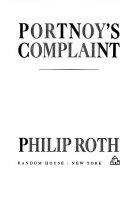
Philip Roth book Portnoy's Complaint
Source: Portnoy's Complaint
“The road to hell is paved with works-in-progress.”
As quoted in "Works in Progress" in The New York Times Book Review (15 July 1979), page BR1
“Doctor doctor, what do you say, lets put the id back in yid”
Philip Roth book Portnoy's Complaint
Source: Portnoy's Complaint
Philip Roth book Portnoy's Complaint
Portnoy's Complaint (1969)
Variant: It’s a family joke that when I was a tiny child I turned from the window out of which I was watching a snowstorm, and hopefully asked, "Momma, do we believe in winter?
Philip Roth book The Plot Against America
Source: The Plot Against America (2004), Chapter 3, "June 1941 – December 1941: Following Christians", pp. 113–114 ISBN 0547345313.
Philip Roth book The Facts: A Novelist's Autobiography
Nathan Zuckerman to Philip Roth
The Facts: A Novelist's Autobiography (1988)
Philip Roth book Sabbath's Theater
Sabbath's Theater (1995)
Interview for Martin Krasnik of the Guardian, (14 December 2005) http://www.theguardian.com/books/2005/dec/14/fiction.philiproth
Philip Roth book The Dying Animal
The Dying Animal (2001)
“When you publish a book, it’s the world’s book. The world edits it.”
"A Visit with Philip Roth," interview with James Atlas, The New York Times Book Review (2 September 1979), p. BR1
Philip Roth book The Facts: A Novelist's Autobiography
Opening letter to Nathan Zuckerman
The Facts: A Novelist's Autobiography (1988)
Philip Roth book Exit Ghost
Exit Ghost (2007)
Philip Roth book The Counterlife
Source: The Counterlife (1986), Ch. 5
“When the whole world doesn't believe in God, it will be a great place.”
Interview on CBS, 03 October 2010 https://www.youtube.com/watch?v=ZNv_a1CbX30, Philip Roth on Fame, Sex, and God http://www.cbsnews.com/news/philip-roth-on-fame-sex-and-god/ (3 October 2010)
Philip Roth book Sabbath's Theater
Sabbath's Theater (1995)
Philip Roth book The Counterlife
Source: The Counterlife (1986), Ch. 5
“…her breasts swam towards me like two pink-nosed fish and she let me hold them.”
Philip Roth book Goodbye, Columbus
Source: Goodbye, Columbus (1959), Chapter 2
Philip Roth book The Counterlife
Source: The Counterlife (1986), Ch. 5
Paris Review Interview (1986)


