
Works
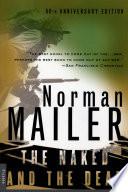
The Naked and the Dead
Norman Mailer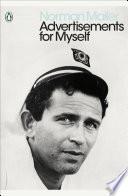
Advertisements for Myself
Norman Mailer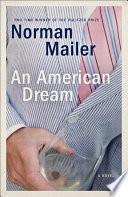
An American Dream
Norman MailerThe Naked and the Dead
Norman MailerAdvertisements for Myself
Norman MailerAn American Dream
Norman MailerFamous Norman Mailer Quotes
Interview with Divina Infusino in American Way (15 June 1995)
“A little bit of rape is good for a man's soul.”
Address on "Richard Milhous Nixon and Women's Liberation" at the University of California at Berkeley, as quoted in TIME magazine (6 November 1972) http://www.time.com/time/magazine/article/0,9171,942598-2,00.html, which also reported that at the close of his address:<br>: Mailer invited "all the feminists in the audience to please hiss." When a satisfying number obliged, he commented: "Obedient little bitches."
Interview in Writers at Work Third Series (1967) edited by George Plimpton
Context: One's condition on marijuana is always existential. One can feel the importance of each moment and how it is changing one. One feels one's being, one becomes aware of the enormous apparatus of nothingness — the hum of a hi-fi set, the emptiness of a pointless interruption, one becomes aware of the war between each of us, how the nothingness in each of us seeks to attack the being of others, how our being in turn is attacked by the nothingness in others.
TIME interview (1991)
Context: It's a misperception of me that I am a wild man — I wish I still were. I'm 68 years old. The rage now is, oh, so deep it's almost comfortable. It has even approached the point where I can live with it philosophically. The world's not what I want it to be. But then no one ever said I had the right to design the world.
TIME interview (1991)
Context: I love the idea of a left conservative because it gets rid of political cant. We're stifling in it. One of the diseases of the right is self-righteousness. I do believe that America's deepest political sickness is that it is a self-righteous nation.
One of the diseases of the left is political correctness. If you're out of power for too long, then you just get worse and worse about how important your own ideas are.
Norman Mailer Quotes about love
“I guess all that's left is to love the fire.”
Norman Mailer book Advertisements for Myself
Source: Advertisements for Myself
Source: The Man Who Studied Yoga (1956), Ch. 5
Norman Mailer book An American Dream
Stephen Rojack, in Ch. 6
An American Dream (1965)
Norman Mailer Quotes about life
As quoted in The Sunday Herald http://web.archive.org/web/20071112125539/http://www.sundayherald.com/news/heraldnews/display.var.1824217.0.norman_mailer_1923_2007.php [Scotland] (11 November 2007)
"Petty Notes on Some Sex in America" first published in Playboy magazine (1961 - 1962)
Cannibals and Christians (1966)
Review of the book My Hope for America
Cannibals and Christians (1966)
Source: The Man Who Studied Yoga (1956), Ch. 5
Norman Mailer: Trending quotes
“Writing books is the closest men ever come to childbearing.”
"Mr. Mailer Interviews Himself" in The New York Times Book Review (17 September 1965)
Norman Mailer book The Presidential Papers
Preface
The Presidential Papers (1963)
Context: Ultimately a hero is a man who would argue with the gods, and so awakens devils to contest his vision. The more a man can achieve, the more he may be certain that the devil will inhabit a part of his creation.
Norman Mailer Quotes
Norman Mailer book The Naked and the Dead
Gen. Edward Cummings, in Pt. 1, Ch. 3
The Naked and the Dead (1948)
Context: You're a fool if you don't realize this is going to be the reactionary's century, perhaps their thousand-year reign. It's the one thing Hitler said which wasn't completely hysterical.
Norman Mailer book The Naked and the Dead
Mailer's Introduction to the 50th Anniversary Edition (1998)
The Naked and the Dead (1948)
Context: For that is the genius of the old man — Tolstoy teaches us that compassion is of value and enriches our life only when compassion is severe, which is to say when we can perceive everything that is good and bad about a character but are still able to feel that the sum of us as human beings is probably a little more good than awful … That fine edge in Tolstoy, the knowledge that compassion is valueless without severity (for otherwise it cannot defend itself against sentimentality), gave The Naked and the Dead whatever enduring virtue it may possess and catapulted the amateur who wrote it into the grim ranks of those successful literary men and women who are obliged to become professional in order to survive …
Source: The Man Who Studied Yoga (1956), Ch. 1
Context: I would introduce myself if it were not useless. The name I had last night will not be the same as the name I have tonight. For the moment, then, let me say that I am thinking of Sam Slovoda.
“The concept of hero is antagonistic to impersonal social progress,”
Superman Comes to the Supermarket (1960)
Context: The concept of hero is antagonistic to impersonal social progress, to the belief that social ills can be solved by social legislating, for it sees a country as all-but-trapped in its character until it has a hero who reveals the character of the country to itself.
“I give an idea to Sam. "Destroy time, and chaos may be ordered," I say to him.”
Source: The Man Who Studied Yoga (1956), Ch. 5
Context: I give an idea to Sam. "Destroy time, and chaos may be ordered," I say to him.
"Destroy time, and chaos may be ordered," he repeats after me, and in desperation to seek his coma, mutters back, "I do not feel my nose, my nose is numb, my eyes are heavy, my eyes are heavy."
So Sam enters the universe of sleep, a man who seeks to live in such a way as to avoid pain, and succeeds merely in avoiding pleasure. What a dreary compromise is life!
TIME interview (1991)
Context: I don't think we're ever going to have a cheap fascism of Brownshirts and goose stepping or anything of that sort. We're too American for that. We would find that ridiculous.
But there are always traces of repression. And you can find it in a Democratic government too. People who are "right-minded," you know, are always with us. But I think so long as we can move along with the economy, we're all right. It's just if there's a smash, a crash — that's when I'm not at all optimistic about what's going to happen.
“To make an Army work you have to have every man in it fitted into a fear ladder…”
Norman Mailer book The Naked and the Dead
Gen. Edward Cummings, in Pt. 1, Ch. 6
The Naked and the Dead (1948)
Context: To make an Army work you have to have every man in it fitted into a fear ladder… The Army functions best when you're frightened of the man above you, and contemptuous of your subordinates.
“We sail across dominions barely seen, washed by the swells of time.”
Norman Mailer book Ancient Evenings
Ancient Evenings (1983) Last lines
Context: We sail across dominions barely seen, washed by the swells of time. We plow through fields of magnetism. Past and future come together on thunderheads and our dead hearts live with lightning in the wounds of the Gods.
Superman Comes to the Supermarket (1960)
Context: Americans have been leading a double life, and our history has moved on two rivers, one visible, the other underground; there has been the history of politics which is concrete, factual, practical and unbelievably dull if not for the consequences of the actions of some of these men; and there is a subterranean river of untapped, ferocious, lonely and romantic desires, that concentration of ecstasy and violence which is the dream life of the nation.
“We live in a time which has created the art of the absurd. It is our art.”
Introducing our Argument
Cannibals and Christians (1966)
Context: We live in a time which has created the art of the absurd. It is our art. It contains happenings, Pop art, camp, a theater of the absurd … Do we have the art because the absurd is the patina of waste…? Or are we face to face with a desperate or most rational effort from the deepest resources of the unconscious of us all to rescue civilization from the pit and plague of its bedding?
“I had a great many prejudices that have since dissolved.”
TIME interview (1991)
Context: I had a great many prejudices that have since dissolved. But what I still hate about the women's movement is their insistence upon male piety in relation to it. I don't like bending my knee and saying I'm sorry, mea culpa. I find now that women have achieved some power and recognition they are quite the equal of men in every stupidity and vice and misjudgment that we've exercised through history.
They're narrow-minded, power seeking, incapable of recognizing the joys of a good discussion. The women's movement is filled with tyrants, just as men's political movements are equally filled.
What I've come to discover are the negative sides, that women are no better than men. I used to think — this is sexism in a way, I'll grant it — that women were better than men. Now I realize no, they're not any better.
Superman Comes to the Supermarket (1960)
Context: A hero can capture the secret imagination of a people, and so be good for the vitality of his nation; a hero embodies the fantasy and so allows each private mind the liberty to consider its fantasy and find a way to grow. Each mind can become more conscious of its desire and waste less strength in hiding from itself.
Superman Comes to the Supermarket (1960)
Context: America is a nation of experts without roots; we are always creating tacticians who are blind to strategy and strategists who cannot take a step, and when the culture has finished its work the institutions handcuff the infirmity.
“America was the land where people still believed in heroes.”
Superman Comes to the Supermarket (1960)
Context: America was the country in which the dynamic myth of the Renaissance — that every man was potentially extraordinary — knew its most passionate persistence. Simply, America was the land where people still believed in heroes.
“The sense of a long last night over civilization is back again.”
Introducing our Argument
Cannibals and Christians (1966)
Context: We are close to dead. There are faces and bodies like gorged maggots on the dance floor, on the highway, in the city, in the stadium; they are a host of chemical machines who swallow the product of chemical factories, aspirin, preservatives, stimulant, relaxant, and breathe out their chemical wastes into a polluted air. The sense of a long last night over civilization is back again.
Interview for French TV (1998)
Context: There's a detachment that you need as a writer. And as a young man, I probably had more detachment than I have today. So that part of me was just looking at the battlefield, and it was certainly full of horrors. There was a lieutenant with us and a driver and another enlisted man like myself. And I think they were shocked profoundly.
I just thought — this is a cold and cruel thing to say, but it's the way a writer is — I thought, "Oh, this is good." Not that it was good that all these people are dead. But "Oh, it's so good for writing." There was a sense of, "This can be used."
TIME interview (1991)
Context: We've got an agreeable, comfortable life here as Americans. But under it there's a huge, free-floating anxiety. Our inner lives, our inner landscape is just like that sky out there — it's full of smog. We really don't know what we believe anymore, we're nervous about everything.
Norman Mailer book Advertisements for Myself
"Hip, Hell, and the Navigator" in Western Review No. 23 (Winter 1959); republished in Conversations with Norman Mailer (1988) edited by J. Michael Lennon.
Source: Advertisements for Myself
Source: In the Belly of the Beast: Letters From Prison
“The natural role of twentieth-century man is anxiety.”
Norman Mailer book The Naked and the Dead
Gen. Edward Cummings, in Pt. 1, Ch. 6
Source: The Naked and the Dead (1948)
“Harsh words live in the dungeon of the heart”
Norman Mailer The Gospel According to the Son
Source: The Gospel According to the Son
“Sentimentality is the emotional promiscuity of those who have no sentiment.”
Review of the book My Hope for America (1964) by Lyndon B. Johnson
Cannibals and Christians (1966)
“Bright was the light of my last martini on my moral horizon”
Norman Mailer book Harlot's Ghost
Source: Harlot's Ghost
Norman Mailer book The Naked and the Dead
Source: The Naked and the Dead
D.J., in Why Are We in Vietnam? (1967) Ch. 1
“Giving a camera to Diane Arbus is like putting a live grenade in the hands of a child.”
Newsweek (22 October 1984)
Norman Mailer book Barbary Shore
Michael Lovett, in Ch. 18
Barbary Shore (1951)
His reaction to a publisher's rejection of The Deer Park because of six "salacious lines" he would not remove, as quoted in The New York Times (21 July 1985)
“Culture is worth a little risk.”
As quoted in "The Poetic License to Kill" by Lance Morrow, in TIME magazine (1 February 1982) http://www.time.com/time/printout/0,8816,955021,00.html
“"Advertisement for 'Games and Ends'", Pt. 5”
Norman Mailer book Advertisements for Myself
Advertisements for Myself (1959)
"Hip, Hell, and the Navigator" in Western Review No. 23 (Winter 1959); republished in Conversations with Norman Mailer (1988) edited by J. Michael Lennon.
Norman Mailer book An American Dream
Stephen Rojack, in Ch. 1
An American Dream (1965)
Norman Mailer book An American Dream
Stephen Rojack, in Ch. 8
An American Dream (1965)
A Fire on the Moon (1970), Pt. 1, Ch. 1
“In America few people will trust you unless you are irreverent.”
Norman Mailer book The Presidential Papers
Preface
The Presidential Papers (1963)
“The Irish are the only men who know how to cry for the dirty polluted blood of all the world.”
Norman Mailer book An American Dream
Detective Roberts, in Ch. 8
An American Dream (1965)


