
Source: The Journal of Joyce Carol Oates: 1973-1982
Works
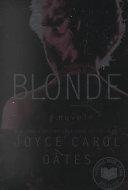
Blonde
Joyce Carol OatesFoxfire: Confessions of a Girl Gang
Joyce Carol OatesYou Must Remember This
Joyce Carol OatesBlonde
Joyce Carol OatesFoxfire: Confessions of a Girl Gang
Joyce Carol OatesYou Must Remember This
Joyce Carol OatesJoyce Carol Oates: 89 quotes3 likes
Famous Joyce Carol Oates Quotes
Source: Invisible Woman: New & Selected Poems, 1970-1982
Source: Wild Nights!: Stories About the Last Days of Poe, Dickinson, Twain, James, and Hemingway
Joyce Carol Oates Quotes about love
“It feels good, honey, but it isn't love.”
Joyce Carol Oates book You Must Remember This
Source: You Must Remember This
Joyce Carol Oates Quotes about life
Source: The Journal of Joyce Carol Oates: 1973-1982
Joyce Carol Oates book After the Wreck, I Picked Myself Up, Spread My Wings, and Flew Away
Source: After the Wreck, I Picked Myself Up, Spread My Wings, and Flew Away
On Boxing (1987)
“I think that art is the commemoration of life in its variety.”
Joyce Carol Oates interviews herself (2013)
Context: I think that art is the commemoration of life in its variety. The novel, for instance, is “historic” in its embodiment in a specific place and time and its suggestion that there is meaning to our actions. Without the stillness, thoughtfulness and depths of art, and without the ceaseless moral rigors of art, we would have no shared culture — no collective memory. As it is, in contemporary societies, where so much concentration is focused on social media, insatiable in its myriad, fleeting interests, the “stillness and thoughtfulness” of a more permanent art feels threatened.
Joyce Carol Oates: Trending quotes
Joyce Carol Oates Quotes
“Prose — it might be speculated — is discourse; poetry ellipsis.”
"'Soul at the White Heat': The Romance of Emily Dickinson’s Poetry," (Woman) Writer: Occasions and Opportunities (1988)<!-- E.P. Dutton -->
Context: Prose — it might be speculated — is discourse; poetry ellipsis. Prose is spoken aloud; poetry overheard. The one is presumably articulate and social, a shared language, the voice of "communication"; the other is private, allusive, teasing, sly, idiosyncratic as the spider’s delicate web, a kind of witchcraft unfathomable to ordinary minds.
Joyce Carol Oates interviews herself (2013)
Context: My theory is that literature is essential to society in the way that dreams are essential to our lives. We can’t live without dreaming — as we can’t live without sleep. We are “conscious” beings for only a limited period of time, then we sink back into sleep — the “unconscious.” It is nourishing, in ways we can’t fully understand.
“We all have numerous identities that shift with circumstances.”
Joyce Carol Oates interviews herself (2013)
Context: We all have numerous identities that shift with circumstances. The writing self is likely to be a highly private, conjured sort of being — you would not find it in a grocery store.
Joyce Carol Oates book Foxfire: Confessions of a Girl Gang
Source: Foxfire: Confessions of a Girl Gang
“Keep a light, hopeful heart. But expect the worst.”
Variant: Keep a light, hopeful heart. But expect the worst.
Source: The Journal of Joyce Carol Oates: 1973-1982
“My self is all to me. I don't have any need of you.”
Source: I Lock My Door Upon Myself
Joyce Carol Oates book Foxfire: Confessions of a Girl Gang
Source: Foxfire: Confessions of a Girl Gang
“Sometimes people surprise us. People we believe we know.”
Joyce Carol Oates book The Falls
Source: The Falls
“Like a flame is real enough, isn't it, while it's burning?-even if there's a time it goes out?”
Joyce Carol Oates book Foxfire: Confessions of a Girl Gang
Source: Foxfire: Confessions of a Girl Gang
“The danger of motherhood. you relive your early self, through the eyes of your mother.”
Joyce Carol Oates The Gravedigger's Daughter
Source: The Gravedigger's Daughter
Joyce Carol Oates book We Were the Mulvaneys
Source: We Were the Mulvaneys
Joyce Carol Oates interviews herself (2013)
“[The] third man in the ring makes boxing possible.”
On the introduction of referees in the late 19th century
On Boxing (1987)
Tavis Smiley interview (2005)
"The Calendar's New Clothes," New York Times (30 December 1999)
Tavis Smiley interview (2005)
"Writers’ Hunger: Food as Metaphor," New York Times (19 August 1986)


