
“Fear not the future, weep not for the past.”
Percy Bysshe Shelley The Revolt of Islam
Canto XI, st. 18
The Revolt of Islam (1817)
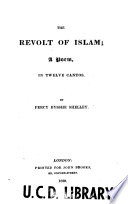
The Revolt of Islam is a poem in twelve cantos composed by Percy Bysshe Shelley in 1817. The poem was originally published under the title Laon and Cythna; or, The Revolution of the Golden City: A Vision of the Nineteenth Century by Charles and James Ollier in December 1817. Shelley composed the work in the vicinity of Bisham Woods, near Great Marlow in Buckinghamshire, northwest of London, from April to September. The plot centres on two characters named Laon and Cythna who initiate a revolution against the despotic ruler of the fictional state of Argolis, modelled on the Sultan of the Ottoman Empire. Despite its title, the poem is not focused on Islam as a specific religion, though the general subject of religion is addressed, and the work draws on Orientalist archetypes and themes. The work is a symbolic parable on liberation and revolutionary idealism following the disillusionment of the French Revolution.
“Fear not the future, weep not for the past.”
Percy Bysshe Shelley The Revolt of Islam
Canto XI, st. 18
The Revolt of Islam (1817)
“With hue like that when some great painter dips
His pencil in the gloom of earthquake and eclipse.”
Percy Bysshe Shelley The Revolt of Islam
Canto V, st. 23
The Revolt of Islam (1817)
“Can man be free if woman be a slave?”
Percy Bysshe Shelley The Revolt of Islam
Canto II, st. 43
The Revolt of Islam (1817)


