Quotes from book
A Pillar of Iron

A Pillar of Iron
Taylor CaldwellOriginal title Cicerone, voce di Roma (Italian, 1965)

New York Times Bestseller: A magnificent novel of ancient Rome and the tragic life of Cicero, who tried in vain to save the republic he loved from tyranny. In this riveting tale, the Roman Empire in its final glory is seen through the eyes of philosopher, orator, and political theorist Marcus Tullius Cicero. From his birth in 106 BC in the hill town of Arpinum, Cicero, the educated son of a wealthy member of the equestrian order, is destined for greatness. At a young age, he discovers the legend of the Unknown God, the coming Messiah, and it propels the rising lawyer on a journey of spiritual conflict and self-discovery. From his tumultuous family life to his tenuous alliance with Julius Caesar to a fateful love affair with the Roman empress Livia and, finally, to the political role that will make him a target of powerful enemies, A Pillar of Iron is the story of Cicero’s legacy as one the greatest influences on Western civilization. Based on hundreds of speeches, voluminous private correspondence, and ancient texts and manuscripts, this bestselling epic brings into focus Cicero’s complicated relationships with his contemporaries, including Caesar, Mark Antony, and Crassus, and brilliantly captures the pageantry, turmoil, and intrigue of life in ancient Rome. According to legendary editor Maxwell Perkins, author “Taylor Caldwell is a storyteller first, last and foremost, and once you begin reading one of her books, you can’t help finishing it.” This ebook features an illustrated biography of Taylor Caldwell including rare images from the author’s estate.

Taylor Caldwell photo

“Antonius [i. e., C. Antonius Hybrida] heartily agreed with him [i. e., M. Tullius Cicero] that the budget should be balanced, that the Treasury should be refilled, that public debt should be reduced, that the arrogance of the generals should be tempered and controlled, that assistance to foreign lands should be curtailed lest Rome become bankrupt, that the mobs should be forced to work and not depend on government for subsistence, and that prudence and frugality should be put into practice as soon as possible.”

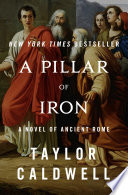
Taylor Caldwell book A Pillar of Iron

A Pillar of Iron (1965), p. 483 of the 1965 edition published by Doubleday (Garden City, NY), and p. 371 (in chapter 51) of the 1966 British edition from Collins (London). The passage, as written or in shortened or modified form, has sometimes been misattributed to M. Tullius Cicero himself. Its origin and history of misquotation have been discussed at Quote Investigator http://quoteinvestigator.com/2013/05/15/cicero-budget/ and Snopes http://www.snopes.com/quotes/cicero.asp. <br class="br">1960s

Similar authors

Taylor Caldwell photo
Taylor Caldwell31
Novelist 1900–1985
Henri Barbusse photo
Henri Barbusse197
French novelist None
Erich Maria Remarque photo
Erich Maria Remarque63
German novelist None
John Galsworthy photo
John Galsworthy48
English novelist and playwright None
Christopher Morley photo
Christopher Morley30
American journalist, novelist, essayist and poet None
João Guimarães Rosa photo
João Guimarães Rosa1
Brazilian novelist None
Marcel Proust photo
Marcel Proust41
French novelist, critic, and essayist None
Cesare Pavese photo
Cesare Pavese137
Italian poet, novelist, literary critic, and translator None
Mario Benedetti photo
Mario Benedetti4
Uruguayan journalist, novelist, and poet None
F. Scott Fitzgerald photo
F. Scott Fitzgerald411
American novelist and screenwriter None