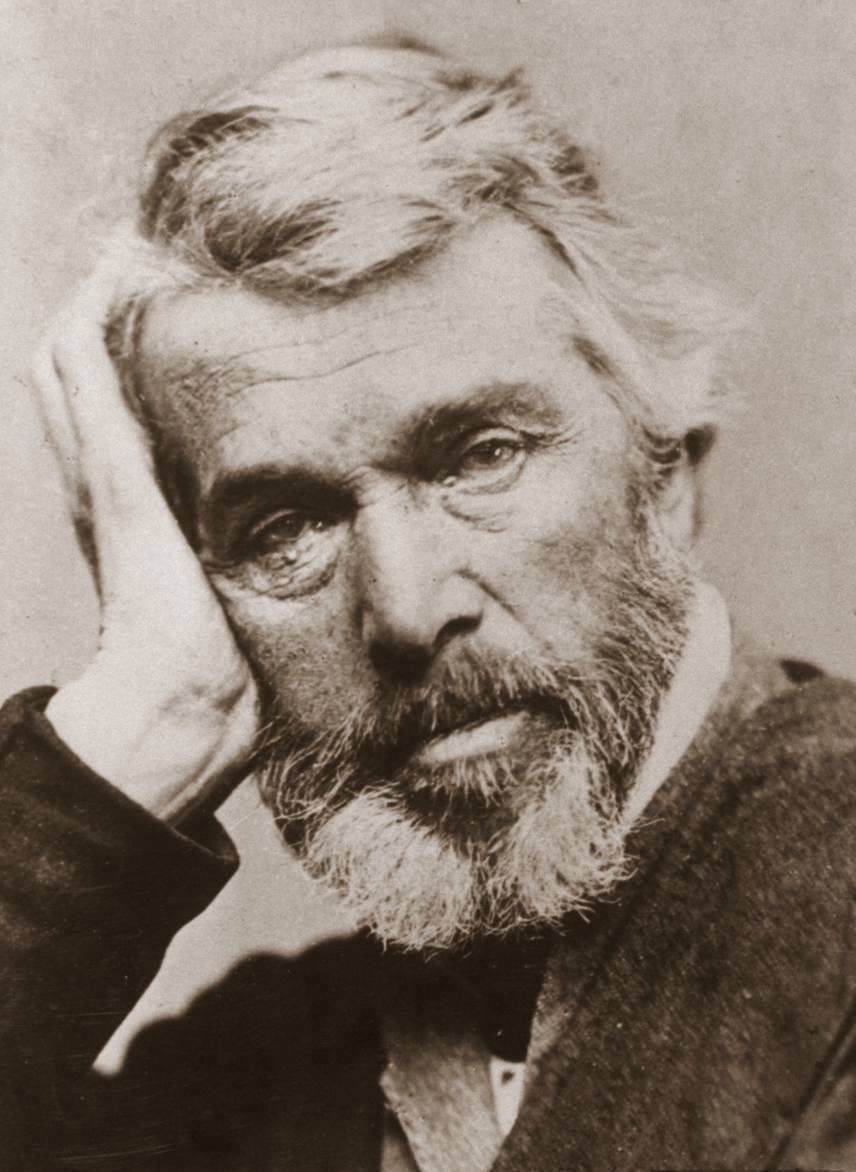
Thomas Carlyle cytaty
strona 12

Thomas Carlyle , szkocki pisarz społeczny, historyk i filozof historii, propagator i współtwórca specyficznej historiozofii zwanej heroizmem. Bardzo wpływowy w czasach wiktoriańskich, oddziałał też szeroko na myśl prawicową.

Poślubił Jane Baillie Welsh , od r. 1865 był rektorem uniwersytetu w Edynburgu. Rewolucyjnym i zgorzkniałym nastrojom epoki Byrona przeciwstawił ewangelię wypełniania swego obowiązku, opowiadając się za reformami społecznymi i organizacją pracy. Niwelacyjnej sile tendencji demokratycznych przeciwstawił kult herosów. W walce przeciwko mechanicznemu poglądowi na świat, uwielbieniu większości i utylitaryzmowi wysuwał jako istotną treść życia rozwój najwyższych, ponadindywidualnych wartości człowieka. W społeczeństwie i państwie ci tylko rządzić powinni, którzy czują w sobie przemożny pęd do władzy. Carlyle jednak powodzenie woli zmierzającej do potęgi utożsamiał z jej usprawiedliwieniem, brał je za dowód idealizmu zwróconego stale ku celom ponad osobowym, i w tym leży słabość i niebezpieczeństwo jego nauki, wywodzącej się ze szkockiego purytanizmu i idealizmu niemieckiego. Politycznie odegrał dużą rolę jako teoretyk imperializmu, podejmujący ideę misji dziejowej narodu angielskiego, która objąć ma świat cały. Z pism Carlyle wymienić należy przede wszystkim rozważania filozoficzno-historyczne „Bohaterowie. Cześć dla bohaterów i pierwiastek bohaterstwa w historii” , dzieła o rewolucji francuskiej, o Fryderyku II. pruskim. Jego „Sartora Resartusa, życie i zdania Pana Teufelsdröckha” przeł. Sygurd Wiśniowski .

Pod wpływem fascynacji niemieckim romantyzmem porzucił kalwinizm. Jego dług wobec filozofii romantycznej widoczny jest w tłumaczeniu Lat nauki Wilhelma Meistra Goethego i książce Life of Schiller. Z romantyzmu Carlyle czerpie przede wszystkim daleko posunięty indywidualizm .

Podstawowym tematem myśli Carlyle'a jest heros, jednostka wybitna, górująca nad masami siłą aktywności życiowej, przede wszystkim moralnej. W podkreśleniu właśnie przewagi moralnej a nie np. intelektualnej herosa widoczny jest wpływ purytanizmu. Mimo to Carlyle antycypuje antropologię Nietzschego.

Germanofil. Zagorzały miłośnik Fryderyka Wielkiego, a także autor jego historii .

Wydaje się, że specyficzna maniera jego umysłowości wywarła znaczny wpływ na formy współczesnej kultury masowej, np. powieść fantasy czy kino akcji. Jego wpływ na myśl prawicową to przede wszystkim widoczny w niej opór wobec myśli Karola Marksa, że byt określa świadomość, jako że heros Carlyle'a może i musi walczyć z naporem generowanych przez naturę i poddany jej motłoch treści, w heroistycznym języku określanych jako potwory.

Stąd historiozofia Carlyle'a nie uznaje żadnych praw dziejowych, w szczególności deterministycznych praw ekonomii, a historię przedstawia na płaszczyślie kosmologicznej jako sekwencję powtarzalnych walk wybitnych jednostek ze złem .

Zobacz też: heroizm, elitaryzm, filozofia historii, antydemokratyzm, kontrrewolucja.


✵ 4. Grudzień 1795 – 5. Luty 1881   •   Natępne imiona Томас Карлайл
Thomas Carlyle Fotografia
Thomas Carlyle: 494   Cytaty 6   Polubień

Thomas Carlyle słynne cytaty

„Staraj się zostać uczciwym człowiekiem – zyskasz dzięki temu pewność, że na świecie jest o jednego drania mniej.”

Źródło: Wielka księga mądrości, wybór Jacek i Tomasz Ilga

Thomas Carlyle cytaty

„Kapitanowie przemysłu.”

Captains of Industry. (ang.)
Źródło: Przeszłość i teraźniejszość (ang. Past and Present) 4, 4

„Szczęśliwi ludzie, których dzieje nie wypełniają podręczników historii.”

Happy the people whose annals are blank in history books! (ang.)

Thomas Carlyle: Cytaty po angielsku

“The Working Man as yet sought only to know his craft; and educated himself sufficiently by ploughing and hammering, under the conditions given, and in fit relation to the persons given: a course of education, then as now and ever, really opulent in manful culture and instruction to him; teaching him many solid virtues, and most indubitably useful knowledges; developing in him valuable faculties not a few both to do and to endure,—among which the faculty of elaborate grammatical utterance, seeing he had so little of extraordinary to utter, or to learn from spoken or written utterances, was not bargained for; the grammar of Nature, which he learned from his mother, being still amply sufficient for him. This was, as it still is, the grand education of the Working Man. As for the Priest, though his trade was clearly of a reading and speaking nature, he knew also in those veracious times that grammar, if needful, was by no means the one thing needful, or the chief thing. By far the chief thing needful, and indeed the one thing then as now, was, That there should be in him the feeling and the practice of reverence to God and to men; that in his life's core there should dwell, spoken or silent, a ray of pious wisdom fit for illuminating dark human destinies;—not so much that he should possess the art of speech, as that he should have something to speak!”

1850s, Latter-Day Pamphlets (1850), Stump Orator (May 1, 1850)

“This great maxim of Philosophy he had gathered by the teaching of nature alone: That man was created to work, not to speculate, or feel, or dream.”

Reminiscences (1881), referring to his father, James Carlyle.
Sometimes quoted as "Man was created to work, not to speculate, or feel, or dream; Every idle moment is treason". The second of those two clauses in fact comes from Thomas Arnold The Christian Life (1841), Lecture VI.
1880s

“No sadder proof can be given by a man of his own littleness than disbelief in great men.”

1840s, Heroes and Hero-Worship (1840), The Hero as Divinity

“"The people may eat grass": hasty words, which fly abroad irrevocable—and will send back tidings.”

Pt. I, Bk. III, ch. 9.
1830s, The French Revolution. A History (1837)

“One life; a little gleam of Time between two Eternities; no second chance to us for evermore!”

1840s, Heroes and Hero-Worship (1840), The Hero as Man of Letters

“The three great elements of modern civilization, gunpowder, printing, and the Protestant religion.”

The State of German Literature (1827).
1820s, Critical and Miscellaneous Essays (1827–1855)

“Can there be a more horrible object in existence than an eloquent man not speaking the truth?”

Address as Lord Rector of Edinburgh University, (1866), reported in Bartlett's Familiar Quotations, 10th ed. (1919).
Attributed

“A mystic bond of brotherhood makes all men one.”

Essays, Goethe's Works.
1820s, Critical and Miscellaneous Essays (1827–1855)

“A great man shows his greatness by the way he treats little men.”

Attributed to Carlyle in Dale Carnegie's How to Win Friends And Influence People (1936), but this quotation is not found in Carlyle's known works. The first mention found in Google Books dates from 1908, where the Rev. John Timothy Stone https://en.wikipedia.org/wiki/John_Timothy_Stone is quoted as claiming: 'The greatest critics of this world have been appreciators. Carlyle said, "You can discover a great man, or see a great man, by the way he treats little men.'
The quotation is subsequently found in slightly different forms, mostly in religious publications: "A great man shows his greatness by manner in which he treats little men" (1913, unattributed); The exact wording of Carnegie's quote suggests that it was taken from Stone's 1930 publication.
Disputed

Podobni autorzy

Robert Louis Stevenson Fotografia
Robert Louis Stevenson 11
pisarz szkocki
Henry David Thoreau Fotografia
Henry David Thoreau 94
amerykański pisarz, poeta i filozof
William James Fotografia
William James 26
filozof i psycholog amerykański
Mark Twain Fotografia
Mark Twain 128
amerykański pisarz, satyryk, humorysta
Arthur Schopenhauer Fotografia
Arthur Schopenhauer 97
filozof niemiecki
John Henry Newman Fotografia
John Henry Newman 10
angielski teolog katolicki, filozof, kardynał
Karol Marks Fotografia
Karol Marks 136
niemiecki filozof, ekonomista i działacz rewolucyjny