“How many generations need to comply in a fallacy before it becomes accepted as truth?”
Michael Moorcock The Cornelius Quartet
The Cornelius Quartet, The Condition of Muzak (1977)
Źródło: The BL 755 cluster bomb (p. 652)
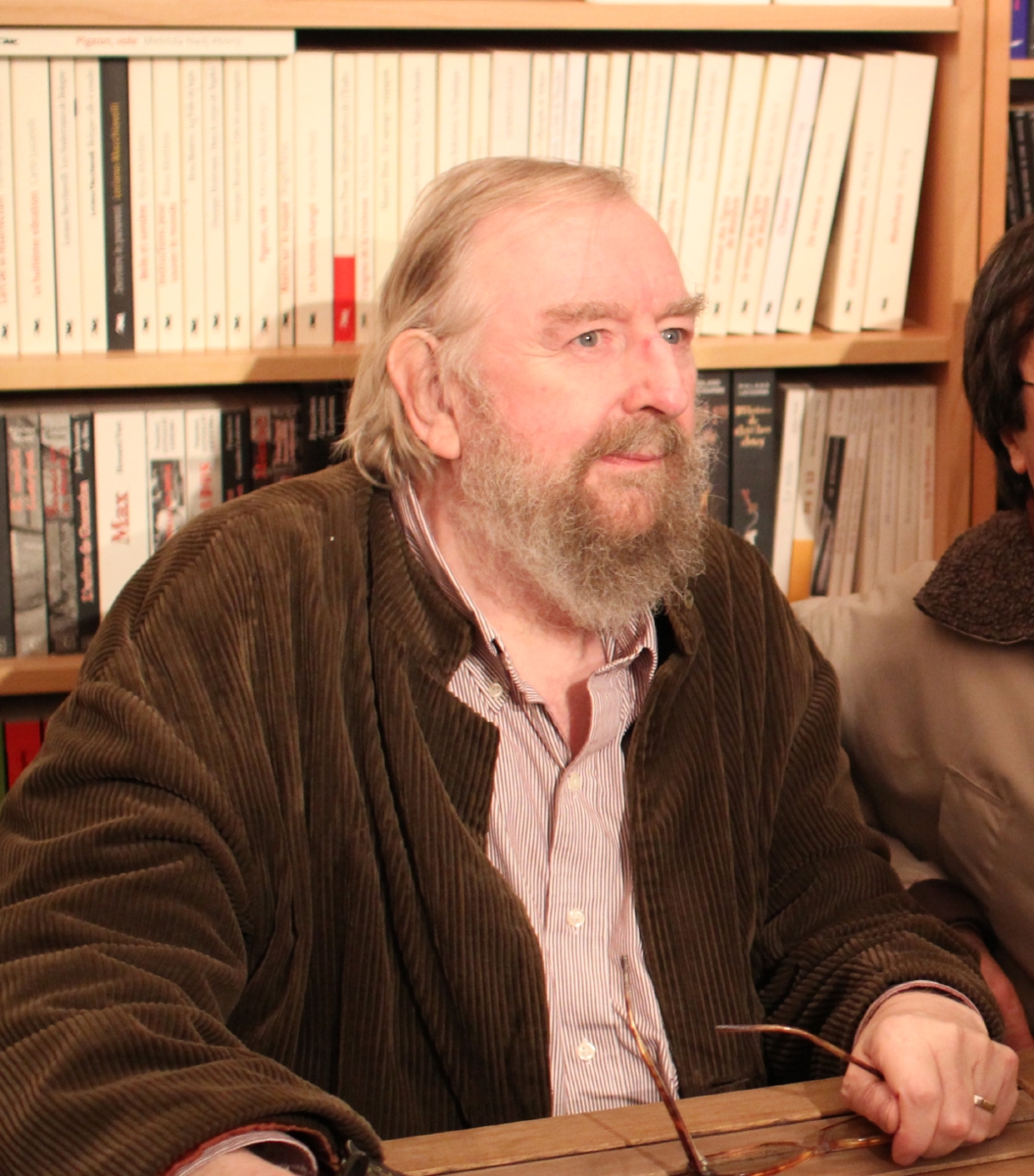
Michael John Moorcock – brytyjski pisarz science-fiction oraz fantasy. Laureat Damon Knight Memorial Grand Master Award w 2008 r. oraz wielu innych nagród w dziedzinie fantastyki.
Michael Moorcock pisarstwem zajął się już w wieku 15 lat. Wymyślał oraz spisywał historie i wysyłał je do obrazkowego magazynu „Tarzan Adventures”. Wkrótce podjął próbę pisania prozą, udaną, gdyż jego opowiadania opublikowano w wielu liczących się czasopismach o tematyce science-fiction i fantasy. W krótkim czasie stał się znanym i cenionym pisarzem.
W 1964 roku otrzymał propozycję pracy w wydawnictwie „New Worlds” na stanowisku redaktora naczelnego, którą przyjął. Jego działalność wyznaczyła drogę rozwoju ówczesnej fantastyce . Sukces owych przeobrażeń zapewniały znakomite publikacje oraz oddana współpraca Briana Aldissa i J.G. Ballarda.
W latach 80. Moorcock porzucił pisanie opowiadań i powieści fantastycznych, skoncentrował się na historiach wojennych. Do jego najwybitniejszych książek z tego okresu należy zaliczyć „The War Hound” i „World's Pain”, a także nowele z serii „Between Wars” nawiązujące do holocaustu II wojny światowej.
Ostatnio Moorcock powrócił do pisania bardziej na gruncie fantastyki, mimo że jak sam mówi, nie przepada za SF i nie lubi środowiska fanów. Pod względem światopoglądowym uważa się za anarchistę. Wikipedia
“How many generations need to comply in a fallacy before it becomes accepted as truth?”
Michael Moorcock The Cornelius Quartet
The Cornelius Quartet, The Condition of Muzak (1977)
Źródło: The BL 755 cluster bomb (p. 652)
“Stagnation’s no substitute for stability.”
Michael Moorcock The Cornelius Quartet
The Cornelius Quartet, The Condition of Muzak (1977)
Źródło: Optics for defence (p. 649)
“The barbarians don’t come from outside the walls any more, do they?”
Michael Moorcock The Cornelius Quartet
The Cornelius Quartet, The English Assassin (1972)
Źródło: The Hill (p. 579)
“Is there anything sadder, I wonder, than an assassin with nobody left to kill?”
Michael Moorcock The Cornelius Quartet
The Cornelius Quartet, The English Assassin (1972)
Źródło: The Alternative Apocalypse 1 (p. 399)
“Technology is potential freedom from brutality.”
Michael Moorcock The Cornelius Quartet
The Cornelius Quartet, A Cure for Cancer (1971)
Źródło: Beyond the X ecliptic (p. 316)
“Time to be moving; moves to be timing.”
Michael Moorcock The Cornelius Quartet
The Cornelius Quartet, A Cure for Cancer (1971)
Źródło: Beyond the X ecliptic (p. 314)
Michael Moorcock The Cornelius Quartet
The Cornelius Quartet, A Cure for Cancer (1971)
Źródło: Ex-bank clerk slave girl in private sin palace (p. 172)
“You think we are in danger there?”
Michael Moorcock książka The King of the Swords
Źródło: Book 3, Chapter 3 “The Conjunction of the Million Spheres” (pp. 379-380), Corum, The King of the Swords (1971)
Kontekst: “Danger? It depends what you regard as dangerous. Some wisdom may be dangerous to one man and not to another.”
“It becomes so easy to believe what one wishes to believe.”
Michael Moorcock książka The King of the Swords
Źródło: Book 2, Chapter 2 “The Castle Built of Blood” (p. 320), Corum, The King of the Swords (1971)
Michael Moorcock książka The King of the Swords
Źródło: Book 2, Chapter 2 “The Castle Built of Blood” (p. 320), Corum, The King of the Swords (1971)
Źródło: Book 2, Chapter 1 “The Lake of Voices” (p. 197), Corum, The Queen of the Swords (1971)
Źródło: Book 1, Chapter 1 “What the Sea God Discarded” (p. 165), Corum, The Queen of the Swords (1971)
Michael Moorcock książka The Knight of the Swords
Źródło: Book 3, Chapter 6 “The God Feasters” (p. 139), Corum, The Knight of the Swords (1971)
Michael Moorcock książka The Knight of the Swords
Źródło: Prologue (p. 9), Corum, The Knight of the Swords (1971)


