“A mathematician may say anything he pleases, but a physicist must be at least partially sane.”
Quoted in R. B. Lindsay, "On the Relation of Mathematics and Physics," Scientific Monthly 59, 456 (Dec. 1944)
Attributed
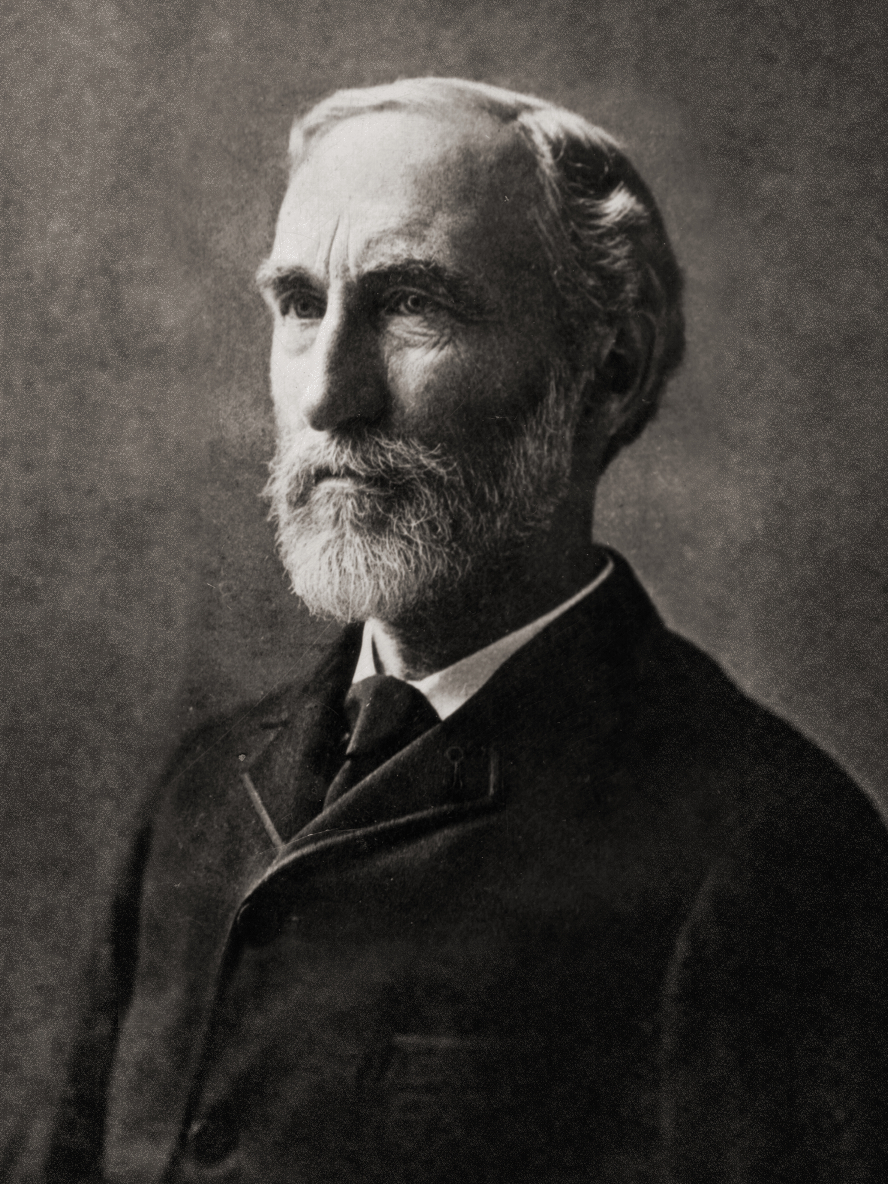
Josiah Willard Gibbs – amerykański fizyk teoretyk, profesor Uniwersytetu Yale’a .
Wniósł duży wkład do termodynamiki chemicznej. Jako fizyk i matematyk współtworzył analizę wektorową. Był pierwszym doktorantem w zakresie inżynierii na Uniwersytecie Yale’a. W latach 1875–1878 Gibbs napisał i opublikował serię prac, które wydane w formie monografii noszą tytuł On the Equilibrium of Heterogeneous Substances . Uważa się, że dzieło to jest jednym z największych naukowych osiągnięć XIX wieku i stanowi fundament powstającej wówczas nowej dziedziny: chemii fizycznej. Gibbs jest również uważany za jednego z ojców mechaniki statystycznej. W 1902 Uniwersytet Yale’a opublikował jego klasyczną książkę Elementary Principles of Statistical Mechanics .
W 1901 Josiah Willard Gibbs otrzymał prestiżową nagrodę londyńskiego Towarzystwa Królewskiego . Wikipedia
“A mathematician may say anything he pleases, but a physicist must be at least partially sane.”
Quoted in R. B. Lindsay, "On the Relation of Mathematics and Physics," Scientific Monthly 59, 456 (Dec. 1944)
Attributed
From the preface to Elementary Principles in Statististical Mechanics (1902), p. viii. Full book https://archive.org/details/elementaryprinc00gibbgoog
From Gibbs's letter accepting the Rumford Medal (1881). Quoted in A. L. Mackay, Dictionary of Scientific Quotations (London, 1994).
At a Yale faculty meeting, during a discussion of language requirements in the undergraduate curriculum. Quoted in Muriel Rukeyser, Willard Gibbs (Garden City, NY: Doubleday, Doran & Co., 1942), p. 280.
Attributed
Quoted by C. S. Hastings in "Biographical Memoir of Josiah Willard Gibbs 1839-1903," National Academy of Sciences Biographical Memoirs, vol. VI (Washington, D.C.: National Academy of Sciences, 1909), p. 390. Complete memoir http://books.nap.edu/html/biomems/jgibbs.pdf <br class="br">Attributed
From Gibbs's obituary for Rudolf Clausius (1889). See The Collected Works of J. Willard Gibbs, vol. 2 (New York: Longmans, Green and Co., 1928), p. 267. Complete volume http://www.archive.org/details/collectedworksj00longgoog
“The whole is simpler than its parts.”
Quoted by Irving Fisher in "The Applications of Mathematics to the Social Sciences," Bulletin of the American Mathematical Society 36, 225-243 (1930). Full article http://projecteuclid.org/euclid.bams/1183493954 <br class="br">Attributed
“Anyone having these desires will make these researches.”
About his own scientific work. Quoted in Muriel Rukeyser, Willard Gibbs (Garden City, NY: Doubleday, Doran & Co., 1942), p. 431.
Attributed
From Gibbs's obituary for Hubert Anson Newton (1897), in the Biographical Memoirs of the National Academy of Sciences http://www.nasonline.org/publications/biographical-memoirs/memoir-pdfs/hubert-newton.pdf.
From the preface to Elementary Principles in Statististical Mechanics (1902), p. ix.
Quoted in Muriel Rukeyser, Willard Gibbs (Garden City, NY: Doubleday, Doran & Co., 1942), p. 4.
Attributed


