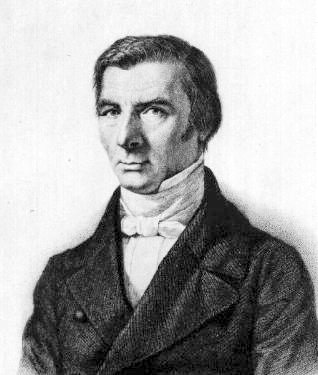
Frédéric Bastiat słynne cytaty
Sofizmaty ekonomiczne – część druga
Źródło: 15. Mały arsenał zwolennika wolnego handlu, s. 425
„Państwo to wielka fikcja, dzięki której każdy usiłuje żyć kosztem innych.”
Państwo
Źródło: s. 111
Kapitał i zysk z kapitału
Źródło: s. 152
Frédéric Bastiat Cytaty o sile
Kapitał i zysk z kapitału
Źródło: s. 174–175
Frédéric Bastiat cytaty
Kapitał i zysk z kapitału
Źródło: s. 168
„(…) braterstwo nie oznacza, że poświęcać się będzie tylko jedna strona”
Kapitał i zysk z kapitału
Źródło: s. 160
Sofizmaty ekonomiczne – część druga
Źródło: 15. Mały arsenał zwolennika wolnego handlu, s. 428
Kapitał i zysk z kapitału
Źródło: s. 155
Prawo
Źródło: s. 70
O Bastiacie
Źródło: Encyklopedia Britannica, wyd. 11, 1910
Sofizmaty ekonomiczne – część druga
Źródło: 15. Mały arsenał zwolennika wolnego handlu, s. 425–426
Kapitał i zysk z kapitału
Źródło: s. 169
Co widać i czego nie widać
Źródło: 3. Podatki, s. 18
„(…) ekonomia polityczna, sprawiedliwość, zdrowy rozsądek – to wszystko jedno i to samo.”
Kapitał i zysk z kapitału
Źródło: s. 158
Co widać i czego nie widać
Źródło: 4. Teatr i sztuki piękne, s. 22
Kapitał i zysk z kapitału
Źródło: s. 172
Co widać i czego nie widać
Źródło: 4. Teatr i sztuki piękne, s. 22
Państwo
Źródło: s. 110
Sofizmaty ekonomiczne – część druga
Źródło: 15. Mały arsenał zwolennika wolnego handlu, s. 427
Co widać i czego nie widać
Źródło: 9. Kredyt, s. 46
Sofizmaty ekonomiczne – część druga
Źródło: 15. Mały arsenał zwolennika wolnego handlu, s. 426
Państwo
Źródło: s. 115
Kapitał i zysk z kapitału
Źródło: s. 163–164
Co widać i czego nie widać
Źródło: przypis, niepublikowany szkic autora, s. 57
Kapitał i zysk z kapitału
Źródło: s. 165
„(…) wcześniejsza praca jest niezbędna, by praca aktualna była naprawdę produktywna”
Kapitał i zysk z kapitału
Źródło: s. 155
„Wszystkie monopole są obrzydliwe, lecz najgorszy jest monopol na nauczanie.”
Przeklęty pieniądz
Źródło: s. 142
o pożyczce z procentem
Kapitał i zysk z kapitału
Źródło: s. 163
Kapitał i zysk z kapitału
Źródło: s. 167
Frédéric Bastiat: Cytaty po angielsku
Frédéric Bastiat książka The Law
Źródło: The Law (1850)
Kontekst: Life, faculties, production — in other words, individuality, liberty, property — this is man. And in spite of the cunning of artful political leaders, these three gifts from God precede all human legislation, and are superior to it. Life, liberty, and property do not exist because men have made laws. On the contrary, it was the fact that life, liberty, and property existed beforehand that caused men to make laws in the first place.
Frédéric Bastiat książka The Law
The Law (1850)
“This is done now; we desire that it be done better.”
Źródło: Justice and Fraternity (1848), p. 313
Kontekst: If socialists mean that under extraordinary circumstances, for urgent cases, the State should set aside some resources to assist certain unfortunate people, to help them adjust to changing conditions, we will, of course, agree. This is done now; we desire that it be done better. There is however, a point on this road that must not be passed; it is the point where governmental foresight would step in to replace individual foresight and thus destroy it.
That which is seen and that which is not seen (Ce qu'on voit et ce qu'on ne voit pas, 1850), the Introduction.
Kontekst: In the department of economy, an act, a habit, an institution, a law, gives birth not only to an effect, but to a series of effects. Of these effects, the first only is immediate; it manifests itself simultaneously with its cause — it is seen. The others unfold in succession — they are not seen: it is well for us, if they are foreseen. Between a good and a bad economist this constitutes the whole difference: the one takes account only of the visible effect; the other takes account of both the effects which are seen and those which it is necessary to foresee. Now this difference is enormous, for it almost always happens that when the immediate consequence is favourable, the ultimate consequences are fatal, and the converse. Hence it follows that the bad economist pursues a small present good, which will be followed by a great evil to come, while the true economist pursues a great good to come, at the risk of a small present evil.
Źródło: Justice and Fraternity (1848), p. 319
Kontekst: "[The socialists declare] that the State owes subsistence, well-being, and education to all its citizens; that it should be generous, charitable, involved in everything, devoted to everybody;... that it should intervene directly to relieve all suffering, satisfy and anticipate all wants, furnish capital to all enterprises, enlightenment to all minds, balm for all wounds, asylums for all the unfortunate, and even aid to the point of shedding French blood, for all oppressed people on the face of the earth.
Who would not like to see all these benefits flow forth upon the world from the law, as from an inexhaustible source? … But is it possible? … Whence does [the State] draw those resources that it is urged to dispense by way of benefits to individuals? Is it not from the individuals themselves? How, then, can these resources be increased by passing through the hands of a parasitic and voracious intermediary?
... Finally…we shall see the entire people transformed into petitioners. Landed property, agriculture, industry, commerce, shipping, industrial companies, all will bestir themselves to claim favors from the State. The public treasury will be literally pillaged. Everyone will have good reasons to prove that legal fraternity should be interpreted in this sense: "Let me have the benefits, and let others pay the costs." Everyone's effort will be directed toward snatching a scrap of fraternal privilege from the legislature. The suffering classes, although having the greatest claim, will not always have the greatest success.
“Either fraternity is spontaneous, or it does not exist. To decree it is to annihilate it.”
Źródło: Justice and Fraternity (1848), p. 312
Kontekst: Either fraternity is spontaneous, or it does not exist. To decree it is to annihilate it. The law can indeed force men to remain just; in vain would it try to force them to be self-sacrificing.
“When goods do not cross borders, soldiers will.”
note: Probably coined by Otto T. Mallery (1881-1956) in his 1943 book Economic Union and Durable Peace (he doesn't attribute it to Bastiat, although Bastiat has written similar ideas)
Źródło: Ref: en.wikiquote.org - Frédéric Bastiat / Misattributed
https://oll.libertyfund.org/pages/did-bastiat-say-when-goods-don-t-cross-borders-soldiers-will note: Misattributed
Frédéric Bastiat Sophismes économiques
Lorsque la Spoliation est devenue le moyen d’existence d’une agglomération d’hommes unis entre eux par le lien social, ils se font bientôt une loi qui la sanctionne, une morale qui la glorifie.
Economic sophisms, 2nd series (1848), ch. 1 Physiology of plunder ("Sophismes économiques", 2ème série (1848), chap. 1 "Physiologie de la spoliation").
Economic Sophisms (1845–1848)
The State in Journal des débats (1848) par. 5.20.
Wariant: The State is the great fiction through which everyone endeavours to live at the expense of everyone else.
Le plus pressé, ce n'est pas que l'État enseigne, mais qu'il laisse enseigner. Tous les monopoles sont détestables, mais le pire de tous, c'est le monopole de l'enseignement.
In 'Cursed Money!', final thought.
The Bastiat-Proudhon Debate on Interest (1849–1850)
Źródło: What Is Money?
That which is seen and that which is not seen (Ce qu'on voit et ce qu'on ne voit pas, 1850), the Introduction.
Kontekst: In the department of economy, an act, a habit, an institution, a law, gives birth not only to an effect, but to a series of effects. Of these effects, the first only is immediate; it manifests itself simultaneously with its cause — it is seen. The others unfold in succession — they are not seen: it is well for us, if they are foreseen. Between a good and a bad economist this constitutes the whole difference: the one takes account only of the visible effect; the other takes account of both the effects which are seen and those which it is necessary to foresee. Now this difference is enormous, for it almost always happens that when the immediate consequence is favourable, the ultimate consequences are fatal, and the converse. Hence it follows that the bad economist pursues a small present good, which will be followed by a great evil to come, while the true economist pursues a great good to come, at the risk of a small present evil.
“By virtue of exchange, one man's prosperity is beneficial to all others.”
Economic harmonies, par. 4.110.
Frédéric Bastiat książka The Law
The Law (1850)
Justice and fraternity, in Journal des Économistes, 15 June 1848, page 324.
Justice and Fraternity (1848)
Frédéric Bastiat książka The Law
The Law (1850)
Frédéric Bastiat książka The Law
which alas! is all too inadequate
The Law (1850)
Frédéric Bastiat książka The Law
Essayez d’imaginer une forme de travail imposée par la Force, qui ne soit une atteinte à la Liberté ; une transmission de richesse imposée par la Force, qui ne soit une atteinte à la Propriété. Si vous n’y parvenez pas, convenez donc que la Loi ne peut organiser le travail et l’industrie sans organiser l’Injustice.
The Law (1850)
“Competition is merely the absence of oppression.”
Economic harmonies, par. 10.4.
“The profit of the one is the profit of the other.”
Economic harmonies, par. 4.118.
Frédéric Bastiat książka The Law
The Law (1850)
Frédéric Bastiat książka The Law
The Law (1850)


