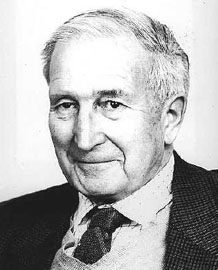
Antony Flew cytaty

Antony Flew − angielski filozof. Znany od wielu dziesięcioleci jako czołowy ateista, pod koniec życia odrzucił ateizm i określił się jako deista, konkretnie opowiedział się za Bogiem Arystotelesa. Jednocześnie jednak uznał chrześcijaństwo za godne oczywistego szacunku i czci.

Pierwotnie jeden z największych krytyków religii, w tym głównie chrześcijaństwa. Z pozycji ateizmu semantycznego głosił, że wszystkie wypowiedzi na temat Boga jako niesprawdzalne empirycznie są pozbawione sensu. Zdaniem Flewa istnienie na świecie zła czyni fałszywym pogląd o istnieniu dobrego, wszechmocnego i wszechwiedzącego Boga. Krytykował pogląd o możliwości życia po śmierci oraz idee zmartwychwstania.

Od roku 2001 krążyły plotki o tym, że Flew porzucił ateizm. Zaprzeczył on wówczas tym pogłoskom na stronie Secular Web. Pełne przedstawienie swoich zrewidowanych poglądów na istnienie Boga ogłosił w wywiadzie udzielonym w roku 2004 czasopismu "Philosophia Christi", w którym mimo wszystko wyraża m.in. nadzieję i wiarę w brak istnienia życia po śmierci oraz niewiarę w zmartwychwstanie Jezusa jako historyczny fakt.

Wokół jego ostatniego dzieła There is a God: How the World's Most Notorious Atheist Changed His Mind , napisanego z udziałem Roya Abrahama Varghese'a, narosło wiele kontrowersji. Niektórzy uważają, że nie był on w ogóle autorem tej książki, a prawdziwymi autorami są Roy Varhese i Bob Hoster. Aby uciąć te teorie spiskowe, Flew oficjalnie ogłosił, że treści tam zawarte odzwierciedlają wiernie jego stanowisko.

Oprócz ateizmu, Flew jest znany z wybitnego wkładu w dziedziny epistemologii oraz logiki. Jego słynne naświetlenie sofizmatu pt. żaden prawdziwy Szkot stanowi swoisty współczesny klasyk tych dyscyplin.

Anthony Flew miał sympatie konserwatywne i libertariańskie. Był wiceprezydentem Conservative Monday Club oraz wiceprezydentem Western Goals Institute. Publikował m.in. w Jorunal of Libertarian Studies. Został nagrodzony przez amerykańską fundację libertariańską Mises Intitute Nagrodą Schlarbauma za "wybitne życiowe osiągnięcia na rzecz wolności". Wikipedia  

✵ 11. Luty 1923 – 8. Kwiecień 2010
Antony Flew Fotografia

Dzieło

Bóg istnieje
Antony Flew
Bóg istnieje
Antony Flew
Antony Flew: 13 cytatów0 Polubień

Antony Flew słynne cytaty

„Moje błędne poglądy wywarły niewątpliwie wpływ na myślenie wielu osób, chcę naprawić te ogromne szkody.”

Antony Flew

po porzuceniu ateizmu. <br class="br">Źródło: Brytyjski filozof-ateista mówi: „Bóg jest” http://gazetabaltycka.pl/promowane/antony-flew-brytyjski-filozof-ateista-mowi-bog-jest, gazetabaltycka.pl, 28 lipca 2013.

Antony Flew: Cytaty po angielsku

“The term 'fundamentalist', which was coined in 1920, derives from the title of a series of tracts - The Fundamentals - published in the United States from 1910 to 1915. It has since been implicitly defined as meaning a person who believes that, since The Bible is the Word of God, every proposition in it must be true; a belief which, notoriously, is taken to commit fundamentalist Christians to defending the historicity of the accounts of the creation of the Universe given in the first two chapters of Genesis. On this understanding a fully believing Christian does not have to be fundamentalist. Instead it is both necessary and sufficient to accept the Apostles' and/or The Nicene Creed. In Islam, however, the situation is altogether different. For, whereas only a very small proportion of all the propositions contained in the Old and New Testaments are presented as statements made directly by God in any of the three persons of the Trinity, The Koran consists entirely and exclusively of what are alleged to be revelations from Allah (God). Therefore, with regard to The Koran, all Muslims must be as such fundamentalists; and anyone denying anything. asserted in The Koran ceases, ipso facto, to be properly accounted a Muslim. Those whom the media call fundamentalists would therefore better be described as revivalists. This conceptual truth not only places a tight limitation upon the possibilities of developmental change within Islam, as opposed to the tacit or open abandonment of one or more of its original particular claims, but also opens up the theoretical possibility of falsifying the Islamic system as a whole by presenting some known fact which is inconsistent with a Koranic assertion.”

Antony Flew

Turning away from Mecca (The Salisbury Review, Spring 1996) quoted from Goel, Sita Ram (editor) (1998). Freedom of expression: Secular theocracy versus liberal democracy. https://web.archive.org/web/20171026023112/http://www.bharatvani.org:80/books/foe/index.htm

“(Still an atheist at the time) For Heaven's sake…sorry, perhaps I should have said something else.”

Antony Flew

Craig Vs Flew, University of Wisconsin, 1st January 1998 https://www.youtube.com/watch?v=NixhL0CoH2s

“I would never regard Islam with anything but horror and fear because it is fundamentally committed to conquering the world for Islam.”

Antony Flew

Did the Resurrection Happen?: A Conversation with Gary Habermas and Antony Flew (2009), p. 88

Podobni autorzy

William Somerset Maugham Fotografia
William Somerset Maugham32
pisarz angielski None
Aldous Huxley Fotografia
Aldous Huxley36
pisarz angielski None
Erich Fromm Fotografia
Erich Fromm66
amerykański filozof, psycholog i psychoanalityk None
Clive Staples Lewis Fotografia
Clive Staples Lewis52
angielski pisarz, historyk, filozof i teolog None
Ludwig Wittgenstein Fotografia
Ludwig Wittgenstein29
filozof austriacki None
Hannah Arendt Fotografia
Hannah Arendt16
amerykańska teoretyk polityki, filozof i publicystka None
Bertrand Russell Fotografia
Bertrand Russell83
angielski logik, matematyk, filozof, myśliciel, działacz sp… None
Martin Heidegger Fotografia
Martin Heidegger20
filozof niemiecki None
Henri Bergson Fotografia
Henri Bergson25
francuski filozof, noblista None
John Ronald Reuel Tolkien Fotografia
John Ronald Reuel Tolkien22
angielski filolog-germanista, filozof chrześcijański, pisarz None