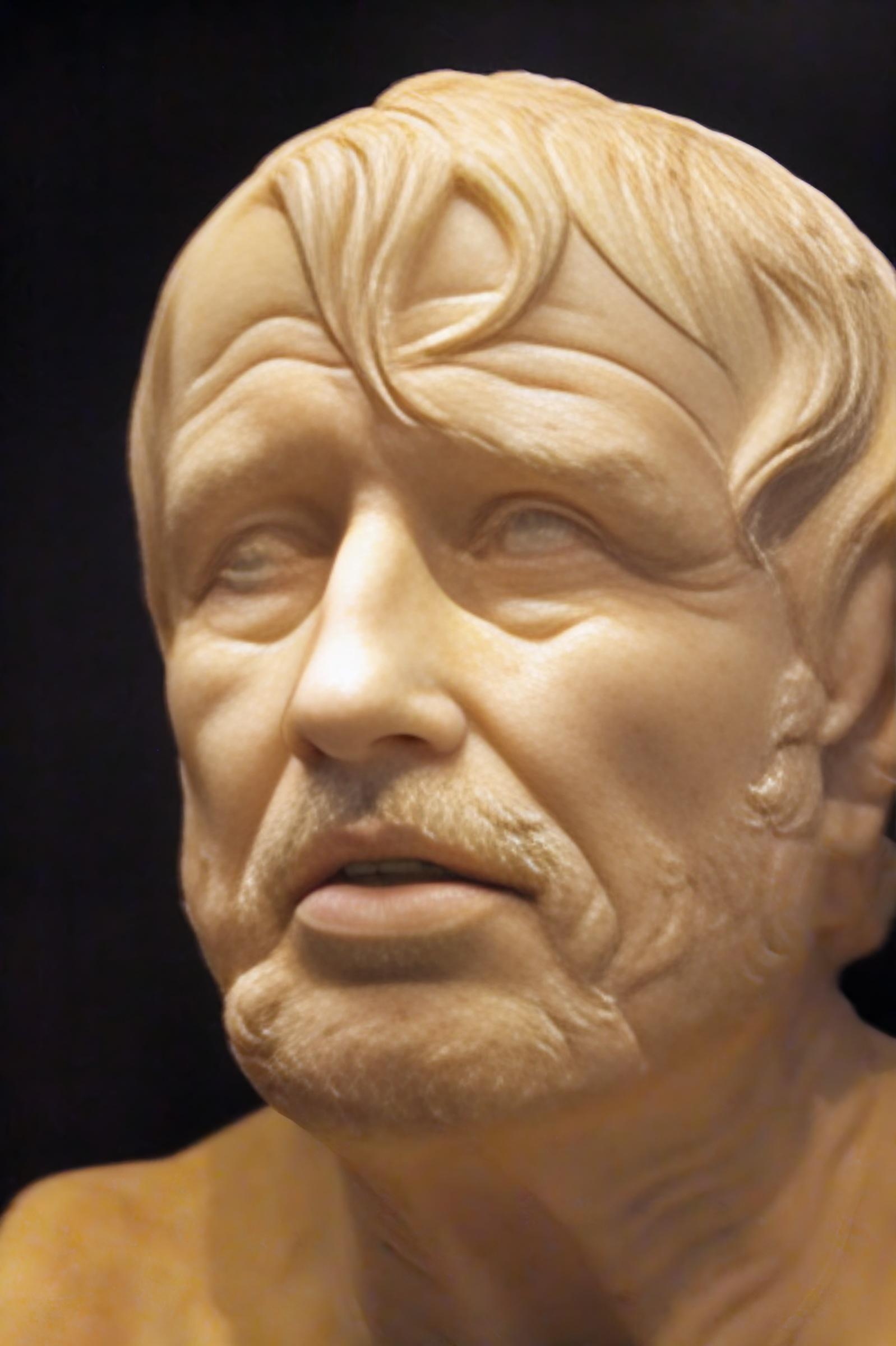
„Ha bölcs vagy, kösd össze ezt a két elemet: ne reménykedj kétség nélkül, és ne ess kétségbe remény nélkül.”
Si sapis, alterum alteri misce: nec speraveris sine desperatione nec desperaveris sine spe.
Lucius Annaeus Seneca: 242 idézet11 Kedvelés
Lucius Annaeus Seneca híres idézetei
„Semmilyen szél nem kedvez annak, aki nem tudja, melyik kikötőbe tart.”
errant consilia nostra, quia non habent quo derigantur; ignoranti quem portum petat nullus suus ventus est.
„Nem az szegény, akinek csak kevese van, hanem aki többre vágyik.”
Non qui parum habet, sed qui plus cupit, pauper est.
„A háborúnál csak a háborútól való félelem rosszabb.”
peior est bello timor ipse belli.
Lucius Annaeus Seneca idézetek
„Mert egyetlen ember sem szabad, aki testének rabszolgája.”
Nemo liber est qui corpori servit.
„Senki sem képes uralkodni, ha nem képes elviselni, hogy uralva legyen.”
nemo autem regere potest nisi qui et regi.
Lucius Annaeus Seneca: Idézetek angolul
“Nothing lasts forever, few things even last for long: all are susceptible of decay in one way or another; moreover all that begins also ends.”
Nihil perpetuum, pauca diuturna sunt; aliud alio modo fragile est, rerum exitus variantur, ceterum quicquid coepit et desinit.
Seneca the Younger könyv To Polybius
From Ad Polybium De Consolatione (Of Consolation, To Polybius), chap. I; translation based on work of Aubrey Stewart
Other works
“It is a rough road that leads to the heights of greatness.”
Confragosa in fastigium dignitatis via est.
Forrás: Epistulae Morales ad Lucilium (Moral Letters to Lucilius), Letter LXXXIV: On gathering ideas, Line 13
“What is wisdom? Always desiring the same things, and always refusing the same things.”
quid est sapienta? semper idem velle atque idem nolle.
Here, Seneca uses the same observation that Sallust made regarding friendship (in his historical account of the Catilinarian conspiracy, Bellum Catilinae[XX.4]) to define wisdom.
Forrás: Epistulae Morales ad Lucilium (Moral Letters to Lucilius), Letter XX: On practicing what you preach, Line 5
“And yet life, Lucilius, is really a battle.”
Atqui vivere, Lucili, militare est.
Epistulae Morales ad Lucilium (Moral Letters to Lucilius), Letter XCVI
“The shortest way to wealth is through the contempt of wealth.”
Brevissima ad divitias per contemptum divitiarum via est.
Epistulae Morales ad Lucilium (Moral Letters to Lucilius), Letter LXII
“For sometimes it is an act of bravery even to live.”
Aliquando enim et vivere fortiter facere est
Seneca, Ad Lucilium epistulae morales, transl. Richard M. Grummere, 1920 ed., Epistle LXXVIII, pp. 181-182
Epistulae Morales ad Lucilium (Moral Letters to Lucilius), Letter LXXVIII: On the Healing Power of the Mind
“If one doesn't know his mistakes, he won't want to correct them.”
Nam qui peccare se nescit, corrigi non vult.
Forrás: Epistulae Morales ad Lucilium (Moral Letters to Lucilius), Letter XXVIII: On travel as a cure for discontent, Line 9
“Just as an enemy is more dangerous to a retreating army, so every trouble that fortune brings attacks us all the harder if we yield and turn our backs.”
Quemadmodum perniciosior est hostis fugientibus, sic omne fortuitum incommodum magis instat cedenti et averso.
Epistulae Morales ad Lucilium (Moral Letters to Lucilius), Letter LXXXVIII: On liberal and vocational studies
“The cause of anger is the belief that we are injured; this belief, therefore, should not be lightly entertained. We ought not to fly into a rage even when the injury appears to be open and distinct: for some false things bear the semblance of truth. We should always allow some time to elapse, for time discloses the truth.”
Contra primus itaque causas pugnare debemus; causa autem iracundiae opinio iniuriae est, cui non facile credendum est. Ne apertis quidem manifestisque statim accedendum; quaedam enim falsa ueri speciem ferunt. Dandum semper est tempus: ueritatem dies aperit.
Seneca the Younger Moral Essays
De Ira (On Anger): Book 2, cap. 22, line 2
Alternate translation: Time discovers truth. (translator unknown).
Moral Essays
“It is quality rather than quantity that matters.”
Non refert quam multos sed quam bonos habeas.
Forrás: Epistulae Morales ad Lucilium (Moral Letters to Lucilius), Letter XLV: On sophistical argumentation, Line 1
“Who is everywhere is nowhere. When a person spends all his time in foreign travel, he ends by having many acquaintances, but no friends.”
Nusquam est qui ubique est. Vitam in peregrinatione exigentibus hoc evenit, ut multa hospitia habeant, nullas amicitias.
Forrás: Epistulae Morales ad Lucilium (Moral Letters to Lucilius), Letter II: On discursiveness in reading, Line 2.
“Impurity is caused by attitude, not events.”
Mens impudicam facere, non casus, solet.
Phaedra line 735; translation by Emily Wilson
Tragedies
Variant translation: I shall never be ashamed of citing a bad author if the line is good.
On Tranquility of the Mind
“Do you seek Alcides' equal? None is, except himself.”
Seneca the Younger Hercules Furens
Hercules Furens (The Madness of Hercules), line 84.
Tragedies
“For love of bustle is not industry – it is only the restlessness of a hunted mind.”
Nam illa tumultu gaudens non est industria sed exagitatae mentis concursatio.
Forrás: Epistulae Morales ad Lucilium (Moral Letters to Lucilius), Letter III: On true and false friendship, Line 5.
“My master Attalus used to say: "Evil herself drinks the largest portion of her own poison." The poison which serpents carry for the destruction of others, and secrete without harm to themselves, is not like this poison; for this sort is ruinous to the possessor.”
Quemadmodum Attalus noster dicere solebat, 'malitia ipsa maximam partem veneni sui bibit'. Illud venenum quod serpentes in alienam perniciem proferunt, sine sua continent, non est huic simile: hoc habentibus pessimum est.
Quemadmodum Attalus noster dicere solebat, 'malitia ipsa maximam partem veneni sui bibit'.
Illud venenum quod serpentes in alienam perniciem proferunt, sine sua continent, non est huic simile: hoc habentibus pessimum est.
Forrás: Epistulae Morales ad Lucilium (Moral Letters to Lucilius), Letter LXXXI: On benefits, Line 22
“A trifling debt makes a man your debtor; a large one makes him an enemy.”
Leve aes alienum debitorem facit, grave inimicum.
Forrás: Epistulae Morales ad Lucilium (Moral Letters to Lucilius), Letter XIX: On worldliness and retirement, Line 11.
On Tranquility of the Mind
“A sword by itself does not slay; it is merely the weapon used by the slayer.”
quemadmodum gladius neminem occidit: occidentis telum est.
Seneca is here describing arguments used by 'certain men,' not stating his own opinion.
Alternate translation: A sword never kills anybody; it is a tool in the killer's hand. (translator unknown).
Forrás: Epistulae Morales ad Lucilium (Moral Letters to Lucilius), Letter LXXXVII: Some arguments in favor of the simple life, Line 30
“"Although," said he [Cato], "all the world has fallen under one man's sway, although Caesar's legions guard the land, his fleets the sea, and Caesar's troops beset the city gates, yet Cato has a way of escape; with one single hand he will open a wide path to freedom. This sword, unstained and blameless even in civil war, shall at last do good and noble service: the freedom which it could not give to his country it shall give to Cato!”
"Licet," inquit, "omnia in unius dicionem concesserint, custodiantur legionibus terrae, classibus maria, Caesarianus portas miles obsideat; Cato qua exeat habet; una manu latam libertati viam faciet. Ferrum istud, etiam civili bello purum et innoxium, bonas tandem ac nobiles edet operas: libertatem, quam patriae non potuit, Catoni dabit.
Seneca the Younger Moral Essays
De Providentia (On Providence), 2.10; translation by John W. Basore
Moral Essays
“Men do not care how nobly they live, but only how long, although it is within the reach of every man to live nobly, but within no man's power to live long.”
Nemo quam bene vivat sed quam diu curat, cum omnibus possit contingere ut bene vivant, ut diu nulli.
Forrás: Epistulae Morales ad Lucilium (Moral Letters to Lucilius), Letter XXII: On the futility of half-way measures, Line 17.
“You can tell the character of every man when you see how he gives and receives praise.”
qualis quisque sit scies, si quemadmodum laudet, quemadmodum laudetur aspexeris.
Forrás: Epistulae Morales ad Lucilium (Moral Letters to Lucilius), Letter LII: On choosing our teachers, Line 12.
“Treat your inferiors as you would be treated by your betters.”
sic cum inferiore vivas quemadmodum tecum superiorem velis vivere.
This can be related to other expressions on the ethics of reciprocity, often referred to as the variants of the Golden Rule.
Forrás: Epistulae Morales ad Lucilium (Moral Letters to Lucilius), Letter XLVII: On master and slave, Line 11
“Valor withers without adversity.”
Marcet sine adversario virtus.
Seneca the Younger Moral Essays
De Providentia (On Providence), 2.4
Moral Essays
Seneca the Younger könyv Epistulae morales ad Lucilium
Epistulae Morales ad Lucilium (Moral Letters to Lucilius), Letter CXVI: On Real Ethics as Superior to Syllogistic Subtleties
Seneca the Younger könyv Epistulae morales ad Lucilium
Epistulae Morales ad Lucilium (Moral Letters to Lucilius), Letter CXVI: On Real Ethics as Superior to Syllogistic Subtleties
Seneca the Younger könyv Epistulae morales ad Lucilium
Epistulae Morales ad Lucilium (Moral Letters to Lucilius), Letter CXV: On the Superficial Blessings
Seneca the Younger könyv Epistulae morales ad Lucilium
Epistulae Morales ad Lucilium (Moral Letters to Lucilius), Letter CVIII: On the Approaches to Philosophy
Seneca the Younger könyv Epistulae morales ad Lucilium
Epistulae Morales ad Lucilium (Moral Letters to Lucilius), Letter CVII: On Obedience to the Universal Will
“If you set a high value on liberty, you must set a low value on everything else.”
Seneca the Younger könyv Epistulae morales ad Lucilium
Epistulae Morales ad Lucilium (Moral Letters to Lucilius), Letter CIV: On Care of Health and Peace of Mind


