“Recherches philosophiques sur les Americains.”
Alexander Hamilton Le Fédéraliste
The Federalist Papers
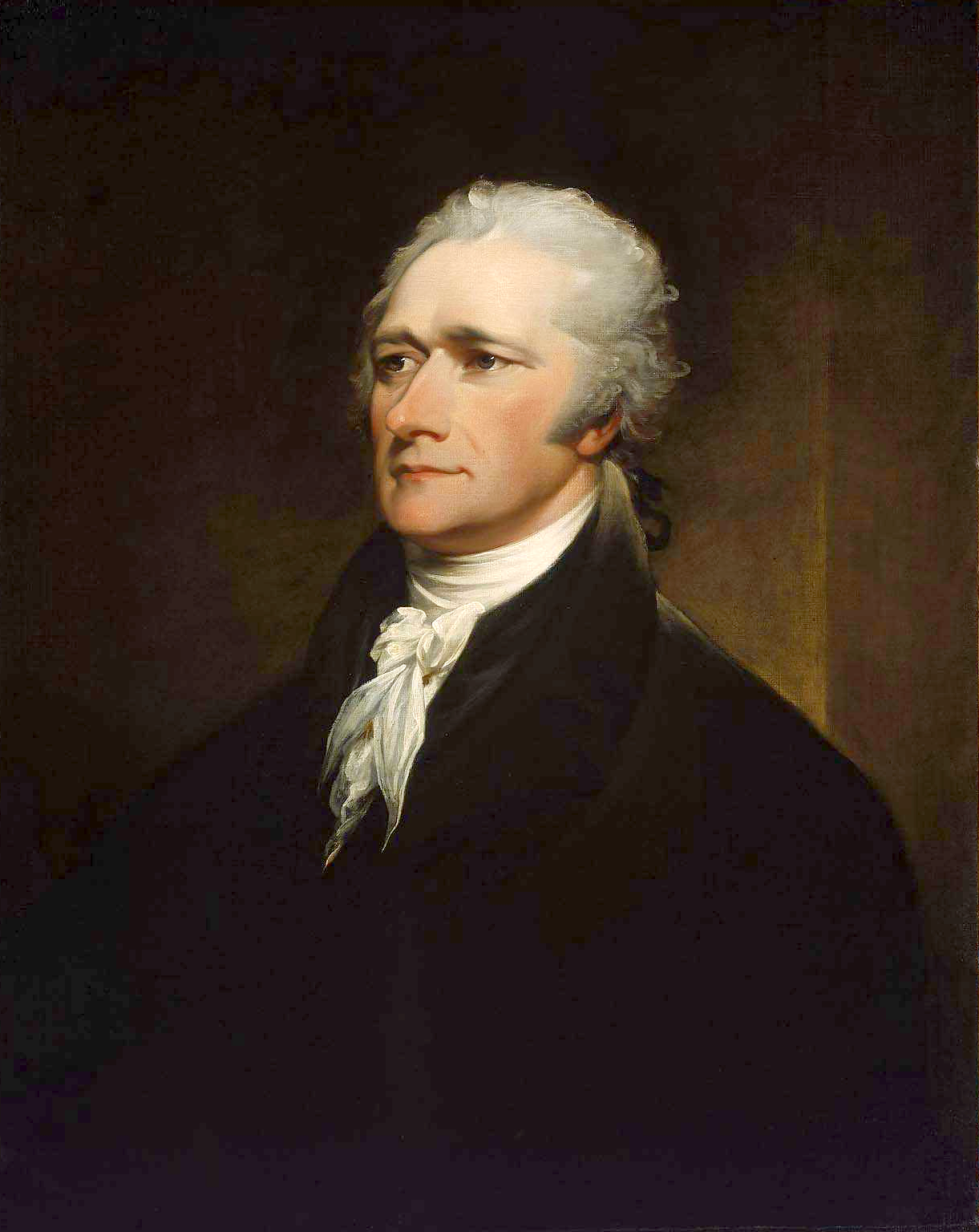
Alexander Hamilton, né le 11 janvier 1757 à Charlestown sur l'île de Niévès et mort le 12 juillet 1804 à New York , est un homme politique, financier, intellectuel et officier militaire américain.
Il fonda le parti fédéraliste. Juriste constitutionnaliste des plus brillants, il fut un délégué influent de la convention constitutionnelle américaine en 1787 et était l'auteur le plus éminent du Fédéraliste , recueil d'articles publié entre 1787-1788 et l'interprétation la plus importante jamais écrite sur la Constitution.
“Recherches philosophiques sur les Americains.”
Alexander Hamilton Le Fédéraliste
The Federalist Papers
Alexander Hamilton Le Fédéraliste
No. 30
The Federalist Papers (1787–1788)
Essay in the American Daily Advertiser (28 August 1794)
Farrand's Records of the Federal Convention, v. 1, p. 299. (June 19, 1787)
Debates of the Federal Convention (1787)
Alexander Hamilton Le Fédéraliste
No. 11
The Federalist Papers (1787–1788)
Alexander Hamilton Le Fédéraliste
No. 51
The Federalist Papers (1787–1788)
“I have thought it my duty to exhibit things as they are, not as they ought to be.”
Letter to Robert Morris (13 August 1782)
Alexander Hamilton Le Fédéraliste
No. 78
The Federalist Papers (1787–1788)
Alexander Hamilton Report on Manufactures
Report on Manufactures (1791)
Alexander Hamilton Le Fédéraliste
No. 33
The Federalist Papers (1787–1788)
Alexander Hamilton Le Fédéraliste
No. 84
The Federalist Papers (1787–1788)
Alexander Hamilton Le Fédéraliste
No. 75
The Federalist Papers (1787–1788)
It is said with us to be unattainable. All communities divide themselves into the few and the many. The first are the rich and well born, the other the mass of the people. The voice of the people has been said to be the voice of God; and however generally this maxim has been quoted and believed, it is not true in fact. The people are turbulent and changing; they seldom judge or determine right. Give therefore to the first class a distinct, permanent share in the government. They will check the unsteadiness of the second, and as they cannot receive any advantage by a change, they therefore will ever maintain good government. Can a democratic assembly, who annually revolve in the mass of the people, be supposed steadily to pursue the public good?
Farrand's Records of the Federal Convention, v. 1, p. 299. (June 19, 1787)
Debates of the Federal Convention (1787)
Alexander Hamilton Le Fédéraliste
No. 6
The Federalist Papers (1787–1788)


