

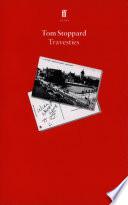
“We're actors — we're the opposite of people!”
Tom Stoppard book Rosencrantz and Guildenstern Are Dead
Source: Rosencrantz and Guildenstern Are Dead
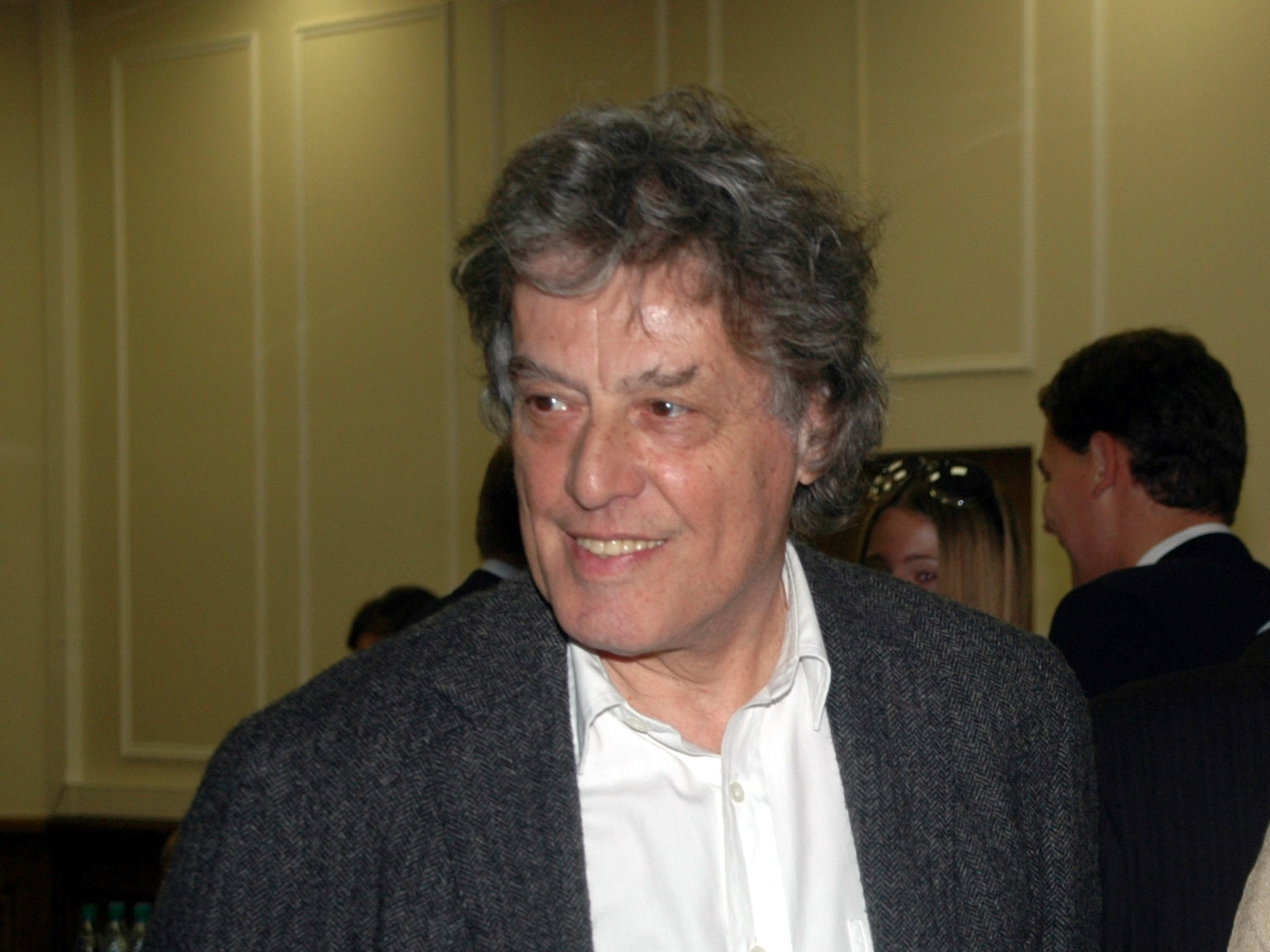
Sir Tom Stoppard is a Czech-born British playwright and screenwriter, knighted in 1997. He has written prolifically for TV, radio, film and stage, finding prominence with plays such as Arcadia, The Coast of Utopia, Every Good Boy Deserves Favour, Professional Foul, The Real Thing, and Rosencrantz and Guildenstern Are Dead. He co-wrote the screenplays for Brazil, The Russia House, and Shakespeare in Love, and has received one Academy Award and four Tony Awards. Themes of human rights, censorship and political freedom pervade his work along with exploration of linguistics and philosophy. Stoppard has been a key playwright of the National Theatre and is one of the most internationally performed dramatists of his generation. In 2008 The Daily Telegraph ranked him number 11 in their list of the "100 most powerful people in British culture".
Born in Czechoslovakia, Stoppard left as a child refugee, fleeing imminent Nazi occupation. He settled with his family in Britain after the war, in 1946, having spent the three years prior in a boarding school in Darjeeling in the Indian Himalayas. After being educated at schools in Nottingham and Yorkshire, Stoppard became a journalist, a drama critic and then, in 1960, a playwright. He has been married three times, to Josie Ingle , then Miriam Stoppard , and Sabrina Guinness .
“We're actors — we're the opposite of people!”
Tom Stoppard book Rosencrantz and Guildenstern Are Dead
Source: Rosencrantz and Guildenstern Are Dead
Tom Stoppard book Rosencrantz and Guildenstern Are Dead
Source: Rosencrantz and Guildenstern Are Dead
Source: Rosencrantz and Guildenstern are Dead
Tom Stoppard book Rosencrantz and Guildenstern Are Dead
Source: Rosencrantz and Guildenstern Are Dead
“Life is a gamble, at terrible odds. If it were a bet you wouldn’t take it.”
Source: Rosencrantz and Guildenstern are Dead
Misattributed
Source: Margaret Mead, quoted in "Growing Old in America: An Introduction with Margaret Mead" by Grace Hechinger, Family Circle (1977-07-26), p. 27.
Milne, Act I
Night and Day (1978)
“Eternity is a terrible thought. I mean, where's it going to end?”
Tom Stoppard book Rosencrantz and Guildenstern Are Dead
Source: Rosencrantz and Guildenstern Are Dead
Lady Croom, Act II
Source: Arcadia (1993)
The Coast of Utopia: Voyage (2002)
“An artist is the magician put among men to gratify — capriciously — their urge for immortality.”
Joyce, Act I
Stoppard called this "the most important" speech in the play.
Travesties (1974)
Context: An artist is the magician put among men to gratify — capriciously — their urge for immortality. The temples are built and brought down around him, continuously and contiguously, from Troy to the fields of Flanders. If there is any meaning in any of it, it is in what survives as art, yes even in the celebration of tyrants, yes even in the celebration of nonentities. What now of the Trojan War if it had been passed over by the artist's touch? Dust. A forgotten expedition prompted by Greek merchants looking for new markets. A minor redistribution of broken pots. But it is we who stand enriched, by a tale of heroes, of a golden apple, a wooden horse, a face that launched a thousand ships — and above all, of Ulysses, the wanderer, the most human, the most complete of all heroes — husband, father, son, lover, farmer, soldier, pacifist, politician, inventor and adventurer.
“Look on every exit as being an entrance somewhere else.”
Tom Stoppard book Rosencrantz and Guildenstern Are Dead
Source: Rosencrantz and Guildenstern Are Dead
Henry, Act II, scene V
Source: The Real Thing (1982)
Context: Buddy Holly was twenty-two. Think of what he might have gone on to achieve. I mean, if Beethoven had been killed in a plane crash at twenty-two, the history of music would have been very different. As would the history of aviation, of course.
“We are tied down to a language which makes up in obscurity what it lacks in style.”
Source: Rosencrantz and Guildenstern are Dead
Tom Stoppard book Rosencrantz and Guildenstern Are Dead
Source: Rosencrantz and Guildenstern Are Dead
“Words, words. They're all we have to go on.”
Tom Stoppard book Rosencrantz and Guildenstern Are Dead
Source: Rosencrantz and Guildenstern Are Dead
“Be happy -- if you're not even happy, what's so good about surviving?”
Tom Stoppard book Rosencrantz and Guildenstern Are Dead
Source: Rosencrantz and Guildenstern Are Dead
Tom Stoppard book Rosencrantz and Guildenstern Are Dead
Source: Rosencrantz and Guildenstern Are Dead
“What a fine persecution—to be kept intrigued without ever quite being enlightened.”
Tom Stoppard book Rosencrantz and Guildenstern Are Dead
Source: Rosencrantz and Guildenstern Are Dead
“It would have been nice to have had unicorns.”
Tom Stoppard book Rosencrantz and Guildenstern Are Dead
Source: Rosencrantz and Guildenstern Are Dead
“It’s not the voting that’s democracy, it’s the counting.”
Dotty, Act I
Source: Jumpers (1972)
“… reality, the name we give to the common experience.”
Source: Rosencrantz and Guildenstern are Dead
Source: Artist Descending a Staircase (1972)
“It's the wanting to know that makes us matter.”
Hannah, Act II.
Source: Arcadia (1993)
Tom Stoppard book Rosencrantz and Guildenstern Are Dead
Source: Rosencrantz and Guildenstern Are Dead
“For all the compasses in the world, there's only one direction, and time is its only measure.”
Tom Stoppard book Rosencrantz and Guildenstern Are Dead
Source: Rosencrantz and Guildenstern Are Dead
“Give us this day our daily mask.”
Tom Stoppard book Rosencrantz and Guildenstern Are Dead
Source: Rosencrantz and Guildenstern Are Dead
“Audiences know what to expect, and that is all that they are prepared to believe in.”
Tom Stoppard book Rosencrantz and Guildenstern Are Dead
Source: Rosencrantz and Guildenstern Are Dead
“Uncertainty is the normal state.”
Tom Stoppard book Rosencrantz and Guildenstern Are Dead
Source: Rosencrantz and Guildenstern Are Dead
“Faith may be defined briefly as an illogical belief in the occurrence of the improbable.”
1920s, Prejudices, Third Series (1922)
“Each move is dictated by the previous one--that is the meaning of order”
Tom Stoppard book Rosencrantz and Guildenstern Are Dead
Source: Rosencrantz and Guildenstern Are Dead
“You can't treat royalty like people with normal perverted desires.”
Tom Stoppard book Rosencrantz and Guildenstern Are Dead
Source: Rosencrantz and Guildenstern Are Dead
Tom Stoppard book Rosencrantz and Guildenstern Are Dead
Source: Rosencrantz and Guildenstern Are Dead
Carr, Act I
Source: Travesties (1974)
“Well, we'll know better next time.”
Tom Stoppard book Rosencrantz and Guildenstern Are Dead
Source: Rosencrantz and Guildenstern Are Dead
Tom Stoppard book Rosencrantz and Guildenstern Are Dead
Source: Rosencrantz and Guildenstern Are Dead
“Public postures have the configuration of private derangement.”
Henry, Act I, scene II
The Real Thing (1982)
Act I
Jumpers (1972)
"Tom Stoppard," profile by Kenneth Tynan, The New Yorker (1977-12-19).
Interviews and profiles
“If you carry your childhood with you, you never become older.”
Misattributed
Source: Abraham Sutzkever (born 1913), quoted in "Yiddish Poet Celebrates Life with His Language" by Joseph Berger, The New York Times (1985-03-17), Section 1, page 38.
Misattributed
Source: Hermann Weyl as quoted by Freeman Dyson: "Characteristic of Weyl was an aesthetic sense which dominated his thinking on all subjects. He once said to me, half-joking, 'My work always tried to unite the true with the beautiful; but when I had to choose one or the other, I usually chose the beautiful.'" - Freeman Dyson, "Obituary of Hermann Weyl," Nature (1956-03-10), pp. 457-458.


