

“If I got rid of my demons, I’d lose my angels.”
Source: Conversations with Tennessee Williams
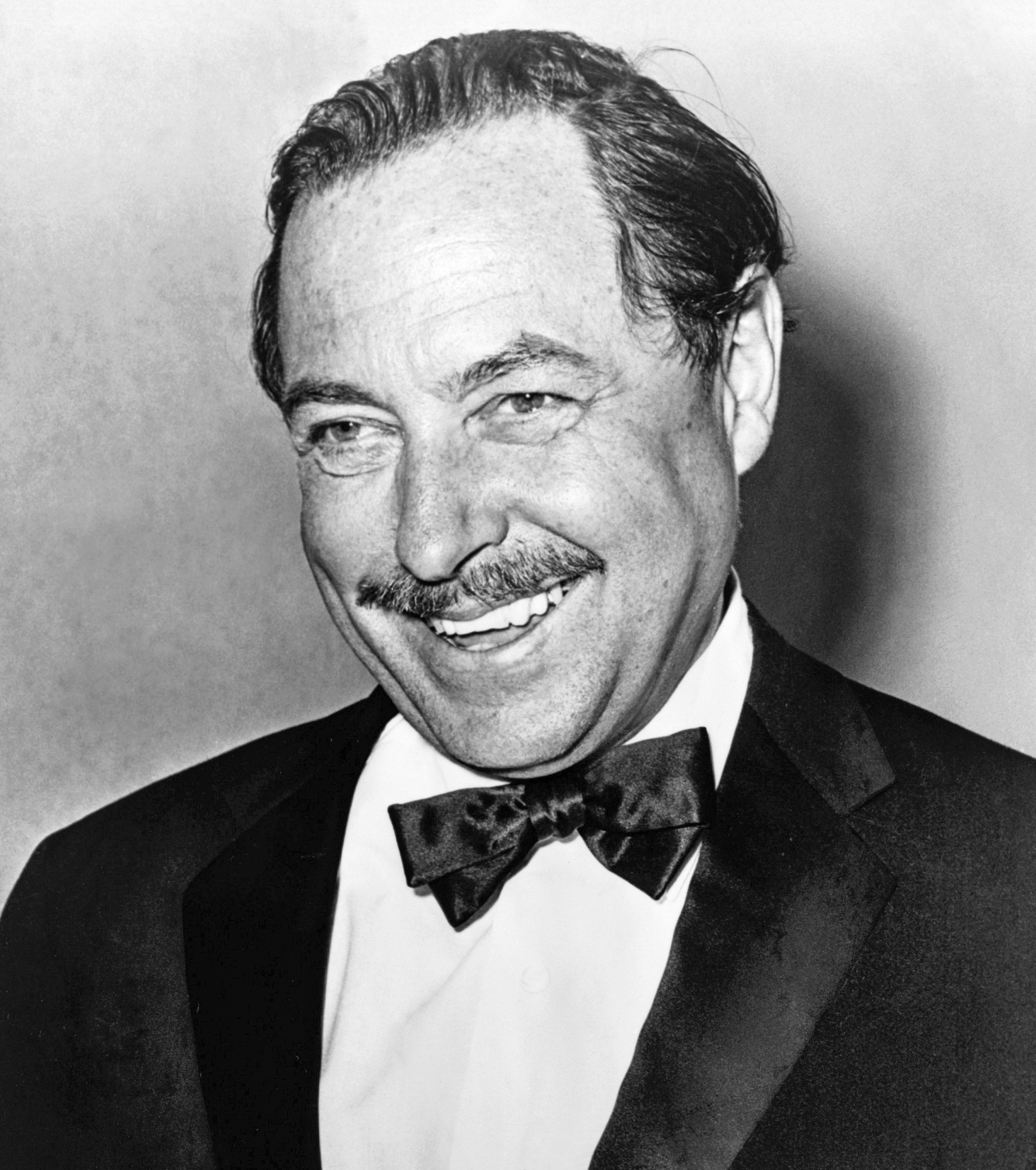
Thomas Lanier "Tennessee" Williams III was an American playwright. Along with Eugene O'Neill and Arthur Miller, he is considered among the three foremost playwrights of 20th-century American drama.
After years of obscurity, he became suddenly famous with The Glass Menagerie , a play that closely reflected his own unhappy family background. This heralded a string of successes, including A Streetcar Named Desire , Cat on a Hot Tin Roof , and Sweet Bird of Youth . His later work attempted a new style that did not appeal to audiences, and alcohol and drug dependence further inhibited his creative output. His drama A Streetcar Named Desire is often numbered on short lists of the finest American plays of the 20th century alongside Eugene O'Neill's Long Day's Journey into Night and Arthur Miller's Death of a Salesman.
Much of Williams' most acclaimed work was adapted for the cinema. He also wrote short stories, poetry, essays and a volume of memoirs. In 1979, four years before his death, Williams was inducted into the American Theater Hall of Fame.
“If I got rid of my demons, I’d lose my angels.”
Source: Conversations with Tennessee Williams
“A Prayer for the Wild at Heart That Are Kept in Cages”
Tennessee Williams Stairs to the Roof
This is the subtitle of the play
Source: Stairs to the Roof (1941)
“People go to the movies instead of moving!”
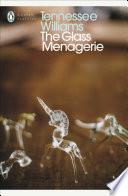
Tennessee Williams The Glass Menagerie
Tom, Scene Six
Source: The Glass Menagerie (1944)
Context: Yes, movies! Look at them — All of those glamorous people — having adventures — hogging it all, gobbling the whole thing up! You know what happens? People go to the movies instead of moving! Hollywood characters are supposed to have all the adventures for everybody in America, while everybody in America sits in a dark room and watches them have them! Yes, until there's a war. That's when adventure becomes available to the masses! Everyone's dish, not only Gable's! Then the people in the dark room come out of the dark room to have some adventures themselves — Goody, goody! — It's our turn now, to go to the south Sea Island — to make a safari — to be exotic, far-off! — But I'm not patient. I don't want to wait till then. I'm tired of the movies and I am about to move!
“All cruel people describe themselves as paragons of frankness.”
Tennessee Williams The Milk Train Doesn't Stop Here Anymore
The Milk Train Doesn't Stop Here Anymore (1963)
Quoted in "Tennessee Williams" in Profiles (1990) by Kenneth Tynan (first published as a magazine article in February 1956)
Tennessee Williams The Milk Train Doesn't Stop Here Anymore
Source: The Milk Train Doesn't Stop Here Anymore
“We're all of us sentenced to solitary confinement inside our own skins, for life.”
Tennessee Williams Orpheus Descending
Val ( Act 2, Scene 1 http://books.google.com/books?id=oOhF2S_tsIoC&q=%22We're+all+of+us+sentenced+to+solitary+confinement+inside+our+own+skins+for+life%22&pg=PA33#v=onepage) <br class="br">Orpheus Descending (1957)
“I'll be all right in a minute, I'm just bewildered - by life…”
Tennessee Williams The Glass Menagerie
Source: The Glass Menagerie
Tennessee Williams The Glass Menagerie
To vary that old, old saying a little bit — I married no planter! I married a man who worked for the telephone company!
Amanda, Scene Six
The Glass Menagerie (1944)
“I have always depended on the kindness of strangers.”
Tennessee Williams A Streetcar Named Desire
Source: A Streetcar Named Desire
“How beautiful it is and how easily it can be broken.”
Tennessee Williams The Glass Menagerie
Source: The Glass Menagerie
“In memory everything seems to happen to music.”
Tennessee Williams The Glass Menagerie
Tom (As Narrator Scene One)
Source: The Glass Menagerie (1944)
“All pretty girls are a trap, a pretty trap, and men expect them to be.”
Tennessee Williams The Glass Menagerie
Amanda, Scene Six
Source: The Glass Menagerie (1944)
Tennessee Williams Orpheus Descending
Source: "The Past, the Present and the Perhaps," http://books.google.com/books?id=mTRaAAAAMAAJ&q=%22The+future+is+called+perhaps+which+is+the+only+possible+thing+to+call+the+future+And+the+important+thing+is+not+to+allow+that+to+scare+you%22&pg=PA7#v=onepage introduction to Orpheus Descending (1957)
“When so many are lonely as seem to be lonely, it would be inexcusably selfish to be lonely alone.”
Tennessee Williams Camino Real
Don Quixote in Prologue
Variant: When so many are lonely as seem to be lonely, it would be inexcusably selfish to be lonely alone.
Source: Camino Real (1953)
Tennessee Williams The Milk Train Doesn't Stop Here Anymore
Christopher
Source: The Milk Train Doesn't Stop Here Anymore (1963)
Source: Cat on a Hot Tin Roof and Other Plays
Tennessee Williams The Glass Menagerie
Amanda, Scene One
The Glass Menagerie (1944)
Tennessee Williams A Streetcar Named Desire
Source: A Streetcar Named Desire
“I'm tired of the movies and I am about to move!”
Tennessee Williams The Glass Menagerie
Tom, Scene Six
The Glass Menagerie (1944)
Context: Yes, movies! Look at them — All of those glamorous people — having adventures — hogging it all, gobbling the whole thing up! You know what happens? People go to the movies instead of moving! Hollywood characters are supposed to have all the adventures for everybody in America, while everybody in America sits in a dark room and watches them have them! Yes, until there's a war. That's when adventure becomes available to the masses! Everyone's dish, not only Gable's! Then the people in the dark room come out of the dark room to have some adventures themselves — Goody, goody! — It's our turn now, to go to the south Sea Island — to make a safari — to be exotic, far-off! — But I'm not patient. I don't want to wait till then. I'm tired of the movies and I am about to move!
“Revolution only needs good dreamers who remember their dreams.”
Tennessee Williams Camino Real
Camino Real (1953)
Context: You said, "They're harmless dreamers and they're loved by the people." — "What," I asked you, "is harmless about a dreamer, and what," I asked you, "is harmless about the love of the people? — Revolution only needs good dreamers who remember their dreams."
“I think that moral earnestness is a good thing for any times, but particularly for these times.”
Program notes for a Pasadena Playhouse production of Stairs to the Roof (1947)
Context: When I look back at Stairs to the Roof... I see its faults very plainly, as plainly as you may see them, but still I do not feel apologetic about this play. Unskilled and awkward as I was at this initial period of my playwriting, I certainly had a moral earnestness which I cannot boast of today, and I think that moral earnestness is a good thing for any times, but particularly for these times. I wish I still had the idealistic passion of Benjamin Murphy! You may smile as I do at the sometimes sophomoric aspect of his excitement, but I hope you will respect, as I do, the purity of his feeling and the honest concern which he had in his heart for the basic problem of mankind, which is to dignify our lives with a certain freedom.
“Why you're not crippled, you just have a little defect — hardly noticeable, even!”
Tennessee Williams The Glass Menagerie
Amanda, Scene Two
The Glass Menagerie (1944)
Context: Why you're not crippled, you just have a little defect — hardly noticeable, even! When people have some slight disadvantage like that, they cultivate other things to make up for it — develop charm — and vivacity — and — charm!
“Make voyages. Attempt them. There's nothing else.”
Tennessee Williams Camino Real
Source: Camino Real
Tennessee Williams The Glass Menagerie
Tom, as Narrator, in Scene One
Source: The Glass Menagerie (1944)
“Deliberate cruelty is unforgivable.
--Blanche Dubois”
Source: Tennessee Williams's A Streetcar Named Desire
“I don't want realism. I want magic!”
Tennessee Williams A Streetcar Named Desire
Source: A Streetcar Named Desire
Tennessee Williams The Glass Menagerie
Variant: Memory takes a lot of poetic licence. It omits some details; others are exaggerated, according to the emotional value of the articles it touches, for memory is seated predominantly in the heart. The interior is therefore rather dim and poetic.
Source: The Glass Menagerie
“Oh, you can't describe someone you're in love with!”
Tennessee Williams A Streetcar Named Desire
Source: A Streetcar Named Desire
Tennessee Williams The Glass Menagerie
Tom, Scene Three
Source: The Glass Menagerie (1944)
“I'm not living with you. We occupy the same cage. (Maggie)”
Tennessee Williams Cat on a Hot Tin Roof
Source: Cat on a Hot Tin Roof
“Go, then! Go to the moon-you selfish dreamer!”
Tennessee Williams The Glass Menagerie
Source: The Glass Menagerie
“And funerals are pretty compared to deaths.”
Tennessee Williams A Streetcar Named Desire
Source: A Streetcar Named Desire
“Well, honey, a shot never does a coke any harm!”
Tennessee Williams A Streetcar Named Desire
Source: A Streetcar Named Desire
“Anything might have been anything else and had as much meaning to it.”
Source: Collected Stories
“I can't stand a naked light bulb, any more than I can a rude remark or a vulgar action.”
Tennessee Williams A Streetcar Named Desire
Source: A Streetcar Named Desire
“We've had this date with each other from the beginning.”
Tennessee Williams A Streetcar Named Desire
Source: A Streetcar Named Desire
“She lives in a world of her own – a world of – little glass ornaments…”
Tennessee Williams The Glass Menagerie
Source: The Glass Menagerie
“Never inside, I didn't lie in my heart…”
Tennessee Williams A Streetcar Named Desire
Source: A Streetcar Named Desire


