“When I discover who I am, I'll be free.”
Ralph Ellison book Invisible Man
Source: Invisible Man (1952), Chapter 11.
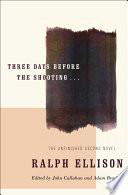
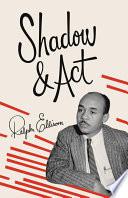
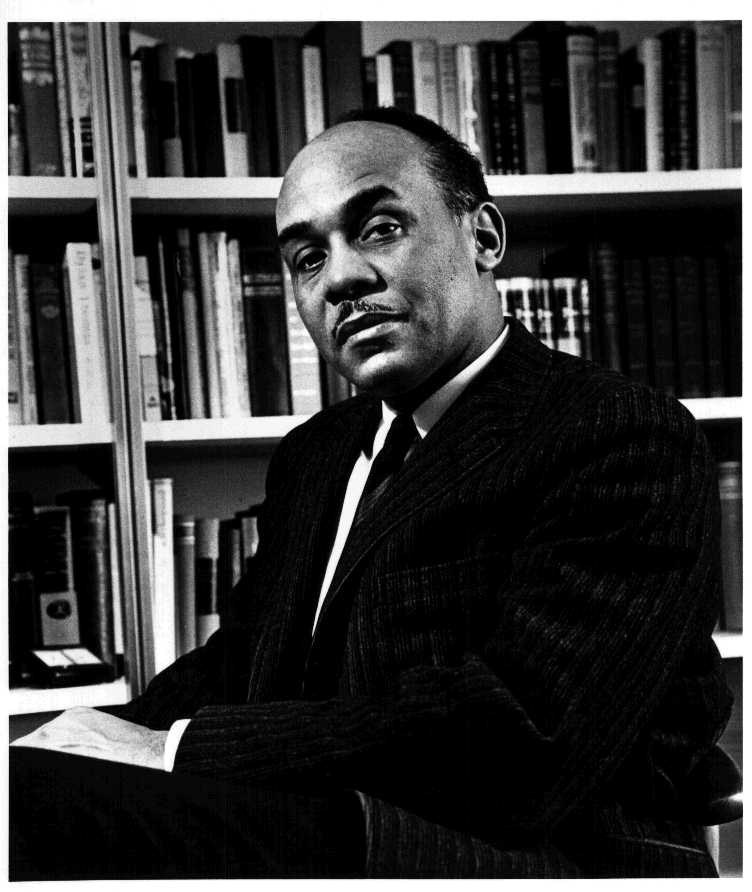
Ralph Waldo Ellison was an American novelist, literary critic, and scholar best known for his novel Invisible Man, which won the National Book Award in 1953. He also wrote Shadow and Act , a collection of political, social and critical essays, and Going to the Territory . For The New York Times, the best of these essays in addition to the novel put him "among the gods of America's literary Parnassus." A posthumous novel, Juneteenth, was published after being assembled from voluminous notes he left upon his death.
Wikipedia
“When I discover who I am, I'll be free.”
Ralph Ellison book Invisible Man
Source: Invisible Man (1952), Chapter 11.
“…the world is possibility if only you'll discover it.”
Ralph Ellison book Invisible Man
Source: Invisible Man (1952), Chapter 7.
Ralph Ellison book Invisible Man
Source: Invisible Man (1952), Chapter 13.
Ralph Ellison book Invisible Man
Source: Invisible Man (1952), Chapter 1.
Context: All my life I had been looking for something, and everywhere I turned someone tried to tell me what it was. I accepted their answers too, though they were often in contradiction and even self-contradictory. I was naïve. I was looking for myself and asking everyone except myself questions which I, and only I, could answer. It took me a long time and much painful boomeranging of my expectations to achieve a realization everyone else appears to have been born with: That I am nobody but myself.
“And I knew that it was better to live out one's own absurdity than to die for that of others.”
Ralph Ellison book Invisible Man
Variant: And I knew that it was better to live out one's own absurdity than to die for that of others.
Source: Invisible Man (1952), Chapter 25.
Ralph Ellison book Invisible Man
Epilogue.
Invisible Man (1952)
Ralph Ellison book Invisible Man
Epilogue.
Source: Invisible Man (1952)
"The Art of Fiction: An Interview" (The Paris Review, Spring 1955), in The Collected Essays, ed. John F. Callahan (New York: Modern Library, 1995), p. 217.
"Richard Wright's Blues" (1945), in The Collected Essays, ed. John F. Callahan (New York: Modern Library, 1995), p. 133.
“When American life is most American it is apt to be most theatrical.”
"Change the Joke and Slip the Yoke" (1958), in The Collected Essays, ed. John F. Callahan (New York: Modern Library, 1995), p. 108.
"Society, Morality and the Novel" (1957), in The Collected Essays, ed. John F. Callahan (New York: Modern Library, 1995), pp. 699-700.
Context: Perhaps the novel evolved in order to deal with man's growing awareness that behind the facade of social organisations, manners, customs, myths, rituals and religions of the post-Christian era lies chaos. Man knows, despite the certainties which it is the psychological function of his social institutions to give him, that he did not create the universe, and that the universe is not at all concerned with human values. Man knows that even in this day of marvelous technology and the tenuous subjugation of the atom, that nature can crush him, and that at the boundaries of human order the arts and the instruments of technology are hardly more than magic objects which serve to aid us in our ceaseless quest for certainty. We cannot live, as someone has said, in the contemplation of chaos, but neither can we live without an awareness of chaos, and the means through which we achieve that awareness, and through which we assert our humanity most significantly against it, is in great art. In our time the most articulate art form for defining ourselves and for asserting our humanity is the novel. Certainly it is our most rational art form for dealing with the irrational.
"What These Children Are Like" (1963), in The Collected Essays, ed. John F. Callahan (New York: Modern Library, 1995), p. 548.
Ralph Ellison book Invisible Man
Source: Invisible Man (1952), Chapter 1.
Context: I never told you, but our life is a war and I have been a traitor all my born days, a spy in the enemy’s country ever since I give up my gun back in the Reconstruction. Live with your head in the lion’s mouth. I want you to overcome ‘em with yeses, undermine ‘em with grins, agree ‘em to death and destruction, let ‘em swoller you till they vomit or bust wide open...
"Society, Morality and the Novel" (1957), in The Collected Essays, ed. John F. Callahan (New York: Modern Library, 1995), pp. 699-700.
Context: Perhaps the novel evolved in order to deal with man's growing awareness that behind the facade of social organisations, manners, customs, myths, rituals and religions of the post-Christian era lies chaos. Man knows, despite the certainties which it is the psychological function of his social institutions to give him, that he did not create the universe, and that the universe is not at all concerned with human values. Man knows that even in this day of marvelous technology and the tenuous subjugation of the atom, that nature can crush him, and that at the boundaries of human order the arts and the instruments of technology are hardly more than magic objects which serve to aid us in our ceaseless quest for certainty. We cannot live, as someone has said, in the contemplation of chaos, but neither can we live without an awareness of chaos, and the means through which we achieve that awareness, and through which we assert our humanity most significantly against it, is in great art. In our time the most articulate art form for defining ourselves and for asserting our humanity is the novel. Certainly it is our most rational art form for dealing with the irrational.
“Responsibility rests upon recognition, and recognition is a form of agreement.”
Ralph Ellison book Invisible Man
Prologue.
Invisible Man (1952)
Context: I am one of the most irresponsible beings that ever lived. Irresponsibility is part of my invisibility; any way you face it, it is a denial. But to whom can I be responsible, and why should I be, when you refuse to see me? And wait until I reveal how truly irresponsible I am. Responsibility rests upon recognition, and recognition is a form of agreement.
“And my problem was that I always tried to go in everyone's way but my own.”
Ralph Ellison book Invisible Man
Source: Invisible Man
“Who knows but that, on the lower frequencies, I speak for you?”
Ralph Ellison book Invisible Man
Epilogue (last line of the novel).
Source: Invisible Man (1952)
“I do not know if all cops are poets, but I know that all cops carry guns with triggers.”
Ralph Ellison book Invisible Man
Source: Invisible Man (1952), Chapter 21.
“Good fiction is made of that which is real, and reality is difficult to come by.”
Ralph Ellison book Shadow and Act
Shadow and Act (New York: Random House, 1964), Introduction, p. xix; in The Collected Essays, ed. John F. Callahan (New York: Modern Library, 1995), p. 56.
“We look too much to museums. The sun coming up in the morning is enough.”
Ralph Ellison book Shadow and Act
Source: Shadow and Act
“…the end is in the beginning and lies far ahead.”
Ralph Ellison book Invisible Man
Prologue.
Invisible Man (1952)
“A hibernation is a covert preparation for a more overt action.”
Ralph Ellison book Invisible Man
Prologue.
Source: Invisible Man (1952)
Ralph Ellison book Invisible Man
Source: Invisible Man (1952), Chapter 1.
“They could laugh at him but they couldn't ignore him”
Ralph Ellison book Invisible Man
Source: Invisible Man
Ralph Ellison book Invisible Man
Source: Invisible Man (1952), Chapter 17.
Ralph Ellison book Shadow and Act
Shadow and Act (New York: Random House, 1964), Introduction, p. xix; in The Collected Essays, ed. John F. Callahan (New York: Modern Library, 1995), p. 56.
“And yet I am what they think I am.”
Ralph Ellison book Invisible Man
Source: Invisible Man (1952), Chapter 17.
Ralph Ellison book Invisible Man
Source: Invisible Man (1952), Chapter 14.
“The work of art is, after all, an act of faith in our ability to communicate symbolically.”
"The Little Man at Chehaw Station" (1978), in The Collected Essays, ed. John F. Callahan (New York: Modern Library, 1995), p. 503.
Ralph Ellison book Invisible Man
Source: Invisible Man (1952), Chapter 3.
“…to hell with being ashamed of what you liked.”
Ralph Ellison book Invisible Man
Source: Invisible Man (1952), Chapter 13.
"The Essential Ellison", interview by Ishmael Reed in Y'Bird 1, no. 1 (1978): 130-59.
"Brave Words for a Startling Occasion" (1953), in The Collected Essays, ed. John F. Callahan (New York: Modern Library, 1995), p. 154.
"Address to the Harvard College Alumni, Class of 1949" (1974), in The Collected Essays, ed. John F. Callahan (New York: Modern Library, 1995), p. 429.
"The Art of Fiction: An Interview" (The Paris Review, Spring 1955), in The Collected Essays, ed. John F. Callahan (New York: Modern Library, 1995), p. 212.
“…there's always an element of crime in freedom.”
Ralph Ellison book Invisible Man
Source: Invisible Man (1952), Chapter 7.
“The truth is the light and light is the truth.”
Ralph Ellison book Invisible Man
Prologue.
Invisible Man (1952)
"The Golden Age, Time Past" (1959), in The Collected Essays, ed. John F. Callahan (New York: Modern Library, 1995), p. 239.
Ralph Ellison book Three Days Before the Shooting...
Source: Three Days Before the Shooting... (2010), pp. 680-1.
"What These Children Are Like" (1963), in The Collected Essays, ed. John F. Callahan (New York: Modern Library, 1995), p. 555.
Ralph Ellison book Three Days Before the Shooting...
Source: Three Days Before the Shooting... (2010), p. 418.
"Twentieth-Century Fiction and the Black Mask of Humanity" (1953), in The Collected Essays, ed. John F. Callahan (New York: Modern Library, 1995), p. 81.
Ralph Ellison book Invisible Man
Prologue.
Invisible Man (1952)
"Some Questions and Some Answers" (1958), in The Collected Essays, ed. John F. Callahan (New York: Modern Library, 1995), p. 298.
"The Art of Fiction: An Interview" (The Paris Review, Spring 1955), in The Collected Essays, ed. John F. Callahan (New York: Modern Library, 1995), p. 218.
“Whence all this passion toward conformity anyway?—diversity is the word.”
Ralph Ellison book Invisible Man
Epilogue.
Invisible Man (1952)
"Brave Words for a Startling Occasion" (1953), in The Collected Essays, ed. John F. Callahan (New York: Modern Library, 1995), p. 153.
“Words are everything and don't you forget it, ever.”
Ralph Ellison book Three Days Before the Shooting...
Source: Three Days Before the Shooting... (2010), p. 251.
Ralph Ellison book Invisible Man
Source: Invisible Man (1952), Chapter 12.
“Play the game, but don't believe in it.”
Ralph Ellison book Invisible Man
Source: Invisible Man (1952), Chapter 7.
“Injustice wears ever the same harsh face wherever it shows itself.”
"If the Twain Shall Meet" (1964), inThe Collected Essays, ed. John F. Callahan (New York: Modern Library, 1995), p. 569.


