“The silence of a wise man is always meaningful.”
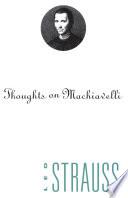
Leo Strauss book Thoughts on Machiavelli
Source: Thoughts on Machiavelli (1958), p. 30
Leo Strauss was a German-American political philosopher and classicist who specialized in classical political philosophy. He was born in Germany to Jewish parents and later emigrated from Germany to the United States. He spent most of his career as a professor of political science at the University of Chicago, where he taught several generations of students and published fifteen books.
Originally trained in the neo-Kantian tradition with Ernst Cassirer and immersed in the work of the phenomenologists Edmund Husserl and Martin Heidegger, Strauss later focused his research on the Greek texts of Plato and Aristotle, retracing their interpretation through medieval Islamic and Jewish philosophy and encouraging the application of those ideas to contemporary political theory.
“The silence of a wise man is always meaningful.”
Leo Strauss book Thoughts on Machiavelli
Source: Thoughts on Machiavelli (1958), p. 30
Jewish Philosophy and the crisis of Modernity : Essays And Lectures in Modern Jewish Thought, p. 327 (1997)
“What is liberal education,” p. 3
Liberalism Ancient and Modern (1968)
Commenting upon the Aleinu prayer, in "Why We Remain Jews" (1962)
Context: The kingdom is Yours, and You will reign in glory for all eternity. As it is written in Your Torah: "The Lord shall reign for ever and ever." And it is said: " And the Lord shall be King over all the earth: on that day the Lord shall be One, and His name One."
No nobler dream was ever dreamt. It is surely nobler to be a victim of the most noble dream than to profit from a sordid reality and to wallow in it. Dream is akin to aspiration. And aspiration is a kind of divination of an enigmatic vision. And an enigmatic vision in the emphatic sense is the perception of the ultimate mystery, of the truth of the ultimate mystery. The truth of the ultimate mystery — the truth that there is an ultimate mystery, that being is radically mysterious — cannot be denied even by the unbelieving Jew of our age. That unbelieving Jew of our age, if he has any education, is ordinarily a positivist, a believer in Science, if not a positivist without any education.
“All political action is then guided by some thought of better or worse.”
"What Is Political Philosophy" in The Journal of Politics, 19(3) (Aug. 1957) by the Southern Political Science Association, p. 343
Context: All political action aims at either preservation or change. When desiring to preserve, we wish to prevent a change for the worse; when desiring to change, we wish to bring about something better. All political action is then guided by some thought of better or worse.
"Why We Remain Jews" (1962)
Context: Science, as the positivist understands it, is susceptible of infinite progress. That you learn in every elementary school today, I believe. Every result of science is provisional and subject to future revision, and this will never change. In other words, fifty thousand years from now there will still be results entirely different from those now, but still subject to revision. Science is susceptible of infinite progress. But how can science be susceptible of infinite progress if its object does not have an inner infinity? The belief admitted by all believers in science today — that science is by its nature essentially progressive, and eternally progressive — implies, without saying it, that being is mysterious. And here is the point where the two lines I have tried to trace do not meet exactly, but where they come within hailing distance. And, I believe, to expect more in a general way, of people in general, would be unreasonable.
"Note on the Plan of Nietzsche's Beyond Good and Evil", Interpretation: A Journal of Political Philosophy 3, nos. 2 and 3 (1973)
Source: Liberalism Ancient and Modern (1968), p. 223
Context: Only a great fool would call the new political science diabolic: it has no attributes peculiar to fallen angels. It is not even Machiavellian, for Machiavelli's teaching was graceful, subtle, and colorful. Nor is it Neronian. Nevertheless one may say of it that it fiddles while Rome burns. It is excused by two facts: it does not know that it fiddles, and it does not know that Rome burns.
Source: Natural Right and History (1953), p. 75
Context: Philosophy has to grant that revelation is possible. But to grant that revelation is possible means to grant that philosophy is perhaps something infinitely unimportant. To grant that revelation is possible means to grant that the philosophic life is not necessarily, not evidently, the right life. Philosophy, the life devoted to the quest for evident knowledge available to man as man, would itself rest on an unevident, arbitrary, or blind decision. This would merely confirm the thesis of faith, that there is no possibility of consistency, of a consistent and thoroughly sincere life, without belief in revelation. The mere fact that philosophy and revelation cannot refute each other would constitute the refutation of philosophy by revelation.
“All political action aims at either preservation or change.”
"What Is Political Philosophy" in The Journal of Politics, 19(3) (Aug. 1957) by the Southern Political Science Association, p. 343
Context: All political action aims at either preservation or change. When desiring to preserve, we wish to prevent a change for the worse; when desiring to change, we wish to bring about something better. All political action is then guided by some thought of better or worse.
“What is liberal education,” pp. 4-5
Liberalism Ancient and Modern (1968)
Context: It was once said that democracy is the regime that stands or falls by virtue: a democracy is a regime in which all or most adults are men of virtue, and since virtue seems to require wisdom, a regime in which all or most adults are virtuous and wise, or the society in which all or most adults have developed their reason to a high degree, or the rational society. Democracy, in a word, is meant to be an aristocracy which has broadened into a universal aristocracy. … There exists a whole science—the science which I among thousands of others profess to teach, political science—which so to speak has no other theme than the contrast between the original conception of democracy, or what one may call the ideal of democracy, and democracy as it is. … Liberal education is the ladder by which we try to ascend from mass democracy to democracy as originally meant.
Commenting upon the Aleinu prayer, in "Why We Remain Jews" (1962)
Context: The kingdom is Yours, and You will reign in glory for all eternity. As it is written in Your Torah: "The Lord shall reign for ever and ever." And it is said: " And the Lord shall be King over all the earth: on that day the Lord shall be One, and His name One."
No nobler dream was ever dreamt. It is surely nobler to be a victim of the most noble dream than to profit from a sordid reality and to wallow in it. Dream is akin to aspiration. And aspiration is a kind of divination of an enigmatic vision. And an enigmatic vision in the emphatic sense is the perception of the ultimate mystery, of the truth of the ultimate mystery. The truth of the ultimate mystery — the truth that there is an ultimate mystery, that being is radically mysterious — cannot be denied even by the unbelieving Jew of our age. That unbelieving Jew of our age, if he has any education, is ordinarily a positivist, a believer in Science, if not a positivist without any education.
Athens and Jerusalem : Some Preliminary Reflections in Studies in Platonic Political Philosophy (1985), p. 149
Source: What is Political Philosophy (1959), p. 40
Context: Men are constantly attracted and deluded by two opposite charms: the charm of competence which is engendered by mathematics and everything akin to mathematics, and the charm of humble awe, which is engendered by meditation on the human soul and its experiences. Philosophy is characterized by the gentle, if firm, refusal to succumb to either charm. It is the highest form of the mating of courage and moderation. In spite of its highness or nobility, it could appear as Sisyphean or ugly, when one contrasts its achievement with its goal. Yet it is necessarily accompanied, sustained and elevated by eros. It is graced by nature's grace.
Source: Liberalism Ancient and Modern (1968), p. 225
Context: It is safer to try to understand the low in the light of the high than the high in the light of the low. In doing the latter one necessarily distorts the high, whereas in doing the former one does not deprive the low of the freedom to reveal itself as fully as what it is.
Source: Liberalism Ancient and Modern (1968), p. 223
Context: Only a great fool would call the new political science diabolic: it has no attributes peculiar to fallen angels. It is not even Machiavellian, for Machiavelli's teaching was graceful, subtle, and colorful. Nor is it Neronian. Nevertheless one may say of it that it fiddles while Rome burns. It is excused by two facts: it does not know that it fiddles, and it does not know that Rome burns.
Source: What is Political Philosophy (1959), p. 68
“What is liberal education,” p. 5
Liberalism Ancient and Modern (1968)
Source: Natural Right and History (1953), p. 6
Source: Natural Right and History (1953), p. 36
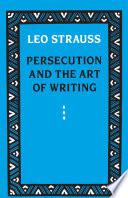
Leo Strauss book Persecution and the Art of Writing
Persecution and the Art of Writing (1952), Introduction
Source: Natural Right and History (1953), p. 86
Source: What is Political Philosophy (1959), p. 73
Attributed to Strauss at many sites on the internet, this is actually Norman Maclean, in A River Runs Through It (1976)
Misattributed
Source: Natural Right and History (1953), p. 31
Source: Natural Right and History (1953), p. 4
“Life is too short to live with any but the greatest books.”
“What is liberal education,” p. 6
Liberalism Ancient and Modern (1968)
Leo Strauss book Thoughts on Machiavelli
Source: Thoughts on Machiavelli (1958), p. 49
Leo Strauss book Persecution and the Art of Writing
Source: Persecution and the Art of Writing (1952), Persecution and the Art of Writing, p. 25
Leo Strauss book Thoughts on Machiavelli
Source: Thoughts on Machiavelli (1958), p. 13
Philosophy as Rigorous Science and Political Philosophy (1971)
“What is liberal education,” p. 8
Liberalism Ancient and Modern (1968)
“The Euthyphron is a very paradoxical dialogue. So indeed is every Platonic dialogue.”
An Untitled Lecture on Plato's Euthyphron (1996)
Source: Natural Right and History (1953), p. 137
Philosophy as Rigorous Science and Political Philosophy (1971)
“What is liberal education,” pp. 7-8
Liberalism Ancient and Modern (1968)
Preface
Spinoza's Critique of Religion (1965)
"Niccolo Machiavelli" (1987)
Source: What is Political Philosophy (1959), p. 23
“What is liberal education,” p. 8
Liberalism Ancient and Modern (1968)
“What is liberal education,” p. 8
Liberalism Ancient and Modern (1968)
“What is liberal education,” p. 5 [The phrase “specialists without spirit or vision and voluptuaries without heart.” is from Max Weber]
Liberalism Ancient and Modern (1968)
Seminar on Nietzsche's Beyond Good and Evil (1971–1972)
“We believe that failing to call a spade a spade is not scientific.”
Leo Strauss book Thoughts on Machiavelli
Source: Thoughts on Machiavelli (1958), p. 50
Leo Strauss book Persecution and the Art of Writing
Source: Persecution and the Art of Writing (1952), Persecution and the Art of Writing, p. 36
Source: What is Political Philosophy (1959), p. 77
Source: Natural Right and History (1953), p. 26
“What is liberal education,” p. 8
Liberalism Ancient and Modern (1968)
Philosophy as Rigorous Science and Political Philosophy (1971)
Source: What is Political Philosophy (1959), p. 73
Leo Strauss book Persecution and the Art of Writing
Persecution and the Art of Writing (1952), Introduction
Source: What is Political Philosophy (1959), p. 91
“Philosophizing means, then, to ascend from public dogma to essentially private knowledge.”
Source: Natural Right and History (1953), p. 12


