Works
Church Dogmatics
Karl Barth
The Epistle to the Romans
Karl BarthChurch Dogmatics
Karl BarthThe Epistle to the Romans
Karl BarthFamous Karl Barth Quotes
This is paraphrased in "Karl Barth's Conception of God" (1952) http://mlk-kpp01.stanford.edu/primarydocuments/Vol2/520102BarthsConceptionOfGod.pdf by Martin Luther King, Jr.: God is the one who stands above our highest and deepest feelings, strivings and intuitions. <br class="br">Dogmatics in Outline (1949) <br class="br">Context: He is the One who stands above us and also above our highest and deepest feelings, strivings, intuitions, above the products, even the most sublime, of the human spirit. God in the highest means first of all … He who is in no way established in us, in no way corresponds to a human disposition and possibility, but who is in every sense established simply in Himself and is real in that way; and who is manifest and made manifest to us men, not because of our seeking and finding, feeling and thinking, but again and again, only through Himself. It is this God in the highest who has turned as such to man, given Himself to man, made Himself knowable to him … God in the highest, in the sense of the Christian Confession, means He who from on high has condescended to us, has come to us, has become ours.<!-- p. 37
The Knowledge of God and the Service of God (1939), p. 31
“Prayer without study would be empty. Study without prayer would be blind.”
Source: Evangelical Theology: An Introduction
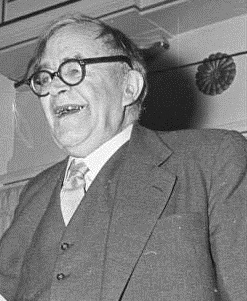
“Laughter is the closest thing to the grace of God.”
As quoted in The Harper Book of Quotations (1993) by Robert I. Fitzhenry, p. 223.
Karl Barth Quotes about God
Karl Barth book The Epistle to the Romans
The Epistle to the Romans (1918; 1921)
"Witness to an Ancient Truth" (1962)
Karl Barth book Church Dogmatics
2:1
Church Dogmatics (1932–1968)
Karl Barth book Church Dogmatics
2:1
Church Dogmatics (1932–1968)
Karl Barth: Trending quotes
Karl Barth book The Epistle to the Romans
The Epistle to the Romans (1918; 1921)
Context: We know that God is He whom we do not know, and that our ignorance is precisely the problem and the source of our knowledge. The Epistle to the Romans is a revelation of the unknown God; God chooses to come to man, not man to God. Even after the revelation man cannot know God, for he is ever the unknown God. In manifesting himself to man he is farther away than before. <!-- p. 48
Karl Barth book Church Dogmatics
2:2 <!-- p. 317 -->
Paraphrased variant: Man can certainly flee from God... but he cannot escape him. He can certainly hate God and be hateful to God … but he cannot change into its opposite the eternal love of God which triumphs even in his hate.
Quoted in Simpson's Contemporary Quotations (1998) by James Beasley Simpson.
Church Dogmatics (1932–1968)
Context: Man can certainly keep on lying (and he does so); but he cannot make truth falsehood. He can certainly rebel (he does so); but he can accomplish nothing which abolishes the choice of God. He can certainly flee from God (he does so); but he cannot escape Him. He can certainly hate God and be hateful to God (he does and is so); but he cannot change into its opposite the eternal love of God which triumphs even in His hate. He can certainly give himself to isolation (he does so — he thinks, wills and behaves godlessly, and is godless); but even in his isolation he must demonstrate that which he wishes to controvert — the impossibility of playing the "individual" over against God. He may let go of God, but God does not let go of him.
Karl Barth Quotes
Karl Barth book The Epistle to the Romans
The Epistle to the Romans (1918; 1921)
Context: The Resurrection is the revelation: the disclosing of Jesus as the Christ, the appearing of God, and the apprehending of God in Jesus. The Resurrection is the emergence of the necessity of giving glory to God: the reckoning with what is unknown and unobservable in Jesus, the recognition of Him as Paradox, Victor and Primal History. In the Resurrection the new world of the Holy Spirit touches the old world of the flesh, but touches it as a tangent touches a circle, that is, without touching it. And, precisely because it does not touch it, it touches it as its frontier — as the new world.<!-- p. 29
“Eternity is here (in the stable at Bethlehem and on the cross of Calvary) in time.”
The Knowledge of God and the Service of God (1939), p. 78
Karl Barth book The Epistle to the Romans
The Epistle to the Romans (1918; 1921)
Context: The name Jesus defines an historical occurence and marks the point where the unknown world cuts the known world... as Christ Jesus is the plane which lies beyond our comprehension. The plane which is known to us, He intersects vertically, from above. Within history Jesus as the Christ can be understood only as Problem or Myth. As the Christ He brings the world of the Father. But we who stand in this concrete world know nothing, and are incapable of knowing anything, of that other world. The Resurrection from the dead is, however, the transformation: the establishing or declaration of that point from above, and the corresponding discerning of it below. <!-- p. 29
Karl Barth book Church Dogmatics
2:2 <!-- p. 625 -->
Church Dogmatics (1932–1968)
Context: The saving of anyone is something which is not in the power of man, but only of God. No one can be saved — in virtue of what he can do. Everyone can be saved — in virtue of what God can do. The divine claim takes the form that it puts both the obedient and the disobedient together and compels them to realise this, to recognise their common status in face of the commanding God.
Karl Barth book Church Dogmatics
2:1 <!-- p. 661 -->
Church Dogmatics (1932–1968)
Context: We are now assuming that we have here the centre and goal of all God's works, and therefore the hidden beginning of them all. We are also assuming that the prominent place occupied by this divine work has something corresponding to it in the essence of God, that the Son forms the centre of the Trinity, and that the essence of the divine being has, so to speak, its locus … in His work, in the name and person of Jesus Christ.
Karl Barth book The Epistle to the Romans
The Epistle to the Romans (1918; 1921)
Context: The revelation in Jesus, just because it is the revelation of the righteousness of God is at the same time the strongest conceivable veiling and unknowableness of God. In Jesus, God really becomes a mystery, makes himself known as the unknown, speaks as the eternally Silent One.<!-- p. 73
Karl Barth book The Epistle to the Romans
The Epistle to the Romans (1918; 1921)
Context: The known plane is God's creation, fallen out of its union with Him, and therefore the world of the flesh needing redemption, the world of men, and of time, and of things — our world. This known plane is intersected by another plane that is unknown — the world of the Father, of the Primal Creation, and of the final Redemption. The relation between us and God, between this world and His world presses for recognition, but the line of intersection is not self-evident. <!-- p. 29
Karl Barth book The Epistle to the Romans
The Epistle to the Romans (1918; 1921)
Context: The known plane is God's creation, fallen out of its union with Him, and therefore the world of the flesh needing redemption, the world of men, and of time, and of things — our world. This known plane is intersected by another plane that is unknown — the world of the Father, of the Primal Creation, and of the final Redemption. The relation between us and God, between this world and His world presses for recognition, but the line of intersection is not self-evident. <!-- p. 29
Karl Barth book The Epistle to the Romans
Source: The Epistle to the Romans (1918; 1921), p. 28
Karl Barth book Church Dogmatics
4:4 <!-- p. 150 -->
Church Dogmatics (1932–1968)
Context: Since Jesus Christ is a servant, looking to Him cannot mean looking away from the world, from men, from life, or, as is often said, from oneself. It cannot mean looking away into some distance or height. To look to Him is to see Him at the very centre, to see Him and the history which, accomplished in Him, heals everything and all things, as the mystery, reality, origin and goal of the whole world, all men, all life. To look to Him is to cleave to Him as the One who bears away the sin of the world. It is to be bound and liberated, claimed, consoled, cheered and ruled by Him.
This is paraphrased in "Karl Barth's Conception of God" (1952) http://mlk-kpp01.stanford.edu/primarydocuments/Vol2/520102BarthsConceptionOfGod.pdf by Martin Luther King, Jr.: God is the one who stands above our highest and deepest feelings, strivings and intuitions. <br class="br">Dogmatics in Outline (1949) <br class="br">Context: He is the One who stands above us and also above our highest and deepest feelings, strivings, intuitions, above the products, even the most sublime, of the human spirit. God in the highest means first of all … He who is in no way established in us, in no way corresponds to a human disposition and possibility, but who is in every sense established simply in Himself and is real in that way; and who is manifest and made manifest to us men, not because of our seeking and finding, feeling and thinking, but again and again, only through Himself. It is this God in the highest who has turned as such to man, given Himself to man, made Himself knowable to him … God in the highest, in the sense of the Christian Confession, means He who from on high has condescended to us, has come to us, has become ours.<!-- p. 37
"The Righteousness of God" (1916) in The Word of God and the Word of Man (1928) as translated by Douglas Horton; this passage begins with a quote of Isaiah 40:3-5; often quoted alone has been the phrase following it: "Conscience is the perfect interpreter of life."
Context: "The voice of him that crieth in the wilderness, Prepare ye the way of the Lord, make straight in the desert a highway for our God. Every valley shall be exalted, and every mountain and hill shall be made low: and the crooked shall be made straight, and the rough places plain: And the glory of the Lord shall be revealed!" This is the voice of our conscience, telling us of the righteousness of God. And since conscience is the perfect interpreter of life, what it tells us is no question, no riddle, no problem, but a fact — the deepest, innermost, surest fact of life: God is righteous. Our only question is what attitude toward the fact we ought to take.
We shall hardly approach the fact with our critical reason. The reason sees the small and the larger but not the large. It sees the preliminary, but not the final, the derived but not the original, the complex but not the simple. It sees what is human but not what is divine.
We shall hardly be taught this fact by men.
The Word of God and the Word of Man (1928)
Context: Our Yes towards life from the very beginning carries within it the Divine No which breaks forth from the antithesis and points away from what now was the thesis to the original and final synthesis. The No is not the last and highest truth, but the call from home which comes in answer to our asking for God in the world.<!-- p. 312
"The Righteousness of God" (1916) in The Word of God and the Word of Man (1928) as translated by Douglas Horton; this passage begins with a quote of Isaiah 40:3-5; often quoted alone has been the phrase following it: "Conscience is the perfect interpreter of life."
Context: "The voice of him that crieth in the wilderness, Prepare ye the way of the Lord, make straight in the desert a highway for our God. Every valley shall be exalted, and every mountain and hill shall be made low: and the crooked shall be made straight, and the rough places plain: And the glory of the Lord shall be revealed!" This is the voice of our conscience, telling us of the righteousness of God. And since conscience is the perfect interpreter of life, what it tells us is no question, no riddle, no problem, but a fact — the deepest, innermost, surest fact of life: God is righteous. Our only question is what attitude toward the fact we ought to take.
We shall hardly approach the fact with our critical reason. The reason sees the small and the larger but not the large. It sees the preliminary, but not the final, the derived but not the original, the complex but not the simple. It sees what is human but not what is divine.
We shall hardly be taught this fact by men.
“He may let go of God, but God does not let go of him.”
Karl Barth book Church Dogmatics
2:2 <!-- p. 317 -->
Paraphrased variant: Man can certainly flee from God... but he cannot escape him. He can certainly hate God and be hateful to God … but he cannot change into its opposite the eternal love of God which triumphs even in his hate.
Quoted in Simpson's Contemporary Quotations (1998) by James Beasley Simpson.
Church Dogmatics (1932–1968)
Context: Man can certainly keep on lying (and he does so); but he cannot make truth falsehood. He can certainly rebel (he does so); but he can accomplish nothing which abolishes the choice of God. He can certainly flee from God (he does so); but he cannot escape Him. He can certainly hate God and be hateful to God (he does and is so); but he cannot change into its opposite the eternal love of God which triumphs even in His hate. He can certainly give himself to isolation (he does so — he thinks, wills and behaves godlessly, and is godless); but even in his isolation he must demonstrate that which he wishes to controvert — the impossibility of playing the "individual" over against God. He may let go of God, but God does not let go of him.
The Word of God and the Word of Man (1928), p. 72
Dogmatics in Outline (1949)
Context: When attempts were later made to speak systematically about God and to describe His nature, men became more talkative. They spoke of God's aseity, His being grounded in Himself; they spoke of God's infinity in space and time, and therefore of God's eternity. And men spoke on the other hand of God's holiness and righteousness, mercifulness and patience. We must be clear that whatever we say of God in such human concepts can never be more than an indication of Him; no such concept can really conceive the nature of God. God is inconceivable. <!-- p. 46
The Knowledge of God and the Service of God (1939)
Source: "Jesus Christ and the Movement for Social Justice" (1911), p. 44
Karl Barth book Church Dogmatics
1:2
Church Dogmatics (1932–1968)
Karl Barth book Church Dogmatics
4:2
Church Dogmatics (1932–1968)
“The goal of human life is not death but resurrection.”
"Witness to an Ancient Truth" (1962)
Karl Barth book Church Dogmatics
2:1
Church Dogmatics (1932–1968)
The Humanity of God (1960), p. 42.
“Grace must find expression in life, otherwise it is not grace.”
As quoted in An Introduction to Protestant Theology (1982) by Helmut Gollwitzer, p. 174.
Karl Barth Protestant Thought From Rousseau to Ritschl, 1952, 1959 p. 284-285
Protestant Thought From Rousseau to Ritschl 1952, 1956
Karl Barth book The Epistle to the Romans
The Epistle to the Romans (1918; 1921)
Karl Barth book Church Dogmatics
2:1
Church Dogmatics (1932–1968)
“The best theology would need no advocates; it would prove itself.”
As quoted in Quotations from the Wayside (1998) by Brenda Wong, p. 78.
Karl Barth book Church Dogmatics
2:1
Church Dogmatics (1932–1968)
On his Epistle to the Romans (1918; 1921).
"Witness to an Ancient Truth" (1962)
“Man as man can never know God: His wishing, seeking, and striving are all in vain.”
In "Karl Barth's Conception of God" (1952) http://mlk-kpp01.stanford.edu/primarydocuments/Vol2/520102BarthsConceptionOfGod.pdf by Martin Luther King, Jr., King cites this as a statement of Barth's in The Epistle to the Romans, p. 91, but it does not actually appear in the 1933 translation of Edwin Hoskyns. It may be a paraphrase of some of Barth's ideas which were incorrectly cited. <br class="br">Disputed
“Faith is never identical with "piety" even if it were the purest and finest.”
As quoted in The Beginnings of Dialectic Theology, Vol. 1 (1968) edited by James M. Robinson
p, 125
The Word of God and the Word of Man (1928)
“The center is not something which is under our control, but something that controls us.”
This has been widely cited to Church Dogmatics, but without citations to volume or chapter, and has not been located in this form in existing translations of that work.
Disputed
Karl Barth book Church Dogmatics
2:1
Church Dogmatics (1932–1968)
“Faith in God's revelation has nothing to do with an ideology which glorifies the status quo.”
As quoted in An Almanac of the Christian Church (1987) by William D. Blake.
“For the millions that suffer unjustly, the Confessing Church does not yet have a heart.”
On the lack of passionate resistence to Nazi policies of persecution of Jews, even in the Confessing Church he helped found in opposition to Nazi influences on churches, in a letter written before leaving Germany in 1935, as quoted in Hitler's Willing Executioners : Ordinary Germans and the Holocaust (1997) by Daniel Jonah Goldhagen, p. 437.
Karl Barth book Church Dogmatics
4:2
Church Dogmatics (1932–1968)
“Joy is the simplest form of gratitude.”
As quoted in Finding the Magnificent in Lower Mundane : Extraordinary Stories About An Ordinary Place (1994) by Bob Stromberg, p. 69.
Source: "Jesus Christ and the Movement for Social Justice" (1911), p. 45
Karl Barth book Church Dogmatics
1:2
Church Dogmatics (1932–1968)


