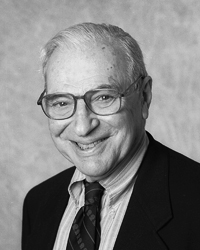
in Lives of the Literature, edited by William Breit and Barry T. Hirsch
1970s-1980s
Kenneth Arrow: 37 quotes1 like
Famous Kenneth Arrow Quotes
Source: 1970s-1980s, The Economics of Information (1984), p. 55
Kenneth Arrow, “The Organization of Economic Activity: Issues Pertinent to the Choice of Market versus Non-market Allocation” (1969)
1950s-1960s
Source: 1970s-1980s, The Economics of Information (1984), p. 55
Source: 1970s-1980s, The Limits Of Organization (1974), Chapter 1, Rationality: Individual And Social, p. 25
Kenneth Arrow, "Uncertainty and The Welfare Economics of Medical Care", The American Economic Review(1953)
1950s-1960s
Kenneth Arrow Quotes about problems
Source: 1950s-1960s, "Existence of an equilibrium for a competitive economy." 1954, p. 265
Source: 1950s-1960s, Social Choice and Individual Values (1951), p. 85
Arrow (1984) "November 1984 lecture at Trinity University". Lecture presented November 5, 1984.
1970s-1980s
quoted in Conor Clarke, An Interview with Kenneth Arrow, Part Three https://www.theatlantic.com/politics/archive/2009/07/an-interview-with-kenneth-arrow-part-three/22330/ (2009) <br class="br">New millennium
quoted in Conor Clarke, An Interview with Kenneth Arrow, Part Two https://www.theatlantic.com/politics/archive/2009/07/an-interview-with-kenneth-arrow-part-two/22279/ (2009) <br class="br">New millennium
quoted in Conor Clarke, An Interview with Kenneth Arrow, Part One https://www.theatlantic.com/politics/archive/2009/07/an-interview-with-kenneth-arrow-part-one/22213/ (2009) <br class="br">New millennium
Kenneth Arrow Quotes
from Kenneth J. Arrow" http://www.pkarchive.org/cranks/Brian.html"Letter (1998) <br class="br">1970s-1980s
Source: 1970s-1980s, The Limits Of Organization (1974), Chapter 2, Organization And Information, p. 33
Source: 1970s-1980s, The Limits Of Organization (1974), Chapter 1, Rationality: Individual And Social, p. 23
Source: 1950s-1960s, Social Choice and Individual Values (1951), p. 7
1970s-1980s, "Rationality of Self and Others in an Economic System", 1986
Source: 1950s-1960s, Social Choice and Individual Values (1951), p. 83
Source: 1970s-1980s, The Limits Of Organization (1974), Chapter 1, Rationality: Individual And Social, p. 29
Kenneth Arrow, "Methodological Individualism and Social Knowledge", American Economic Review (1994)
1970s-1980s
Source: 1970s-1980s, The Limits Of Organization (1974), Chapter 4, Authority And Responsibility, p. 65
1970s-1980s, "Rationality of Self and Others in an Economic System", 1986
Source: 1950s-1960s, Social Choice and Individual Values (1951), p. 85 as cited in: Gerry Mackie (2006) "The Reception of Social Choice Theory By Democratic Theory".
Source: 1950s-1960s, "Existence of an equilibrium for a competitive economy." 1954, p. 265
Source: 1970s-1980s, The Limits Of Organization (1974), Chapter 1, Rationality: Individual And Social, p. 26
Source: 1970s-1980s, The Limits Of Organization (1974), Chapter 1, Rationality: Individual And Social, p. 16
Arrow (1984) "November 1984 lecture at Trinity University". Lecture presented November 5, 1984.
1970s-1980s
“The Austrian a priori dogmatism (von Mises, especially; Hayek, to a lesser degree).”
on question "In your mind, what has been the most misleading theoretical approach in economics?", in Karen Ilse Horn (ed.) Roads to Wisdom, Conversations With Ten Nobel Laureates in Economics (2009)
New millennium
Kenneth J. Arrow (1962). "Economic Welfare and the Allocation of Resources for Invention." In: The Rate and Direction of Inventive Activity. Princeton University Press.; cited in: Thrainn Eggertsson, Economic behavior and institutions. 1990. p. 22
1950s-1960s
Source: 1970s-1980s, The Limits Of Organization (1974), Chapter 2, Organization And Information, p. 34
in Karen Ilse Horn (ed.) Roads to Wisdom, Conversations With Ten Nobel Laureates in Economics (2009)
New millennium
1970s-1980s, "Rationality of Self and Others in an Economic System", 1986
Arrow and Hicks (1972) From Nobel Lectures, Economics 1969-1980, Editor Assar Lindbeck, World Scientific Publishing Co., Singapore, 1992 ( online http://www.nobelprize.org/nobel_prizes/economics/laureates/1972/presentation-speech.html) <br class="br">1970s-1980s
Source: 1970s-1980s, The Economics of Information (1984), p. 55 as cited in: Demetri Kantarelis (2008) " Book Review: Title: Theories Of The Firm 2nd Edition http://www.inderscience.com/books/TOF_american_econ_review.pdf". In: The American economist. Vol 52, Nr 1. p. 117
Kenneth Arrow, "Some Developments in Economic Theory Since 1940: An Eyewitness Account" Annu. Rev. Econ. 2009
New millennium
Kenneth Arrow, "Ricardo's Work as Viewed by Later Economists" (1988)
1970s-1980s
Source: 1950s-1960s, Social Choice and Individual Values (1951), p. 1: Opening pharagraph


