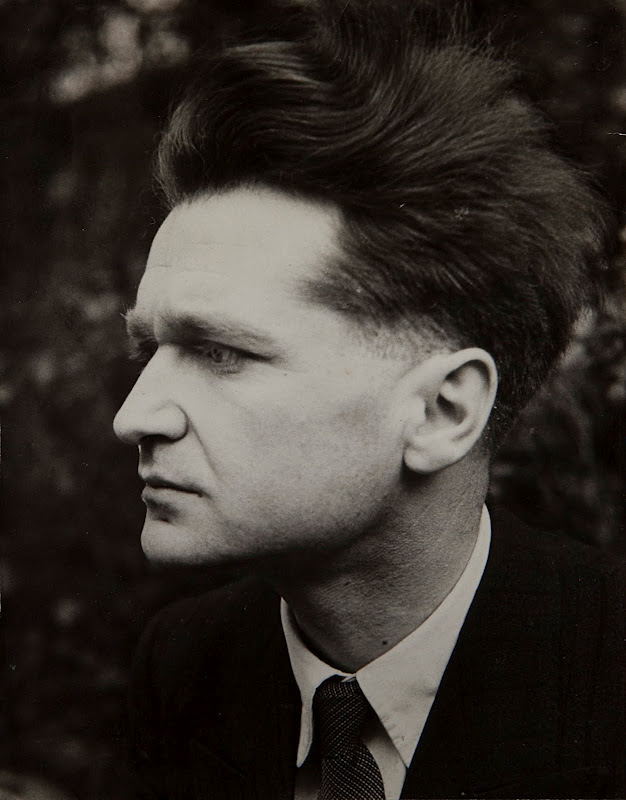
Emil M. Cioran Quotes
“To suffer is the great modality of taking the world seriously.”
The Book of Delusions (1936)
“Life creates itself in delirium and is undone in ennui.”
Emil M. Cioran book A Short History of Decay
A Short History of Decay (1949)
“The only profound thinkers are the ones who do not suffer from a sense of the ridiculous.”
Drawn and Quartered (1983)
“For a writer, to change languages is to write a love letter with a dictionary.”
Anathemas and Admirations (1987)
Emil M. Cioran book The Trouble With Being Born
The Trouble With Being Born (1973)
Anathemas and Admirations (1987)
“The universal view melts things into a blur.”
Emil M. Cioran book A Short History of Decay
A Short History of Decay (1949)
“If there is anyone who owes everything to Bach, it is certainly God.”
All Gall Is Divided (1952)
Anathemas and Admirations (1987)
The New Gods (1969)
“…all of the philosophers put together are not worth a single saint.”
Tears and Saints (1937)
“If you don't want to explode with rage, leave your memory alone, abstain from burrowing there.”
Anathemas and Admirations (1987)
“To act is to anchor in the imminent future.”
Emil M. Cioran book History and Utopia
History and Utopia (1960)
“We define only out of despair, we must have a formula… to give a facade to the void.”
Emil M. Cioran book A Short History of Decay
A Short History of Decay (1949)
“Without God, everything is nothingness; and with God? Supreme nothingness.”
All Gall Is Divided (1952)
“There are questions which, once approached, either isolate you or kill you outright.”
On the Heights of Despair (1934)
“Love's great (and sole) originality is to make happiness indistinct from misery.”
Anathemas and Admirations (1987)
“A self-respecting man is a man without a country. A fatherland is birdlime…”
Drawn and Quartered (1983)
“I don't understand how people can believe in God, even when I myself think of him everyday.”
The Book of Delusions (1936)
“Even more than in a poem, it is the aphorism that the word is god.”
Drawn and Quartered (1983)
“The moment we believe we've understood everything grants us the look of a murderer.”
All Gall Is Divided (1952)
All Gall Is Divided (1952)
“We are afraid of the enormity of the possible.”
Emil M. Cioran book A Short History of Decay
A Short History of Decay (1949)
The Book of Delusions (1936)
“Not to be born is undoubtedly the best plan of all. Unfortunately, it is within no one's reach.”
Emil M. Cioran book The Trouble With Being Born
The Trouble With Being Born (1973)
On the Heights of Despair (1934)
On the Heights of Despair (1934)


