Quotes from book
Quo Vadis

Quo Vadis
Henryk SienkiewiczOriginal title Quo vadis, Powieść z czasów Nerona (Polish, 1896)

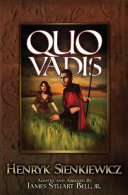
Quo Vadis: A Narrative of the Time of Nero, commonly known as Quo Vadis, is a historical novel written by Henryk Sienkiewicz in Polish. "Quo vadis, Domine?" is Latin for "Where are you going, Lord?" and appears in Chapter 69 of the novel in a retelling of a story from the apocryphal Acts of Peter, in which Peter flees Rome but on his way meets Jesus and asks him why he is going to Rome. Jesus says, "If thou desertest my people, I am going to Rome to be crucified a second time", which shames Peter into going back to Rome to accept martyrdom.


Henryk Sienkiewicz photo

“Whoso loves beauty is unable for that very reason to love deformity.”

Henryk Sienkiewicz book Quo Vadis

Petronius, Ch. 72
Quo Vadis (1895)
Context: Whoso loves beauty is unable for that very reason to love deformity. One may not believe in our gods, but it is possible to love them...

Henryk Sienkiewicz photo

“Not Nero, but God, rules the world.”

Henryk Sienkiewicz book Quo Vadis

Lygia to Marcus Vinicius, in Ch. 2
Quo Vadis (1895)

Henryk Sienkiewicz photo

“Life deserves laughter, hence people laugh at it.”

Henryk Sienkiewicz book Quo Vadis

Petronius, in Ch. 2
Quo Vadis (1895)

Henryk Sienkiewicz photo

“The howls of Cerberus, though resembling thy music, will be less offensive to me, for I have never been the friend of Cerberus, and I need not be ashamed of his howling.”

Henryk Sienkiewicz book Quo Vadis

Letter of Petronius to Nero, Ch. 73
Quo Vadis (1895)
Context: Rome stuffs its ears when it hears thee; the world reviles thee. I can blush for thee no longer, and I have no wish to do so. The howls of Cerberus, though resembling thy music, will be less offensive to me, for I have never been the friend of Cerberus, and I need not be ashamed of his howling.

Henryk Sienkiewicz photo

“Pliny declares, as I hear, that he does not believe in the gods, but he believes in dreams; and perhaps he is right.”

Henryk Sienkiewicz book Quo Vadis

Petronius, as depicted in the novel, speaking to Marcus Vinicius,<!-- entirely fictional character, NOT the historical figure. --> in Ch. 1
Quo Vadis (1895)
Context: Pliny declares, as I hear, that he does not believe in the gods, but he believes in dreams; and perhaps he is right. My jests do not prevent me from thinking at times that in truth there is only one deity, eternal, creative, all-powerful, Venus Genetrix. She brings souls together; she unites bodies and things. Eros called the world out of chaos. Whether he did well is another question; but, since he did so, we should recognize his might, though we are free not to bless it.
Henryk Sienkiewicz photo

“Our world knew, before thou wert born, that when the last cup was drained, it was time to go, — time to rest, — and it knows yet how to do that with calmness. Plato declares that virtue is music, that the life of a sage is harmony. If that be true, I shall die as I have lived, — virtuously.”

Henryk Sienkiewicz book Quo Vadis

Petronius, Ch. 72
Quo Vadis (1895)
Context: No God has promised me immortality; hence no surprise meets me. At the same time thou art mistaken, Vinicius, in asserting that only thy God teaches man to die calmly. No. Our world knew, before thou wert born, that when the last cup was drained, it was time to go, — time to rest, — and it knows yet how to do that with calmness. Plato declares that virtue is music, that the life of a sage is harmony. If that be true, I shall die as I have lived, — virtuously.

Henryk Sienkiewicz photo

“No God has promised me immortality; hence no surprise meets me.”

Henryk Sienkiewicz book Quo Vadis

Petronius, Ch. 72
Quo Vadis (1895)
Context: No God has promised me immortality; hence no surprise meets me. At the same time thou art mistaken, Vinicius, in asserting that only thy God teaches man to die calmly. No. Our world knew, before thou wert born, that when the last cup was drained, it was time to go, — time to rest, — and it knows yet how to do that with calmness. Plato declares that virtue is music, that the life of a sage is harmony. If that be true, I shall die as I have lived, — virtuously.

Similar authors

Henryk Sienkiewicz photo
Henryk Sienkiewicz38
Polish journalist, Nobel Prize-winning novelist, and philan… 1846–1916
Alphonse Karr photo
Alphonse Karr3
French critic, journalist, and novelist None
Emile Zola photo
Emile Zola54
French writer (1840-1902) None
Anatole France photo
Anatole France122
French writer None
Theodor Mommsen photo
Theodor Mommsen65
German classical scholar, historian, jurist, journalist, po… None
Andrew Carnegie photo
Andrew Carnegie34
American businessman and philanthropist None
Joseph Conrad photo
Joseph Conrad127
Polish-British writer None
Frédéric Chopin photo
Frédéric Chopin30
Polish composer None
George Eliot photo
George Eliot300
English novelist, journalist and translator None
Pierre Curie photo
Pierre Curie1
French physicist None