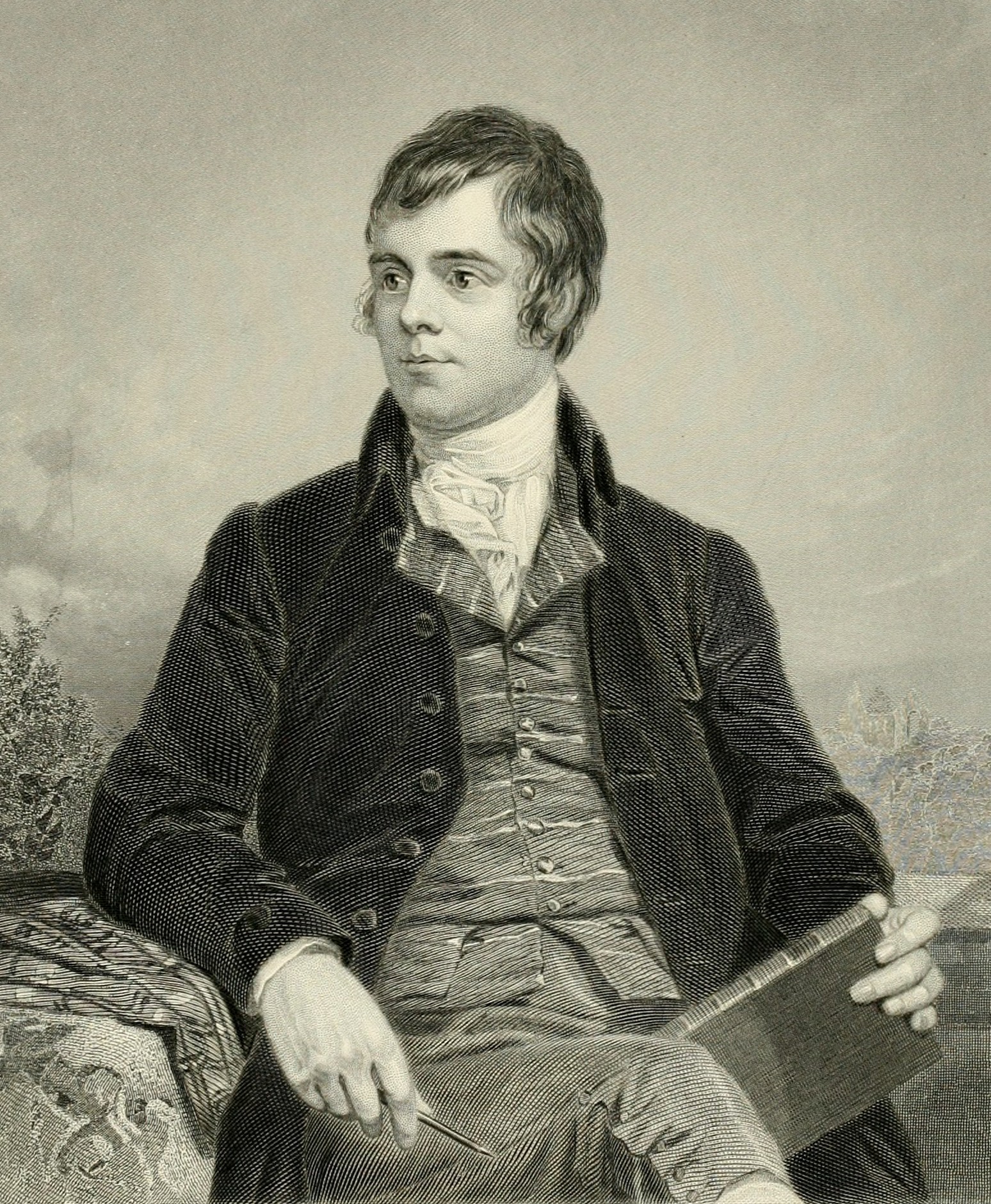
Auld Lang Syne. (szkoc.)
tytuł szkockiej pieśni, tradycyjnie śpiewanej w wigilię Nowego Roku.
Znaczenie: dawne dobre czasy.
Źródło: Auld Lang Syne (1788)
Robert Burns: 116 cytatów0 Polubień
Robert Burns cytaty
„Najdokładniej obmyślone intrygi myszy i ludzi biorą w łeb.”
Źródło: Do myszy, cyt. za: Eugene W. Straus, Alex Straus, 100 największych osiągnięć medycznych, wyd. Świat Książki, Warszawa 2009, ISBN 978-83-247-0890-1, s. 244.
Robert Burns: Cytaty po angielsku
“I was na fou, but just had plenty.”
Death and Dr. Hornbook, st. 3 (1787)
“Now a' is done that men can do,
And a' is done in vain.”
It Was A' for Our Rightfu' King, st. 2
Johnson's The Scots Musical Museum (1787-1796)
A Man's A Man For A' That, st. 3-5 (1795)
“Stern Ruin's plowshare drives elate,
Full on thy bloom.”
Robert Burns To a Mountain Daisy
To a Mountain Daisy, st. 9 (1786)
Robert Burns To a Mountain Daisy
To a Mountain Daisy, st. 1 (1786)
“In durance vile here must I wake and weep,
And all my frowsy couch in sorrow steep.”
Epistle from Esopus to Maria
Posthumous Pieces (1799)
“Perhaps it may turn out a sang,
Perhaps turn out a sermon.”
Stanza 1
Epistle to a Young Friend (1786)
Robert Burns Tam o' Shanter
Źródło: Tam o' Shanter (1790), Line 10
“He wales a portion with judicious care;
And "Let us worship God" he says, with solemn air.”
Robert Burns The Cotter's Saturday Night
Stanza 12
The Cotter's Saturday Night (1786)
Robert Burns Scots Wha Hae
Scots Wha Hae, st. 1, 2 (1794)
“God knows, I'm no the thing I should be,
Nor am I even the thing I could be.”
To The Reverend John M'Math, st. 8
Posthumous Pieces (1799)
On the Late Captain Grose's Peregrinations Thro' Scotland, st. 1 (1793)
The Banks o' Doon, st. 1
Johnson's The Scots Musical Museum (1787-1796)
“Beneath the milk-white thorn that scents the evening gale.”
Robert Burns The Cotter's Saturday Night
Stanza 9
The Cotter's Saturday Night (1786)
Robert Burns Handsome Nell
Handsome Nell (1773) (also known as "My Handsome Nell"), st. 6.
Johnson's The Scots Musical Museum (1787-1796)
“Suspense is worse than disappointment.”
Letter to Thomas Sloan, (1 September 1791)
The Jolly Beggars, chorus
Posthumous Pieces (1799)
“The white moon is setting behind the white wave,
And Time is setting with me, O!”
Misquotation by W. B. Yeats of Burns's "Open the Door to me, Oh" http://www.robertburns.org/works/397.shtml (1793) in Ideas of good and evil (1907), p. 241; the original reads: "The wan Moon is setting beyond the white wave,/ And Time is setting with me, oh!" <br class="br">Misattributed
“O Mary, at thy window be!
It is the wished, the trysted hour.”
Robert Burns Mary Morison
Mary Morison, st. 1 (1793)
Here's a Health to Them That's Awa, st. 1
Posthumous Pieces (1799)
“Nature's law,
That man was made to mourn.”
Man Was Made to Mourn, st. 4 (1786)
“And may you better reck the rede,
Than ever did the adviser!”
Stanza 11.
Epistle to a Young Friend (1786)
“Perhaps Dundee's wild-warbling measures rise,
Or plaintive Martyrs, worthy of the name.”
Robert Burns The Cotter's Saturday Night
Stanza 13
The Cotter's Saturday Night (1786)
“Some wee short hours ayont the twal.”
Death and Dr. Hornbook.
Bartlett's Familiar Quotations, 10th ed. (1919)
“Affliction's sons are brothers in distress;
A brother to relieve,—how exquisite the bliss!”
A Winter Night.
Bartlett's Familiar Quotations, 10th ed. (1919)
“Beauty's of a fading nature
Has a season and is gone!”
Will Ye Go and Marry Katie? (1764)


