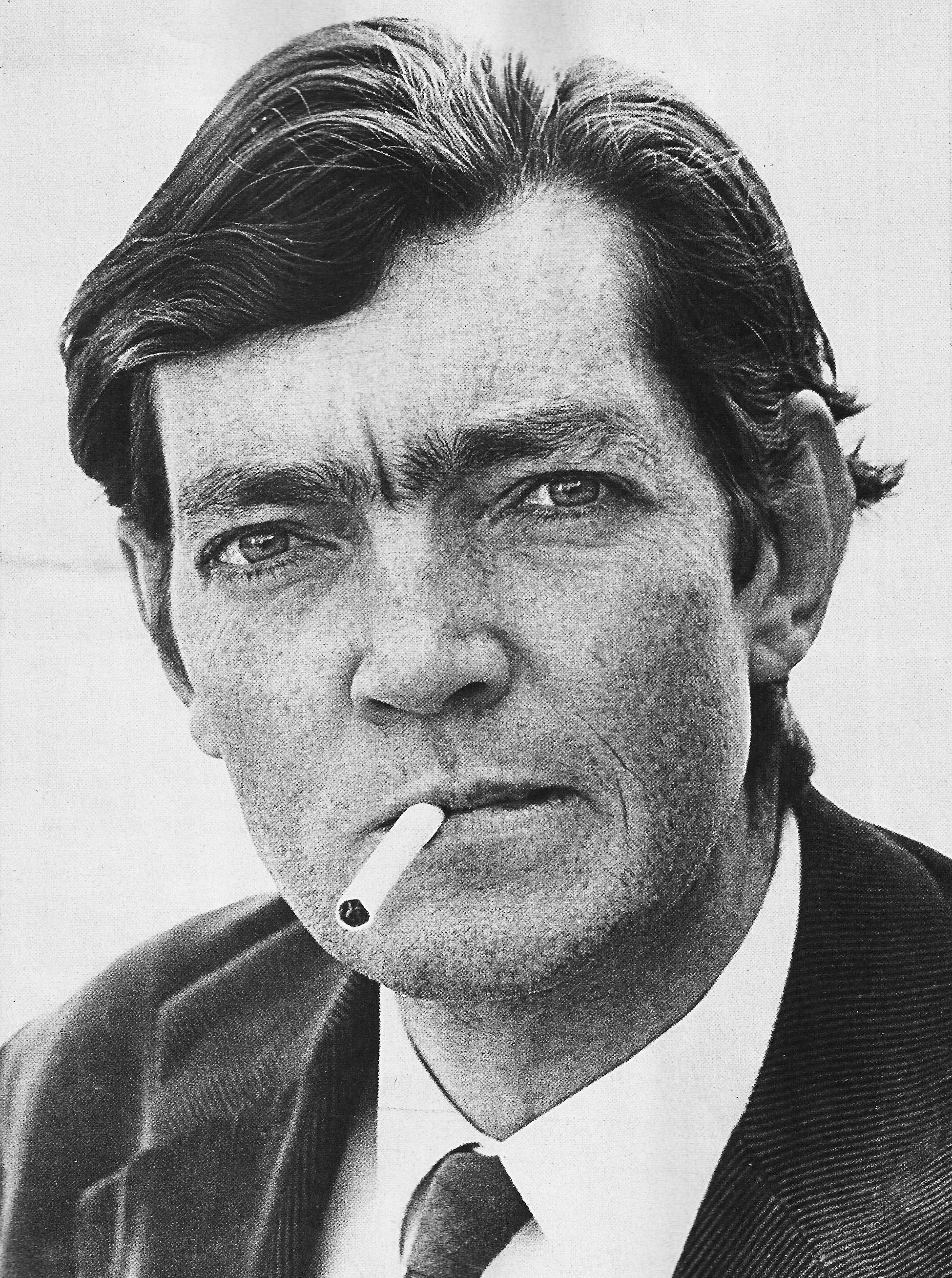
Julio Cortázar cytaty

Julio Cortázar – argentyński pisarz, tłumacz, filozof i intelektualista argentyński XX wieku. Światowej sławy twórca prozy latynoamerykańskiej, znany jest przede wszystkim dzięki powieściom, m.in. Gra w klasy, 62. Model do składania, oraz ze zbiorów opowiadań. Cortázar zdobył uznanie głównie dzięki oryginalnej technice swojego pisarstwa. Jego utwory to nowatorska, pełna humoru i fantastyki proza latynoamerykańska, ukazująca niezwykłe pokłady wyobraźni i pomysłowości pisarza. Wikipedia  

✵ 26. Sierpień 1914 – 12. Luty 1984
Julio Cortázar Fotografia

Dzieło

Gra w klasy
Julio Cortázar
Gra w klasy
Julio Cortázar
Julio Cortázar: 51 cytatów5 Polubień

Julio Cortázar słynne cytaty

„Nierozwiązany bowiem problem wraca niezależnie od świadomości.”

Julio Cortázar

Opowiadania o Łukaszu
Źródło: Łukasz. Nowy sposób wygłaszania odczytów

„Nie należy pisać dla innych, lecz dla siebie samego.”

Julio Cortázar

Opowiadania o Łukaszu
Źródło: Łukasz. Porozumienia

„To, co jest naprawdę nowe, zachwyca lub przeraża.”

Julio Cortázar

Źródło: Opowieści o kronopiach i famach, tłum. Zofia Chądzyńska

Julio Cortázar cytaty

„Z Polą też zaczęło się od rąk.”

Julio Cortázar książka Gra w klasy

Gra w klasy

„Człowiek powinien mieć jakieś sekrety, jakąś przemilczaną rozrzutność, rzeczy, które inni wykorzystywaliby do ostatniej okruszyny.”

Julio Cortázar

Tak bardzo kochamy Glendę
Źródło: Historie, które sobie opowiadam

„Jesteśmy w ZOO tylko, że NAS oglądają.”

Julio Cortázar

Wielkie wygrane

„Ponieważ zemsta jest sztuką, szuka sobie coraz subtelniejszych i piękniejszych form wyrazu.”

Julio Cortázar

Tak bardzo kochamy Glendę
Źródło: Clone

„Pamięć zwodzi tych, którzy jej ufają i każe im przyjmować własne mutacje i warianty.”

Julio Cortázar

Tak bardzo kochamy Glendę
Źródło: Tak bardzo kochamy Glendę

„Nie takie to proste wiedzieć, dlaczego ktoś zdradza, a ktoś zabija.”

Julio Cortázar

Tak bardzo kochamy Glendę
Źródło: Clone

„Przez delikatność marnujemy życie.”

Julio Cortázar

Nikt, byle kto…
Źródło: Dwie strony medalu

„W ciemnościach przestrzeń i pozycje zmieniają się i człowiek jest niezdarny jak dziecko.”

Julio Cortázar

Ośmiościan
Źródło: Szyja czarnego kociaka

„Nie można nigdy stać się tym, czego się nie zna.”

Julio Cortázar książka Gra w klasy

Gra w klasy

„Czas jest śmiercią, ohydną maską śmierci.”

Julio Cortázar

Nikt, byle kto…
Źródło: Barka, czyli ponowne odwiedziny Wenecji

Julio Cortázar: Cytaty po angielsku

“In quoting others, we cite ourselves.”

Julio Cortázar książka Around the Day in Eighty Worlds

Źródło: Around the Day in Eighty Worlds

“Memory is a mirror that scandalously lies.”

Julio Cortázar książka Around the Day in Eighty Worlds

Źródło: Around the Day in Eighty Worlds

“All profound distraction opens certain doors. You have to allow yourself to be distracted when you are unable to concentrate.”

Julio Cortázar książka Around the Day in Eighty Worlds

Źródło: Around the Day in Eighty Worlds

“We no longer believe because it is absurd: it is absurd because we must believe.”

Julio Cortázar książka Around the Day in Eighty Worlds

Źródło: Around the Day in Eighty Worlds

“Now I am an axolotl.”

Julio Cortázar

Źródło: Blow-Up and Other Stories

“Wordplay hides a key to reality that the dictionary tries in vain to lock inside every free word.”

Julio Cortázar książka Around the Day in Eighty Worlds

Źródło: Around the Day in Eighty Worlds

“We went around without looking for each other, but knowing we went around to find each other.”

Julio Cortázar książka Gra w klasy

Źródło: Rayuela (Hopscotch) (1963), Chapter 1.

“(memory is) A strange echo, which stores its replicas according to some other acoustic than consciousness or expectation.”

Julio Cortázar książka Around the Day in Eighty Worlds

Źródło: Around the Day in Eighty Worlds

“Nothing is lost if one has the courage to proclaim that all is lost and we must begin anew.”

Julio Cortázar książka Gra w klasy

Nada está perdido si se tiene el valor de proclamar que todo está perdido y hay que empezar de nuevo.
Źródło: Rayuela (Hopscotch) (1963), Chapter 71.

“"Hair loss and retrieval" (Translation of "Pérdida y recuperación del pelo")


To combat pragmatism and the horrible tendency to achieve useful purposes, my elder cousin proposes the procedure of pulling out a nice hair from the head, knotting it in the middle and droping it gently down the hole in the sink. If the hair gets caught in the grid that usually fills in these holes, it will just take to open the tap a little to lose sight of it.


Without wasting an instant, must start the hair recovery task. The first operation is reduced to dismantling the siphon from the sink to see if the hair has become hooked in any of the rugosities of the drain. If it is not found, it is necessary to expose the section of pipe that goes from the siphon to the main drainage pipe. It is certain that in this part will appear many hairs and we will have to count on the help of the rest of the family to examine them one by one in search of the knot. If it does not appear, the interesting problem of breaking the pipe down to the ground floor will arise, but this means a greater effort, because for eight or ten years we will have to work in a ministry or trading house to collect enough money to buy the four departments located under the one of my elder cousin, all that with the extraordinary disadvantage of what while working during those eight or ten years, the distressing feeling that the hair is no longer in the pipes anymore can not be avoided and that only by a remote chance remains hooked on some rusty spout of the drain.


The day will come when we can break the pipes of all the departments, and for months to come we will live surrounded by basins and other containers full of wet hairs, as well as of assistants and beggars whom we will generously pay to search, assort, and bring us the possible hairs in order to achieve the desired certainty. If the hair does not appear, we will enter in a much more vague and complicated stage, because the next section takes us to the city's main sewers. After buying a special outfit, we will learn to slip through the sewers at late night hours, armed with a powerful flashlight and an oxygen mask, and explore the smaller and larger galleries, assisted if possible by individuals of the underworld, with whom we will have established a relationship and to whom we will have to give much of the money that we earn in a ministry or a trading house.


Very often we will have the impression of having reached the end of the task, because we will find (or they will bring us) similar hairs of the one we seek; but since it is not known of any case where a hair has a knot in the middle without human hand intervention, we will almost always end up with the knot in question being a mere thickening of the caliber of the hair (although we do not know of any similar case) or a deposit of some silicate or any oxide produced by a long stay against a wet surface. It is probable that we will advance in this way through various sections of major and minor pipes, until we reach that place where no one will decide to penetrate: the main drain heading in the direction of the river, the torrential meeting of detritus in which no money, no boat, no bribe will allow us to continue the search.


But before that, and perhaps much earlier, for example a few centimeters from the mouth of the sink, at the height of the apartment on the second floor, or in the first underground pipe, we may happen to find the hair. It is enough to think of the joy that this would cause us, in the astonished calculation of the efforts saved by pure good luck, to choose, to demand practically a similar task, that every conscious teacher should advise to its students from the earliest childhood, instead of drying their souls with the rule of cross-multiplication or the sorrows of Cancha Rayada.”

Julio Cortázar

Historias de Cronopios y de Famas (1962)

“Traslation: Now it happens that turtles are great speed enthusiasts, which is natural.
The esperanzas know that and don't bother themselves about it.
The famas know it, and make fun of it.
The cronopios know it, and each time they meet a turtle, they haul out the box of colored chalks, and on the rounded blackboard of the turtle's shell they draw a swallow.”

Julio Cortázar

'Ahora pasa que las tortugas son grandes admiradoras de la velocidad, como es natural. Las esperanzas lo saben, y no se preocupan. Los famas lo saben, y se burlan. Los cronopios lo saben, y cada vez que encuentran una tortuga, sacan la caja de tizas de colores y sobre la redonda pizarra de la tortuga dibujan una golondrina.'
Historias de Cronopios y de Famas (1962)

“And after doing all they do they rise from their bed, they bathe, powder and perfume their persons, they dress, and gradually return to being what they are not.”

Julio Cortázar książka Un tal Lucas

Un tal Lucas (1979)
Oryginał: (es) 'AMOR 77'
Y después de hacer todo lo que hacen, se levantan, se bañan, se entalcan, se perfuman, se peinan, se visten, y así progresivamente van volviendo a ser lo que no son.

Podobni autorzy

Jorge Luis Borges Fotografia
Jorge Luis Borges45
argentyński pisarz, poeta i eseista None
Ernesto Guevara Fotografia
Ernesto Guevara35
rewolucjonista argentyński None
James Joyce Fotografia
James Joyce21
irlandzki pisarz None
Gilbert Keith Chesterton Fotografia
Gilbert Keith Chesterton85
pisarz angielski None
Henry Miller Fotografia
Henry Miller16
pisarz amerykański None
Paulo Coelho Fotografia
Paulo Coelho95
pisarz brazylijski None
Ilja Erenburg Fotografia
Ilja Erenburg19
rosyjski pisarz None
Francis Scott Fitzgerald Fotografia
Francis Scott Fitzgerald33
amerykański pisarz None
Haruki Murakami Fotografia
Haruki Murakami81
pisarz japoński None
Ernst Jünger Fotografia
Ernst Jünger54
pisarz niemiecki None