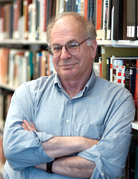
Daniel Kahneman słynne cytaty
„Pewność siebie to uczucie, a nie logiczna konkluzja, do której dochodzi się po analizie danych.”
Źródło: Olivier Burkeman, Rozum na manowcach, „The Guardian”, tłum. „Forum”, 13 lutego 2012.
Źródło: Olivier Burkeman, Rozum na manowcach, „The Guardian”, tłum. „Forum”, 13 lutego 2012.
Źródło: Olivier Burkeman, Rozum na manowcach, „The Guardian”, tłum. „Forum”, 13 lutego 2012.
Daniel Kahneman: Cytaty po angielsku
Daniel Kahneman książka Thinking, Fast and Slow
Źródło: Thinking, Fast and Slow (2011), Chapter 19, "The illusion of understanding", page 201 (ISBN 9780141033570).
Daniel Kahneman książka Thinking, Fast and Slow
Źródło: Thinking, Fast and Slow (2011), Chapter 5, "Cognitive ease", page 62 (ISBN 9780141033570).
Daniel Kahneman książka Thinking, Fast and Slow
Źródło: Thinking, Fast and Slow
“Nothing in life is as important as you think it is when you are thinking about it.”
Daniel Kahneman książka Thinking, Fast and Slow
Wariant: Nothing in life is as important as you think it is when you are thinking about it.
Źródło: Thinking, Fast and Slow (2011), Chapter 38, "Thinking about life", page 402 (ISBN 9780141033570).
“Money does not buy you happiness, but lack of money certainly buys you misery.”
Źródło: Well-Being: Foundations of Hedonic Psychology: Foundations of Hedonic Psychology
Daniel Kahneman książka Thinking, Fast and Slow
Źródło: Thinking, Fast and Slow
“we can be blind to the obvious, and we are also blind to our blindness.”
Daniel Kahneman książka Thinking, Fast and Slow
Źródło: Thinking, Fast and Slow
About the death of his long-time collaborator Amos Tversky on 5 June 1996. Nobel Prize Autobiographical Information http://www.nobelprize.org/nobel_prizes/economic-sciences/laureates/2002/kahneman-bio.html (2002). <br class="br">Kontekst: People who make a difference do not die alone. Something dies in everyone who was affected by them. Amos made a great deal of difference, and when he died, life was dimmed and diminished for many of us. There is less intelligence in the world. There is less wit. There are many questions that will never be answered with the same inimitable combination of depth and clarity. There are standards that will not be defended with the same mix of principle and good sense. Life has become poorer. There is a large Amos-shaped gap in the mosaic, and it will not be filled. It cannot be filled because Amos shaped his own place in the world, he shaped his life, and even his dying. And in shaping his life and his world, he changed the world and the life of many around him.
Daniel Kahneman książka Thinking, Fast and Slow
Źródło: Thinking, Fast and Slow
Daniel Kahneman książka Thinking, Fast and Slow
Źródło: Thinking, Fast and Slow (2011), Chapter 3, "The lazy controller", page 46 (ISBN 9780141033570).
Daniel Kahneman książka Thinking, Fast and Slow
Źródło: Thinking, Fast and Slow
“I am my remembering self, and the experiencing self, who does my living, is like a stranger to me.”
Daniel Kahneman książka Thinking, Fast and Slow
"Bias, Blindness and How We Truly Think" (2011)
Źródło: Thinking, Fast and Slow
Kontekst: An experiment about your next vacation will allow you to observe your attitude to your experiencing self: At the end of the vacation, all pictures and videos will be destroyed. Furthermore, you will swallow a potion that will wipe out all your memories of the vacation. How would this affect your vacation plans? How much would you be willing to pay for it, relative to a normally memorable vacation? My impression is that the elimination of memories greatly reduces the value of the experience.Imagine a painful operation during which you will scream in pain and beg the surgeon to stop. However, you are promised an amnesia-inducing drug that will wipe out any memory of the episode. Here again, my observation is that most people are remarkably indifferent to the pains of their experiencing self. Some say they don’t care at all. Others share my feeling, which is that I feel pity for my suffering self but not more than I would feel for a stranger in pain.I am my remembering self, and the experiencing self, who does my living, is like a stranger to me.
Daniel Kahneman książka Thinking, Fast and Slow
Źródło: Thinking, Fast and Slow
Daniel Kahneman książka Thinking, Fast and Slow
Źródło: Thinking, Fast and Slow
Daniel Kahneman książka Thinking, Fast and Slow
Źródło: Thinking, Fast and Slow
Daniel Kahneman książka Thinking, Fast and Slow
Źródło: Thinking, Fast and Slow
Daniel Kahneman książka Thinking, Fast and Slow
Źródło: Thinking, Fast and Slow
Daniel Kahneman książka Thinking, Fast and Slow
Źródło: Thinking, Fast and Slow
Daniel Kahneman książka Thinking, Fast and Slow
Źródło: Thinking, Fast and Slow
Daniel Kahneman książka Thinking, Fast and Slow
Źródło: Thinking, Fast and Slow
Daniel Kahneman książka Thinking, Fast and Slow
Źródło: Thinking, Fast and Slow
Nobel Prize Autobiographical Information http://www.nobelprize.org/nobel_prizes/economic-sciences/laureates/2002/kahneman-bio.html (2002).
Bias, Blindness and How We Truly Think (Part 2): Daniel Kahneman, bloomberg.com, 24 October 2011, 15 May 2014 http://www.bloomberg.com/news/2011-10-25/bias-blindness-and-how-we-truly-think-part-2-daniel-kahneman.html, <br class="br">"Bias, Blindness and How We Truly Think" (2011)
Bias, Blindness and How We Truly Think (Part 1): Daniel Kahneman, bloomberg.com, 24 October 2011, 15 May 2014 http://www.bloomberg.com/news/2011-10-24/bias-blindness-and-how-we-truly-think-part-1-daniel-kahneman.html, <br class="br">"Bias, Blindness and How We Truly Think" (2011)
Daniel Kahneman książka Thinking, Fast and Slow
Źródło: Thinking, Fast and Slow (2011), Chapter 23, "The outside view", page 254 (ISBN 9780141033570).
Daniel Kahneman książka Thinking, Fast and Slow
Źródło: Thinking, Fast and Slow (2011), Chapter 38, "Thinking about life", pages 400-401 (ISBN 9780141033570).


