„Jedynym sposobem na trafne przewidywanie przyszłości jest wynalezienie jej.”
Źródło: Gordon Dryden, Jeanette Vos, Rewolucja w uczeniu, wyd. Moderski i S-ka, Poznań 2000, tłum. Bożena Jóźwiak, s. 18.
Alan Kay – amerykański informatyk.
Laureat nagrody Turinga w 2003 za pionierską pracę nad obiektowymi językami programowania jako lider zespołu tworzącego język Smalltalk i fundamentalny wkład w rozwój komputerów osobistych. Wikipedia
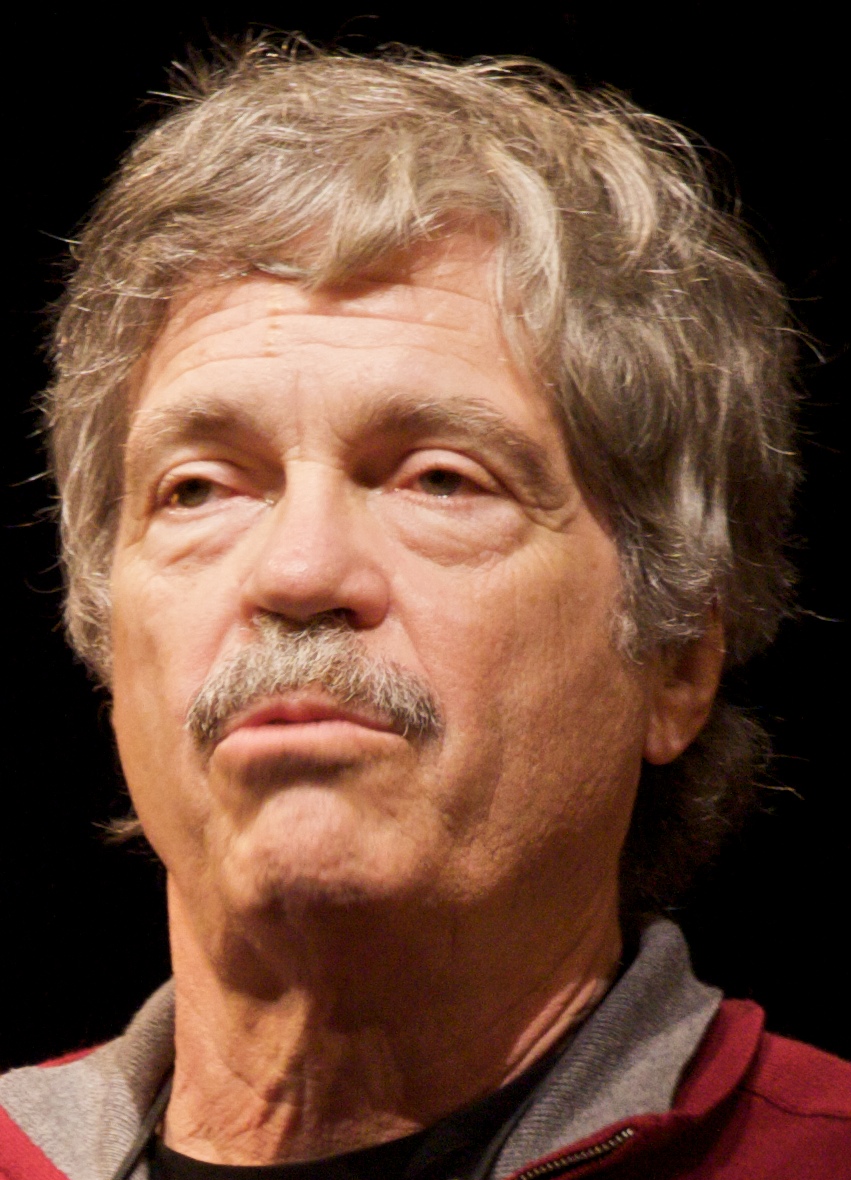
„Jedynym sposobem na trafne przewidywanie przyszłości jest wynalezienie jej.”
Źródło: Gordon Dryden, Jeanette Vos, Rewolucja w uczeniu, wyd. Moderski i S-ka, Poznań 2000, tłum. Bożena Jóźwiak, s. 18.
Źródło: Don Tapscott, The Digital Economy, McGraw-Hill, 1996, cyt. za: Gordon Dryden, Jeanette Vos, Rewolucja w uczeniu, op. cit., s. 95.
“Most creativity is a transition from one context into another where things are more surprising.”
ACM Queue A Conversation with Alan Kay Vol. 2, No. 9 - Dec/Jan 2004-2005 http://queue.acm.org/detail.cfm?id=1039523 <br class="br">2000s, A Conversation with Alan Kay, 2004–05 <br class="br">Kontekst: Most creativity is a transition from one context into another where things are more surprising. There’s an element of surprise, and especially in science, there is often laughter that goes along with the “Aha.” Art also has this element. Our job is to remind us that there are more contexts than the one that we’re in — the one that we think is reality.
“The best way to predict the future is to invent it.”
Alan Kay (1971) at a 1971 meeting of PARC http://quoteinvestigator.com/2012/09/27/invent-the-future/ <br class="br">Similar remarks are attributed to Peter Drucker and Dandridge M. Cole. <br class="br">Cf. Dennis Gabor, Inventing the Future (1963): "The future cannot be predicted, but futures can be invented." <br class="br">Nigel Calder reviewed Gabor's book and wrote, "we cannot predict the future, but we can invent it..." <br class="br">1970s
ACM Queue A Conversation with Alan Kay Vol. 2, No. 9 - Dec/Jan 2004-2005 http://queue.acm.org/detail.cfm?id=1039523 <br class="br">2000s, A Conversation with Alan Kay, 2004–05 <br class="br">Kontekst: Most creativity is a transition from one context into another where things are more surprising. There’s an element of surprise, and especially in science, there is often laughter that goes along with the “Aha.” Art also has this element. Our job is to remind us that there are more contexts than the one that we’re in — the one that we think is reality.
ACM Queue A Conversation with Alan Kay Vol. 2, No. 9 - Dec/Jan 2004-2005 http://queue.acm.org/detail.cfm?id=1039523 <br class="br">2000s, A Conversation with Alan Kay, 2004–05
2010 for Computerworld Australia http://www.computerworld.com.au/article/352182/z_programming_languages_smalltalk-80/ <br class="br">2010s
Alan Kay (1972) in 1972 Rolling Stone article http://www.wheels.org/spacewar/stone/rolling_stone.html <br class="br">1970s
ACM Queue A Conversation with Alan Kay Vol. 2, No. 9 - Dec/Jan 2004-2005 http://queue.acm.org/detail.cfm?id=1039523 <br class="br">2000s, A Conversation with Alan Kay, 2004–05
“A change in perspective is worth 80 IQ points.”
Perspective is worth 80 IQ points. <br class="br">Point of view is worth 80 IQ points <br class="br"> Talk at Creative Think seminar, 20 July 1982 https://www.folklore.org/StoryView.py?project=Macintosh&story=Creative_Think.txt <br class="br">1980s
ACM Queue A Conversation with Alan Kay Vol. 2, No. 9 - Dec/Jan 2004-2005 http://www.acmqueue.com/modules.php?name=Content&pa=showpage&pid=273&page=4 <br class="br">2000s
“… greatest single programming language ever designed. (About the Lisp programming language.)”
2003. Daddy, Are We There Yet? A Discussion with Alan Kay http://www.openp2p.com/pub/a/p2p/2003/04/03/alan_kay.html <br class="br">2000s
ACM Queue A Conversation with Alan Kay Vol. 2, No. 9 - Dec/Jan 2004-2005 http://queue.acm.org/detail.cfm?id=1039523 <br class="br">2000s, A Conversation with Alan Kay, 2004–05
“Technology is anything that wasn't around when you were born.”
Hong Kong press conference in the late 1980s
1980s
The Computer Revolution hasn't happend yet — 1997 OOPSLA Keynote http://www.youtube.com/watch?v=oKg1hTOQXoY <br class="br">1990s
ACM Queue A Conversation with Alan Kay Vol. 2, No. 9 - Dec/Jan 2004-2005 http://queue.acm.org/detail.cfm?id=1039523 <br class="br">2000s, A Conversation with Alan Kay, 2004–05
2012 Dr. Dobb's Interview with Alan Kay http://www.drdobbs.com/architecture-and-design/interview-with-alan-kay/240003442 <br class="br">2010s
1984 in Alan Kay's paper Inventing the Future which appears in The AI Business: The Commercial Uses of Artificial Intelligence, edited by Patrick Henry Winston and Karen Prendergast. As quoted by Eugene Wallingford in a post entiteled ALAN KAY'S TALKS AT OOPSLA http://www.cs.uni.edu/~wallingf/blog/archives/monthly/2004-11.html#e2004-11-06T21_03_42.htm on November 06, 2004 9:03 PM at the website of the Computer Science section of the University of Northern Iowa. <br class="br">1980s
ACM Queue A Conversation with Alan Kay Vol. 2, No. 9 - Dec/Jan 2004-2005 http://queue.acm.org/detail.cfm?id=1039523 <br class="br">2000s, A Conversation with Alan Kay, 2004–05
“Actually I made up the term "object-oriented", and I can tell you I did not have C++ in mind.”
The Computer Revolution hasn't happend yet — 1997 OOPSLA Keynote http://www.youtube.com/watch?v=oKg1hTOQXoY <br class="br">Alternative: I invented the term Object-Oriented, and I can tell you I did not have C++ in mind. <br class="br">Attributed to Alan Kay in: Peter Seibel (2005) Practical Common Lisp. p.189 <br class="br">1990s
“Possibly the only real object-oriented system in working order. (About Internet)”
2010 for Computerworld Australia http://www.computerworld.com.au/article/352182/z_programming_languages_smalltalk-80/ <br class="br">2010s
“People who are really serious about software should make their own hardware.”
talk at Creative Think seminar, 20 July 1982 https://www.folklore.org/StoryView.py?project=Macintosh&story=Creative_Think.txt <br class="br">1980s
ACM Queue A Conversation with Alan Kay Vol. 2, No. 9 - Dec/Jan 2004-2005 http://queue.acm.org/detail.cfm?id=1039523 <br class="br">2000s, A Conversation with Alan Kay, 2004–05
ACM Queue A Conversation with Alan Kay Vol. 2, No. 9 - Dec/Jan 2004-2005 http://queue.acm.org/detail.cfm?id=1039523 <br class="br">2000s, A Conversation with Alan Kay, 2004–05
ACM Queue A Conversation with Alan Kay Vol. 2, No. 9 - Dec/Jan 2004-2005 http://queue.acm.org/detail.cfm?id=1039523 <br class="br">2000s, A Conversation with Alan Kay, 2004–05
“I hired finishers because I’m a good starter and a poor finisher.”
ACM Queue A Conversation with Alan Kay Vol. 2, No. 9 - Dec/Jan 2004-2005 http://queue.acm.org/detail.cfm?id=1039523 <br class="br">2000s, A Conversation with Alan Kay, 2004–05
Art also has this element. Our job is to remind us that there are more contexts than the one that we're in — the one that we think is reality. <br class="br"> ACM Queue A Conversation with Alan Kay Vol. 2, No. 9 - Dec/Jan 2004-2005 http://queue.acm.org/detail.cfm?id=1039523 <br class="br">2000s, A Conversation with Alan Kay, 2004–05


_(cropped).jpg)