Xénophon livre Mémorables
Socrate répond aux critiques du sophiste Antiphon .
Mémorables
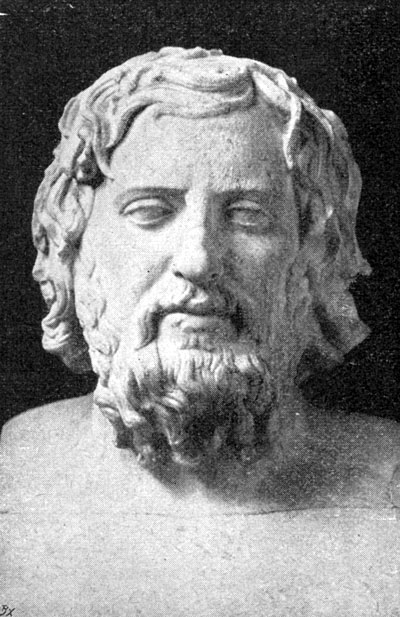
Xénophon est un philosophe et chef militaire de la Grèce antique né à Erchia près d'Athènes vers 430, av. J.-C. et mort vers 355 av. J.-C. Outre l’Anabase et la Cyropédie, il a écrit une suite à l’Histoire de la guerre du Péloponnèse de Thucydide intitulée Les Helléniques.
Bien que citoyen d'Athènes, Xénophon est néanmoins l'ami de Sparte. Aristocrate, partisan de l'oligarchie, et proche du roi Agésilas II, il combat notamment en Perse au service de Sparte.
Xénophon, sans le savoir, ouvre la voie aux futures conquêtes d’Alexandre le Grand : dans l’Anabase, outre une description détaillée de son trajet en Asie, il montre qu'un corps expéditionnaire de soldats grecs peut traverser l’Empire perse invaincu. La campagne d'Agésilas en Asie Mineure confirme d'ailleurs la fragilité de l'Empire perse. Wikipedia
Xénophon livre Mémorables
Socrate répond aux critiques du sophiste Antiphon .
Mémorables
Le Banquet
“Cri de joie des mercenaires grecs lorsqu’ils aperçoivent enfin au loin les rives du Pont Euxin.”
La mer ! La mer !
Θάλαττα! θάλαττα!
grc
Anabase
Anabase
Anabase
Xenophon livre Cyropaedia
Bk. 1, ch. 6; as translated by Henry Graham Dakyns in Cyropaedia (2004) p. 29.
Cyropaedia, 4th Century BC
Contexte: That... is the road to the obedience of compulsion. But there is a shorter way to a nobler goal, the obedience of the will. When the interests of mankind are at stake, they will obey with joy the man whom they believe to be wiser than themselves. You may prove this on all sides: you may see how the sick man will beg the doctor to tell him what he ought to do, how a whole ship’s company will listen to the pilot.
“Anything forced is not beautiful”
Source: The Art of Horsemanship
Xenophon livre Cyropaedia
Cyropaedia, 4th Century BC
Xenophon livre Cyropaedia
Bk. 1, ch. 6; as translated by Henry Graham Dakyns in Cyropaedia (2004) p. 29.
Cyropaedia, 4th Century BC
Xenophon livre Anabase
Bk. 3, ch. 2; pp. 88-89.
Anabasis
Contexte: On making prisoners of our generals, they expected that we should perish from want of direction and order. It is incumbent, therefore, on our present commanders to be far more vigilant than our former ones, and on those under command to be far more orderly, and more obedient to their officers, at present than they were before…On the very day that such resolution is passed, they will see before them ten thousand Clearchuses instead of one.
Memorabilia of Socrates Bk. 1, ch. 2, as translated by Sarah Fielding in The Whole Works of Xenophon (1840), p. 523.
Contexte: It is only for those to employ force who possess strength without judgment; but the well advised will have recourse to other means. Besides, he who pretends to carry his point by force hath need of many associates; but the man who can persuade knows that he is himself sufficient for the purpose; neither can such a one be supposed forward to shed blood; for, who is there would choose to destroy a fellow citizen rather than make a friend of him by mildness and persuasion?
Xenophon livre Anabase
Bk. 3, ch. 2; pp. 88-89.
Anabasis
Contexte: On making prisoners of our generals, they expected that we should perish from want of direction and order. It is incumbent, therefore, on our present commanders to be far more vigilant than our former ones, and on those under command to be far more orderly, and more obedient to their officers, at present than they were before…On the very day that such resolution is passed, they will see before them ten thousand Clearchuses instead of one.
Hellenica Bk. 7, as translated by Rex Warner in A History of My Times (1979) p. 398.
Xenophon livre Anabase
Bk. 5, ch. 8; p. 179.
Anabasis
Hellenica Bk. 4, as translated by Carleton L. Brownson (1918)
Xenophon Le Banquet
“Well, then,” said Callias, “take a place; for the guests, though well fed, as you observe, on seriousness, are perhaps rather ill supplied with laughter.”
Symposium, 1.11-13
“The most delightful of all music, that of your own praises.”
Xenophon livre Hiero
Hiero, ch. 3, as translated by Richard Graves in The Whole Works of Xenophon (1832) p. 626).
Xenophon livre Cyropaedia
Bk. 1, ch. 6; as translated by Henry Graham Dakyns in Cyropaedia (2004) p. 31.
Cyropaedia, 4th Century BC
The Cavalry General, ch. 6, as translated by Henry Graham Dakyns in The Cavalry General (2004) p. 26.
Words spoken by Socrates to Antiphon in Memorabilia, 1.6.11.
“Every one of you is the leader.”
Quoted in Edith Hamilton The Greek Way ([1930] 1993) p. 134.
“Clearchus spoke, and his words were few; "Conquerors do not, as a rule, give up their arms."”
Xenophon livre Anabase
Bk. 2, ch. 1.
Anabasis


