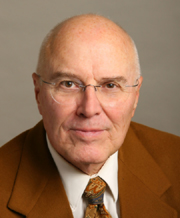
William H. Starbuck Quotes

William Haynes Starbuck graduated from Harvard University and the Carnegie Institute of Technology . He is an organizational scientist who has held professorships in social relations , sociology , business administration , and management . Wikipedia  

✵ 20. September 1934
William H. Starbuck photo
William H. Starbuck: 8 quotes0 likes

Famous William H. Starbuck Quotes

“One should not label a firm as knowledge-intensive unless exceptional and valuable expertise dominates commonplace knowledge.”

William H. Starbuck

Source: Learning by knowledge‐intensive firms," 1992, p. 716
Context: In deciding whether a firm is knowledge-intensive, one ought to weigh its emphasis on esoteric expertise instead of widely shared knowledge. Everybody has knowledge, most of it widely shared, but some idiosyncratic and personal. If one defines knowledge broadly to encompass what everybody knows, every firm can appear knowledge-intensive. One loses the value of focusing on a special category of firms. Similarly, every firm has some unusual expertise. To make the knowledge-intensive firm a useful category, one has to require that exceptional expertise make important contributions. One should not label a firm as knowledge-intensive unless exceptional and valuable expertise dominates commonplace knowledge.

“Labeling a firm as knowledge-intensive implies that knowledge has more importance than other inputs.”

William H. Starbuck

Source: Learning by knowledge‐intensive firms," 1992, p. 715

““Organization theory,” a term that appeared in the middle of the twentieth century, has multiple meanings. When it first emerged, the term expressed faith in scientific research as a way to gain understanding of human beings and their interactions. Although scientific research had been occurring for several centuries, the idea that scientific research might enhance understanding of human behavior was considerably newer and rather few people appreciated it. Simon (1950, 1952-3, 1952) was a leading proponent for the creation of “organization theory”, which he imagined as including scientific management, industrial engineering, industrial psychology, the psychology of small groups, human-resources management, and strategy. The term “organization theory” also indicated an aspiration to state generalized, abstract propositions about a category of social systems called “organizations,” which was a very new concept. Before and during the 1800s, people had regarded armies, schools, churches, government agencies, and social clubs as belonging to distinct categories, and they had no name for the union of these categories. During the 1920s, some people began to perceive that diverse kinds of medium-sized social systems might share enough similarities to form a single, unified category. They adopted the term “organization” for this unified category.”

William H. Starbuck

William H. Starbuck and Philippe Baumard (2009). "The seeds, blossoming, and scant yield of organization theory," in: Jacques Rojot et. al (eds.) Comportement organisationnel - Volume 3 De Boeck Supérieur. p. 15

Similar authors

Ayn Rand photo
Ayn Rand322
Russian-American novelist and philosopher None
James Tobin photo
James Tobin22
American economist None
Charles Bukowski photo
Charles Bukowski555
American writer None
John Nash photo
John Nash23
American mathematician and Nobel Prize laureate None
Richard Dawkins photo
Richard Dawkins322
English ethologist, evolutionary biologist and author None
Paul A. Samuelson photo
Paul A. Samuelson47
American economist None
Reinhold Niebuhr photo
Reinhold Niebuhr65
American protestant theologian None
Friedrich Hayek photo
Friedrich Hayek79
Austrian and British economist and Nobel Prize for Economic… None
Noam Chomsky photo
Noam Chomsky334
american linguist, philosopher and activist None
Umberto Eco photo
Umberto Eco120
Italian semiotician, essayist, philosopher, literary critic… None