“An erring colleague is not an Amalkite to be smitten hip and thigh.”
"The Rise of the Gentry: A Postscript," The Economic History Review, Vol. 7, No. 1 (1954)
Richard Henry "Harry" Tawney, generally known as R. H. Tawney , was an English economic historian, social critic, ethical socialist, Christian socialist, and important proponent of adult education.The Oxford Companion to British History explained that Tawney made a "significant impact" in all four of these "interrelated roles". A. L. Rowse goes further by insisting that "Tawney exercised the widest influence of any historian of his time, politically, socially and, above all, educationally". Wikipedia
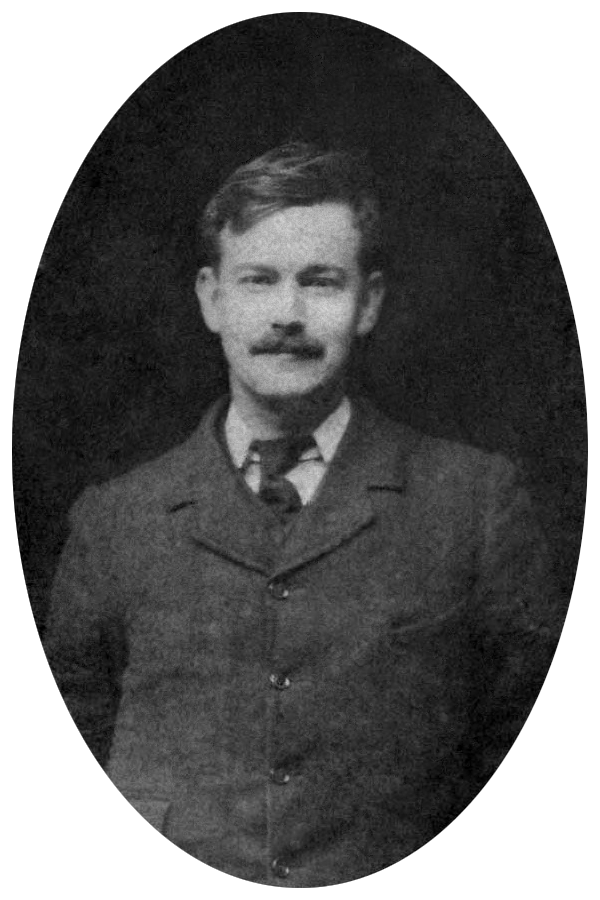
“An erring colleague is not an Amalkite to be smitten hip and thigh.”
"The Rise of the Gentry: A Postscript," The Economic History Review, Vol. 7, No. 1 (1954)
“Mankind may wring her secrets from nature, and use their knowledge to destroy themselves.”
Conclusion
Religion and the Rise of Capitalism (1926)
“It is probable that democracy owes more to Nonconformity than to any other single movement.”
Part IV, Ch. 4
Religion and the Rise of Capitalism (1926)
Part IV, Ch. 4
Religion and the Rise of Capitalism (1926)
Secondary Education For All (1922)
Secondary Education For All (1922)
Equality (1931)
Secondary Education For All (1922)
and secondary education that of their masters.
Secondary Education For All (1922)
Secondary Education For All (1922)
“Apart from the children of the well-to-do”
Secondary Education For All (1922)
Context: Apart from the children of the well-to-do, who receive secondary education almost as a matter of course, and whose parents appear usually, though quite mistakenly, to believe that they pay the whole cost of it, secondary education is still commonly regarded as a "privilege" to be conceded only to the exceptionally brilliant or fortunate.
“They would very strongly advise”
Secondary Education For All (1922)
Context: They would very strongly advise that in selecting children for higher education care should be taken to avoid creating, as was done, for example, in India, a large class of persons whose education is unsuitable for the employment they eventually enter.
“The primary school is like the rope which the Indian juggler throws into the air to end in vacancy”
Secondary Education For All (1922)
Context: The primary school is like the rope which the Indian juggler throws into the air to end in vacancy; that while in the United States some twenty-eight per cent, of the children entering the primary schools pass to high schools, in England the percentage passing from elementary to secondary schools is less than ten.
“It is still possible for the largest education authority in the country to propose”
Secondary Education For All (1922)
Context: It is still possible for the largest education authority in the country to propose to erect inequality of educational opportunity into a principle of public policy by solemnly suggesting, with much parade of philosophical arguments, that the interests of the community require that the children of well-to-do parents, who pay fees, should be admitted to public secondary schools on easier intellectual terms than the children of poor parents who can enter them only with free places, and that the children who are so contemptible as to be unable to afford secondary education without assistance in the form of maintenance allowances shall not be admitted unless they reach a higher intellectual standard still!
“The organization of education on lines of class”
Secondary Education For All (1922)
Context: The organization of education on lines of class, which, though qualified in the last twenty years, has characterized the English system of public education since its very inception, has been at once a symptom, an effect, and a cause of the control of the lives of the mass of men and women by a privileged minority. The very assumption on which it is based, that all that the child of the workers needs is "elementary education" — as though the mass of the people, like anthropoid apes, had fewer convolutions in their brains than the rich — is in itself a piece of insolence.
Part IV, Ch. 2
Religion and the Rise of Capitalism (1926)
Part IV, Ch. 3
Religion and the Rise of Capitalism (1926)
Laborare est orare.
Part IV, Ch. 3
Religion and the Rise of Capitalism (1926)
Part IV, Ch. 4
Religion and the Rise of Capitalism (1926)
Part IV, Ch. 3
Religion and the Rise of Capitalism (1926)
Part IV, Ch. 2
Religion and the Rise of Capitalism (1926)
“Freedom for the pike is death for the minnow.”
in Equality (1931)
sometimes cited as an English proverb, sometimes also attributed to Isaiah Berlin
Disputed
Part I, Ch. 3
Religion and the Rise of Capitalism (1926)
describing the Puritan view, Part IV, Ch. 4
Religion and the Rise of Capitalism (1926)
Part IV, Ch. 4
Religion and the Rise of Capitalism (1926)
Part IV, Ch. 3
Religion and the Rise of Capitalism (1926)
Part IV, Ch. 2
Religion and the Rise of Capitalism (1926)
“The certainties of one age are the problems of the next.”
Conclusion
Religion and the Rise of Capitalism (1926)


