“Flee an enemy who knows your weakness.”
Fuyez un ennemi qui sait votre défaut.
Néarque, act I, scene i.
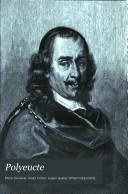
Polyeucte (1642)
Pierre Corneille was a French tragedian. He is generally considered one of the three great seventeenth-century French dramatists, along with Molière and Racine.
As a young man, he earned the valuable patronage of Cardinal Richelieu, who was trying to promote classical tragedy along formal lines, but later quarrelled with him, especially over his best-known play, Le Cid, about a medieval Spanish warrior, which was denounced by the newly formed Académie française for breaching the unities. He continued to write well-received tragedies for nearly forty years.
Wikipedia

“Flee an enemy who knows your weakness.”
Fuyez un ennemi qui sait votre défaut.
Néarque, act I, scene i.
Polyeucte (1642)
“One is often guilty by being too just.”
Pierre Corneille The Death of Pompey
À force d'être juste on est souvent coupable.
Photin, act I, scene i.
La Mort de Pompée (The Death of Pompey) (1642)
“The king, just and prudent, wants only those things which he can get.”
Le Roi, juste et prudent, ne veut que ce qu'il peut.
Laodice, act I, scene ii.
Nicomède (1651)
“Have others fear you, and I will have no fear.”
Faites que l'on vous craigne, et je ne craindrai rien.
Laodice, act I, scene i.
Nicomède (1651)
Ma raison, il est vrai, dompte mes sentiments,
Mais, quelque autorité que sur eux elle ait prise,
Elle n'y règne pas, elle les tyrannise.
Pauline, act II, scene ii.
Polyeucte (1642)
“To take revenge halfheartedly is to court disaster:
Either condemn or crown your hatred.”
Qui se venge à demi court lui-même à sa peine:
Il faut ou condamner ou couronner sa haine.
Cléopâtre, act V, scene i.
Rodogune (1644)
“It is hard to hate what one has loved,
And a half-extinguished fire is soon relit.”
On a peine à haïr ce qu'on a bien aimé,
Et le feu mal éteint est bientôt rallumé.
Sertorius, act I, scene iii.
Sertorius (1662)
“I love you much less than my God, but much more than myself.”
Je vous aime,
Beaucoup moins que mon Dieu, mais bien plus que moi-même.
Polyeucte, act IV, scene iii.
Polyeucte (1642)
“If you betray me, can I take a better revenge
Than to love the person you hate?”
Pierre Corneille Tite et Bérénice
Me puis-je mieux venger, si vous me trahissez,
Que d'aimer à vos yeux ce que vous haïssez?
Domitien, act IV, scene iii.
Tite et Bérénice (Titus and Berenice) (1670)
“Self-love is the source of all our other loves.”
Pierre Corneille Tite et Bérénice
L'amour-propre est la source en nous de tous les autres.
Albin, act I, scene iii.
Tite et Bérénice (Titus and Berenice) (1670)
“Love is a tyrant, sparing none.”
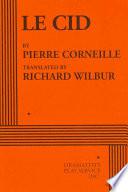
Pierre Corneille book Le Cid
L'amour est un tyran qui n'épargne personne.
Doña Urraque, act I, scene ii.
Le Cid (1636)
“Reason and love are sworn enemies.”
La raison et l'amour sont ennemis jurés.
La nourrice, La Veuve [The Widow], (1631), act II, scene III.
“He who fears not death fears not a threat.”
Pierre Corneille book Le Cid
Qui ne craint point la mort ne craint point les menaces.
Don Gomès, act II, scene i.
Le Cid (1636)
“Who is all-powerful should fear everything.”
Qui peut tout doit tout craindre.
Auguste, act IV, scene ii.
Cinna (1641)
“He who punishes the vanquished fears not the victor.”
Pierre Corneille The Death of Pompey
Qui punit le vaincu ne craint point le vainqueur.
Photin, act I, scene i.
La Mort de Pompée (The Death of Pompey) (1642)
“How sweet to die after one’s enemies.”
Il est doux de périr après ses ennemis.
Cléopâtre, act V, scene i.
Rodogune (1644)
“I don’t know how to defend myself: surprised innocence
Cannot imagine being under suspicion.”
Je me défendrai mal: l'innocence étonnée
Ne peut s'imaginer qu'elle soit soupçonnée.
Rodogune, act V, scene iv
Rodogune (1644)
“Treachery is noble when aimed at tyranny.”
Émilie, act III, scene iv.
Cinna (1641)
“They were more than kings, now they are less than slaves.”
Ils etaient plus que rois; ils sont moindres qu'esclaves.
Sertorius, act III, scene i
Sertorius describes Roman citizens after they had fallen under tyranny.
Sertorius (1662)
“As our self-interests differ, so do our feelings.”
Pierre Corneille The Death of Pompey
Comme nos intérêts, nos sentiments diffèrent.
Cornélie, act V, scene ii.
La Mort de Pompée (The Death of Pompey) (1642)
“Oh! how many actions, how many fabulous exploits
Remain without glory in the midst of the night.”
Pierre Corneille book Le Cid
Ô combien d’actions, combien d’exploits célèbres
Sont demeurés sans gloire au milieu des ténèbres.
Don Rodrigue, act IV, scene iii.
Le Cid (1636)
Rome seule aujourd'hui peut résister à Rome.
Viriate, act II, scene i.
Sertorius (1662)
“The worst of all states is the people's state.”
Le pire des États, c'est l'État populaire.
Cinna, act II, scene i.
Cinna (1641)
“They who overcome their desires once can overcome them always.”
Pierre Corneille Tite et Bérénice
Qui se vainc une fois peut se vaincre toujours.
Domitien, act II, scene ii.
Tite et Bérénice (Titus and Berenice) (1670)
“Its fury aims to shatter but our altars:
It scorns only the gods and never the mortals.”
Sa fureur ne va qu'à briser nos autels,
Elle n'en veut qu'aux dieux, et non pas aux mortels.
Stratonice, act I, scene iii
Referring to the early Christian church.
Polyeucte (1642)
“Brave men are brave from the very first.”
Pierre Corneille book Le Cid
Les hommes valeureux le sont du premier coup.
Chimène, act II, scene iii.
Le Cid (1636)
“He who is insulted has a right to be outraged, as unpunished audacity only increases!”
Qui se laisse outrager, mérite qu'on l'outrage
Et l'audace impunie enfle trop un courage.
Heraclius, act I, scene II.
“I agree to, or rather aspire to, my doom.”
Je consens, ou plutôt j'aspire à ma ruine.
Polyeucte, act IV, scene ii.
Polyeucte (1642)
“The fire which seems extinguished often slumbers beneath the ashes.”
Le feu qui semble éteint souvent dort sous la cendre.
Rodogune, act III, scene iv.
Rodogune (1644)
Pierre Corneille book Le Cid
Don Diègue: Rodrigue, as-tu du coeur?
Don Rodrigue: Tout autre que mon père
L’éprouverait sur l’heure.
Act I, scene v.
Le Cid (1636)
“He who can live in infamy is unworthy of life.”
Pierre Corneille book Le Cid
Qui peut vivre infâme est indigne du jour.
Don Diègue, act I, scene v.
Le Cid (1636)
“To conquer without risk is to triumph without glory.”
Pierre Corneille book Le Cid
À vaincre sans péril, on triomphe sans gloire.
Don Gomès, act II, scene ii.
Le Cid (1636)
“One half of my life has put the other half in the grave.”
Pierre Corneille book Le Cid
La moitié de ma vie a mis l’autre au tombeau.
Chimène, act III, scene iii.
Le Cid (1636)
“It is an imprudence common to kings
To listen to too much advice and to err in their choice.”
Pierre Corneille The Death of Pompey
C'est une imprudence assez commune aux rois
D'écouter trop d'avis et se tromper au choix.
Ptolomée, act IV, scene i.
La Mort de Pompée (The Death of Pompey) (1642)
“Ambition displeases when it has been sated… Having reached the peak, it aspires to descend.”
L'ambition déplaît quand elle est assouvie... Monté sur le faîte, il aspire à descendre.
Auguste, act II, scene i.
Cinna (1641)
“We never taste a perfect joy;
Our happiest successes are mixed with sadness.”
Pierre Corneille book Le Cid
Jamais nous ne goûtons de parfaite allégresse:
Nos plus heureux succès sont mêlés de tristesse.
Don Diègue, act III, scene v.
Le Cid (1636)
“And the combat ceased for want of combatants.”
Pierre Corneille book Le Cid
Et le combat cessa faute de combattants.
Don Rodrigue, act IV, scene iii.
Le Cid (1636)
“True, I am young, but for souls nobly born
Valor doesn’t await the passing of years.”
Pierre Corneille book Le Cid
Je suis jeune, il est vrai; mais aux âmes bien nées
La valeur n’attend point le nombre des années.
Don Rodrigue, act II, scene ii.
Le Cid (1636)
“The subject of a good tragedy must not be realistic.”
Le sujet d'une belle tragédie doit n'être pas vraisemblable.
Héraclius (1646), preface.
“Clemency is the noblest trait
Which can reveal a true monarch to the world.”
La clémence est la plus belle marque
Qui fasse à l'univers connaître un vrai monarque.
Livie, act IV, scene iii.
Cinna (1641)
“Death was to be my glory, but destiny has refused it.”
Pierre Corneille The Death of Pompey
Ma mort était ma gloire, et le destin m'en prive.
Cornélie, act III, scene iv.
La Mort de Pompée (The Death of Pompey) (1642)
“Sir, what does it matter whom I serve, so long as I am right?”
Seigneur, si j'ai raison, qu'importe à qui je sois?
Nicomède, act I, scene ii.
Nicomède (1651)
“The greater the effort, the greater the glory.”
Plus l'effort est grand, plus la gloire en est grande.
Pauline, act IV, scene v.
Polyeucte (1642)
Variant: The greater the effort, the greater the glory.
“The fate of States decides theirs:
Clauses of treaties determine their affections.”
Le destin des Etats est arbitre du leur,
Et l'ordre des traités règle tout dans leur cœur.
Rodogune, act III, scene iv.
Rodogune (1644)
“Rome is no longer in Rome, it is here where I am.”
Rome n'est plus dans Rome, elle est toute où je suis.
Sertorius, act III, scene i.
Sertorius (1662)
“The wrinkles on his forehead are the marks which his mighty deeds have engraved.”
Pierre Corneille book Le Cid
Ses rides, sur son front, ont grave ses exploits.
Don Diego, act I, scene i.
Le Cid (1636)
“Your virtue raises your glory above your crime.”
Ta vertu met ta gloire au-dessus de ton crime.
Tulle, act V, scene iii.
Horace (1639)
“I can be forced to live without happiness,
But I will never consent to live without honor.”
Pierre Corneille book Le Cid
L’on peut me réduire à vivre sans bonheur,
Mais non pas me résoudre à vivre sans honneur.
Don Gomès, act II, scene i.
Le Cid (1636)
“My generosity finally cedes to her hatred.”
Ma générosité cède enfin à sa haine.
Nicomède, act III, scene iv.
Nicomède (1651)
“Heaven absolves all crimes committed to gain a throne
Once Heaven gives it to us.”
Tous ces crimes d'État qu'on fait pour la couronne,
Le ciel nous en absout alors qu'il nous la donne.
Livie, act V, scene ii.
Cinna (1641)
“It is a crime against the State to be powerful enough to commit one.”
C'est un crime d'État que d'en pouvoir commettre.
Araspe, act II, scene i.
Nicomède (1651)
“Guess if you can, choose if you dare.”
Devine, si tu peux, et choisis, si tu l'oses.
Léontine, Héraclius, act IV, scene IV.
“He who plays advisor is no longer ambassador.”
Qui fait le conseiller n'est plus ambassadeur.
Nicomède, act III, scene iii.
Nicomède (1651)
“To die for one’s country is such a worthy fate
That all compete for so beautiful a death.”
Mourir pour le pays est un si digne sort,
Qu’on briguerait en foule une si belle mort.
Horace, act II, scene iii.
Horace (1639)
“I would not like a king who could obey.”
Laodice, act III, scene ii.
Nicomède (1651)
“After having won a scepter, few are so generous
As to disdain the pleasures of ruling.”
Peu de généreux vont jusqu'à dédaigner,
Après un sceptre acquis, la douceur de régner.
Maxime, act II, scene i.
Cinna (1641)
“As great as kings may be, they are what we are: they can err like other men.”
Pierre Corneille book Le Cid
Pour grands que soient les rois, ils sont ce que nous sommes:
Ils peuvent se tromper comme les autres hommes.
Don Gomès, act I, scene iii.
Le Cid (1636)
“To he who avenges a father, nothing is impossible.”
Pierre Corneille book Le Cid
À qui venge son père, il n’est rien d’impossible.
Don Rodrigue, act II, scene ii.
Le Cid (1636)
“A liar is always lavish of oaths.”
Un menteur est toujours prodigue de serments.
Clariste, act III, scene v.
Le Menteur (The Liar) (1643)
“Desire increases when fulfillment is postponed.”
Le désir s'accroît quand l'effet se recule.
Polyeucte, act I, scene i.
Polyeucte (1642)
Sans doute vos chrétiens, qu'on persécute en vain,
Ont quelque chose en eux qui surpasse l'humain:
Ils mènent une vie avec tant d'innocence,
Que le ciel leur en doit quelque reconnaissance;
Se relever plus forts, plus ils sont abattus,
N'est pas aussi l'effet des communes vertus.
Sévère, act V, scene vi.
Polyeucte (1642)
“By speaking of our misfortunes we often relieve them.”
À raconter ses maux souvent on les soulage.
Stratonice, act I, scene iii.
Polyeucte (1642)
L'exemple souvent n'est qu'un miroir trompeur;
Et l'ordre du destin qui gêne nos pensées
N'est pas toujours écrit dans les choses passées.
Auguste, act II, scene i.
Cinna (1641)
“A monarch must sometimes rule even himself:
He who wants everything must risk very little.”
Pierre Corneille Tite et Bérénice
Un monarque a souvent des lois à s'imposer;
Et qui veut pouvoir tout ne doit pas tout oser.
Tite, act IV, scene v.
Tite et Bérénice (Titus and Berenice) (1670)
“A true king is neither husband nor father;
He considers his throne and nothing else.”
Un véritable roi n'est ni mari ni père;
Il regarde son trône, et rien de plus.
Nicomède, act IV, scene iii.
Nicomède (1651)
“Such subjects are the very strength of kings,
And are thus above the law.”
De pareils serviteurs sont les forces des rois,
Et de pareils aussi sont au-dessus des lois.
Tulle, act V, scene iii
King Tullus forgives the hero, Horace, who has saved the state but killed his sister.
Horace (1639)
“He who pardons easily invites offense.”
Auguste, act IV, scene ii.
Cinna (1641)


