
Works

Our Inner Conflicts
Karen Horney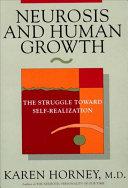
Neurosis and Human Growth
Karen Horney
New Ways in Psychoanalysis
Karen HorneyOur Inner Conflicts
Karen HorneyNeurosis and Human Growth
Karen HorneyNew Ways in Psychoanalysis
Karen HorneyFamous Karen Horney Quotes
Karen Horney book Neurosis and Human Growth
Neurosis and Human Growth (1950), Chapter 2, Neurotic Claims
Context: It is amazing how obtuse otherwise intelligent patients can become when it is a matter of seeing the inevitability of cause and effect in psychic matters. I am thinking of rather self-evident connections such as these: if we want to achieve something, we must put in work; if we want to become independent, we must strive toward assuming responsibility for ourselves. Or: so long as we are arrogant, we will be vulnerable. Or: so long as we do not love ourselves, we cannot possibly believe that others love us, and must by necessity be suspicious toward any assertion of love. Patients presented with such sequences of cause and effect may start to argue, to become befogged or evasive.
“If you want to be proud of yourself, then do things in which you can take pride”
Source: Neurosis and Human Growth: The Struggle Towards Self-Realization
The Neurotic Personality of Our Time (1937), pp. 227–228
Context: [The neurotic] feels caught in a cellar with many doors, and whichever door he opens leads only into new darkness. And all the time he knows that others are walking outside in sunshine. I do not believe that one can understand any severe neurosis without recognizing the paralyzing hopelessness which it contains. … It may be difficult then to see that behind all the odd vanities, demands, hostilities, there is a human being who suffers, who feels forever excluded from all that makes life desirable, who knows that even if he gets what he wants he cannot enjoy it. When one recognizes the existence of all this hopelessness it should not be difficult to understand what appears to be an excessive aggressiveness or even meanness, unexplainable by the particular situation. A person so shut out from every possibility of happiness would have to be a veritable angel if he did not feel hatred toward a world he cannot belong to.
“Rationalization may be defined as self-deception by reasoning.”
Karen Horney book Our Inner Conflicts
Our Inner Conflicts (1945) http://encarta.msn.com/quote_561555562/Reason_Rationalization_may_be_defined_as.html
Karen Horney Our Inner Conflicts (1945)
Karen Horney book New Ways in Psychoanalysis
New Ways in Psychoanalysis (1939) pp. 281


