John Rawls Quotes

John Bordley Rawls was an American moral and political philosopher in the liberal tradition. Rawls received both the Schock Prize for Logic and Philosophy and the National Humanities Medal in 1999, the latter presented by President Bill Clinton, in recognition of how Rawls' work "helped a whole generation of learned Americans revive their faith in democracy itself."In his 1990 introduction to the field, Will Kymlicka wrote that "it is generally accepted that the recent rebirth of normative political philosophy began with the publication of John Rawls's A Theory of Justice in 1971." Rawls has often been described as one of the most influential political philosophers of the 20th century. He has the unusual distinction among contemporary political philosophers of being frequently cited by the courts of law in the United States and Canada and referred to by practising politicians in the United States and the United Kingdom.Rawls's theory of "justice as fairness" recommends equal basic rights, equality of opportunity, and promoting the interests of the least advantaged members of society. Rawls's argument for these principles of social justice uses a thought experiment called the "original position", in which people select what kind of society they would choose to live under if they did not know which social position they would personally occupy. In his later work Political Liberalism , Rawls turned to the question of how political power could be made legitimate given reasonable disagreement about the nature of the good life. Wikipedia  

✵ 21. February 1921 – 24. November 2002

Works

John Rawls: 63 quotes12 likes

Famous John Rawls Quotes

“The natural distribution is neither just nor unjust; nor is it unjust that persons are born into society at some particular position. These are simply natural facts. What is just and unjust is the way that institutions deal with these facts.”

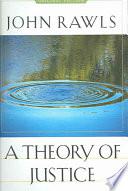
John Rawls book A Theory of Justice

Source: A Theory of Justice (1971; 1975; 1999), Chapter II, Section 14, pg. 87-88
Context: Occasionally this reflection is offered as an excuse for ignoring injustice, as if the refusal to acquiesce in injustice is on a par with being unable to accept death. The natural distribution is neither just nor unjust; nor is it unjust that persons are born into society at some particular position. These are simply natural facts. What is just and unjust is the way that institutions deal with these facts.
Context: We may reject the contention that the ordering of institutions is always defective because the distribution of natural talents and the contingencies of social circumstance are unjust, and this injustice must inevitably carry over to human arrangements. Occasionally this reflection is offered as an excuse for ignoring injustice, as if the refusal to acquiesce in injustice is on a par with being unable to accept death. The natural distribution is neither just nor unjust; nor is it unjust that persons are born into society at some particular position. These are simply natural facts. What is just and unjust is the way that institutions deal with these facts. Aristocratic and caste societies are unjust because they make these contingencies the ascriptive basis for belonging to more or less enclosed and privileged social classes. The basic structure of these societies incorporates the arbitrariness found in nature. But there is no necessity for men to resign themselves to these contingencies. The social system is not an unchangeable order beyond human control but a pattern of human action. In justice as fairness men agree to avail themselves of the accidents of nature and social circumstance only when doing so is for the common benefit. The two principles are a fair way of meeting the arbitrariness of fortune; and while no doubt imperfect in other ways, the institutions which satisfy these principles are just.

“The intolerant can be viewed as free-riders, as persons who seek the advantages of just institutions while not doing their share to uphold them.”

John Rawls book A Theory of Justice

Source: A Theory of Justice (1971; 1975; 1999), Chapter VI, Section 59, pg. 388

“The concept of justice I take to be defined, then, by the role of its principles in assigning rights and duties and in defining the appropriate division of social advantages.”

John Rawls book A Theory of Justice

Source: A Theory of Justice (1971; 1975; 1999), Chapter I, Section 2, pg. 10
Context: The concept of justice I take to be defined, then, by the role of its principles in assigning rights and duties and in defining the appropriate division of social advantages. A conception of justice is an interpretation of this role.

“I have tried to set forth a theory that enables us to understand and to assess these feelings about the primacy of justice.”

John Rawls book A Theory of Justice

Source: A Theory of Justice (1971; 1975; 1999), Chapter IX, Section 87, p. 586
Context: I have tried to set forth a theory that enables us to understand and to assess these feelings about the primacy of justice. Justice as fairness is the outcome: it articulates these opinions and supports their general tendency.

“Each person possesses an inviolability founded on justice that even the welfare of society as a whole cannot override.”

John Rawls book A Theory of Justice

Source: A Theory of Justice (1971; 1975; 1999), Chapter I, Section 1, pg. 3-4
Context: Justice is the first virtue of social institutions, as truth is of systems of thought. A theory however elegant and economical must be rejected or revised if it is untrue; likewise laws and institutions no matter how efficient and well-arranged must be reformed or abolished if they are unjust. Each person possesses an inviolability founded on justice that even the welfare of society as a whole cannot override. For this reason justice denies that the loss of freedom for some is made right by a greater good shared by others. It does not allow that the sacrifices imposed on a few are outweighed by the larger sum of advantages enjoyed by many. Therefore in a just society the liberties of equal citizenship are taken as settled; the rights secured by justice are not subject to political bargaining or to the calculus of social interests.

John Rawls Quotes about justice

“The principles of justice are chosen behind a veil of ignorance.”

John Rawls book A Theory of Justice

Source: A Theory of Justice (1971; 1975; 1999), Chapter I, Section 3, pg. 12

“Our concern is solely with the basic structure of society and its major institutions and therefore with the standard cases of social justice.”

John Rawls book A Theory of Justice

Source: A Theory of Justice (1971; 1975; 1999), Chapter II, Section 10, pg. 58

“Justice is happiness according to virtue.”

John Rawls book A Theory of Justice

Source: A Theory of Justice (1971; 1975; 1999), Chapter V, Section 48, p. 310

“To each according to his threat advantage does not count as a principle of justice.”

John Rawls book A Theory of Justice

Source: A Theory of Justice (1971; 1975; 1999), Chapter III, Section 24, pg. 141

John Rawls Quotes about personality

“I have assumed throughout that the persons in the original position are rational.”

John Rawls book A Theory of Justice

Source: A Theory of Justice (1971; 1975; 1999), Chapter III, Section 25, pg. 142

“Greater intelligence, wealth and opportunity, for example, allow a person to achieve ends he could not rationally contemplate otherwise.”

John Rawls book A Theory of Justice

Source: A Theory of Justice (1971; 1975; 1999), Chapter II, Section 15, pg. 93

John Rawls: Trending quotes

“Justice is the first virtue of social institutions, as truth is of systems of thought.”

John Rawls book A Theory of Justice

Source: A Theory of Justice (1971; 1975; 1999), Chapter I, Section 1, pg. 3-4
Context: Justice is the first virtue of social institutions, as truth is of systems of thought. A theory however elegant and economical must be rejected or revised if it is untrue; likewise laws and institutions no matter how efficient and well-arranged must be reformed or abolished if they are unjust. Each person possesses an inviolability founded on justice that even the welfare of society as a whole cannot override. For this reason justice denies that the loss of freedom for some is made right by a greater good shared by others. It does not allow that the sacrifices imposed on a few are outweighed by the larger sum of advantages enjoyed by many. Therefore in a just society the liberties of equal citizenship are taken as settled; the rights secured by justice are not subject to political bargaining or to the calculus of social interests.

“We cannot at the end count them a second time because we do not like the result.”

John Rawls book A Theory of Justice

Source: A Theory of Justice (1971; 1975; 1999), Chapter III, Section 23, pg. 135
Context: The claims of existing social arrangements and of self interest have been duly allowed for. We cannot at the end count them a second time because we do not like the result.

John Rawls Quotes

“There are infinitely many variations of the initial situation and therefore no doubt indefinitely many theorems of moral geometry.”

John Rawls book A Theory of Justice

Source: A Theory of Justice (1971; 1975; 1999), Chapter III, Section 21, pg. 126

“A just system must generate its own support.”

John Rawls book A Theory of Justice

Source: A Theory of Justice (1971; 1975; 1999), Chapter V, Section 41, p. 261

“In justice as fairness society is interpreted as a cooperative venture for mutual advantage.”

John Rawls book A Theory of Justice

Source: A Theory of Justice (1971; 1975; 1999), Chapter II, Section 14, pg. 84

“Intuitionism is not constructive, perfectionism is unacceptable.”

John Rawls book A Theory of Justice

Source: A Theory of Justice (1971; 1975; 1999), Chapter I, Section 9, pg. 52

“Ideal legislators do not vote their interests.”

John Rawls book A Theory of Justice

Source: A Theory of Justice (1971; 1975; 1999), Chapter V, Section 43, p. 284

“Ideally a just constitution would be a just procedure arranged to insure a just outcome.”

John Rawls book A Theory of Justice

Source: A Theory of Justice (1971; 1975; 1999), Chapter IV, Section 31, pg. 197

“Indeed, it is tempting to suppose that it is self evident that things should be so arranged so as to lead to the most good.”

John Rawls book A Theory of Justice

Source: A Theory of Justice (1971; 1975; 1999), Chapter I, Section 5, pg. 25

“The hazards of the generalized prisoner's dilemma are removed by the match between the right and the good.”

John Rawls book A Theory of Justice

Source: A Theory of Justice (1971; 1975; 1999), Chapter IX, Section 86, p. 577

“It may be expedient but it is not just that some should have less in order that others may prosper.”

John Rawls book A Theory of Justice

Source: A Theory of Justice (1971; 1975; 1999), Chapter I, Section 3, pg. 15

“The fundamental criterion for judging any procedure is the justice of its likely results.”

John Rawls book A Theory of Justice

Source: A Theory of Justice (1971; 1975; 1999), Chapter IV, Section 37, p. 230

“If A were not allowed his better position, B would be even worse off than he is.”

John Rawls book A Theory of Justice

Source: A Theory of Justice (1971; 1975; 1999), Chapter II, Section 17, pg. 103

“Inequalities are permissible when they maximize, or at least all contribute to, the long term expectations of the least fortunate group in society.”

John Rawls book A Theory of Justice

Source: A Theory of Justice (1971; 1975; 1999), Chapter III, Section 26, pg. 151

“Being happy involves both a certain achievement in action and a rational assurance about the outcome.”

John Rawls book A Theory of Justice

Source: A Theory of Justice (1971; 1975; 1999), Chapter IX, Section 83, p. 549

“The fault of the utilitarian doctrine is that it mistakes impersonality for impartiality.”

John Rawls book A Theory of Justice

Source: A Theory of Justice (1971; 1975; 1999), Chapter III, Section 30, pg. 190

“We must choose for others as we have reason to believe they would choose for themselves if they were at the age of reason and deciding rationally.”

John Rawls book A Theory of Justice

Source: A Theory of Justice (1971; 1975; 1999), Chapter IV, Section 33, p. 209

“The even larger difference between rich and poor makes the latter even worse off, and this violates the principle of mutual advantage.”

John Rawls book A Theory of Justice

Source: A Theory of Justice (1971; 1975; 1999), Chapter II, Section 13, pg. 79

“I am particularly grateful to Nozick for his unfailing help and encouragement during the last stages.”

John Rawls book A Theory of Justice

Preface, pg. xii
A Theory of Justice (1971; 1975; 1999)

“We may suppose that everyone has in himself the whole form of a moral conception.”

John Rawls book A Theory of Justice

Source: A Theory of Justice (1971; 1975; 1999), Chapter I, Section 9, pg. 50

“Clearly when the liberties are left unrestricted they collide with one another.”

John Rawls book A Theory of Justice

Source: A Theory of Justice (1971; 1975; 1999), Chapter IV, Section 32, p. 203

“An intuitionist conception of justice is, one might say, but half a conception.”

John Rawls book A Theory of Justice

Source: A Theory of Justice (1971; 1975; 1999), Chapter I, Section 8, pg. 41

“The circumstances of justice may be described as the normal conditions under which human cooperation is both possible and necessary.”

John Rawls book A Theory of Justice

Source: A Theory of Justice (1971; 1975; 1999), Chapter III, Section 22, pg. 126

“The extreme nature of dominant-end views is often concealed by the vagueness and ambiguity of the end proposed.”

John Rawls book A Theory of Justice

Source: A Theory of Justice (1971; 1975; 1999), Chapter IX, Section 83, p. 554

“The suppression of liberty is always likely to be irrational.”

John Rawls book A Theory of Justice

Source: A Theory of Justice (1971; 1975; 1999), Chapter IV, Section 33, p. 210

“This is a long book, not only in pages.”

John Rawls book A Theory of Justice

Preface, pg. viii
A Theory of Justice (1971; 1975; 1999)

“Justice does not require that men must stand idly by while others destroy the basis of their existence.”

John Rawls book A Theory of Justice

Source: A Theory of Justice (1971; 1975; 1999), Chapter IV, Section 35, p. 218

“Justice as fairness provides what we want.”

John Rawls book A Theory of Justice

Source: A Theory of Justice (1971; 1975; 1999), Chapter III, Section 30, pg. 190

“No one deserves his greater natural capacity nor merits a more favorable starting place in society.”

John Rawls book A Theory of Justice

Source: A Theory of Justice (1971; 1975; 1999), Chapter II, Section 17, pg. 102

Similar authors

Hannah Arendt photo
Hannah Arendt85
Jewish-American political theorist None
Jean Paul Sartre photo
Jean Paul Sartre321
French existentialist philosopher, playwright, novelist, sc… None
Ayn Rand photo
Ayn Rand322
Russian-American novelist and philosopher None
Max Weber photo
Max Weber41
German sociologist, philosopher, and political economist None
Elinor Ostrom photo
Elinor Ostrom4
American political economist None
Bertrand Russell photo
Bertrand Russell562
logician, one of the first analytic philosophers and politi… None
Martin Heidegger photo
Martin Heidegger69
German philosopher None
Noam Chomsky photo
Noam Chomsky334
american linguist, philosopher and activist None
Paulo Freire photo
Paulo Freire115
educator and philosopher None
Emil M. Cioran photo
Emil M. Cioran531
Romanian philosopher and essayist None