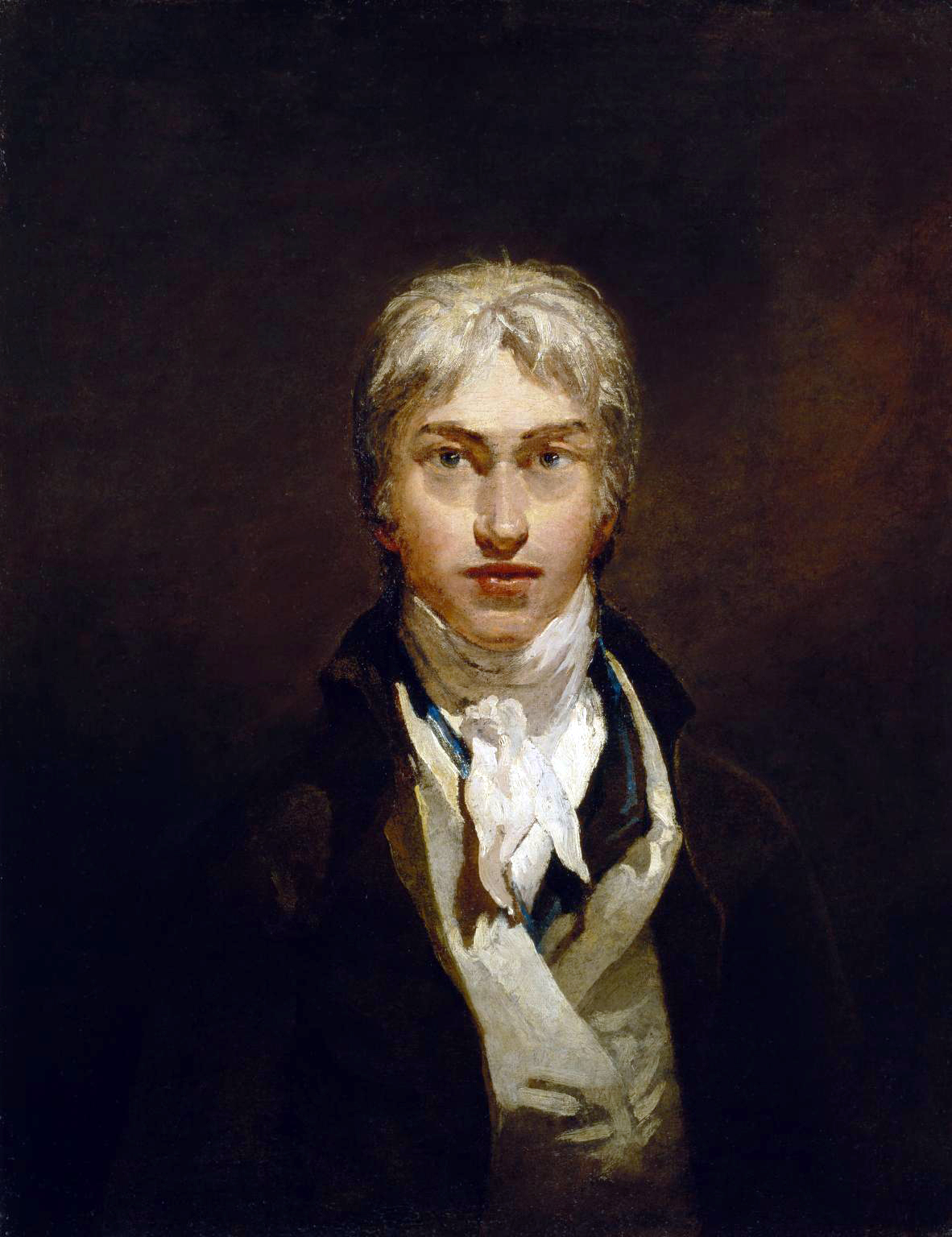
Source: J.M.W. Turner
J.M.W. Turner: 22 quotes7 likes
Famous J.M.W. Turner Quotes
Quote of Turner, c. 1840's; as cited by George Walter Thornbury, in The life of J.M.W. Turner, Volume II; Hurst and Blackett Publishers, London, 1862, p. 130
Turner did not appear to be pleased with Mr. Ruskin's superlative eulogies, according to Peter Cunningham
1821 - 1851
“Painting can never show her nose in company with architecture without being snubbed.”
Quote c. 1840; as cited by by Charles Rob Leslie Vol. 1, (1860), p. 208; as quoted in The Life of J. M. W. Turner - Founded on Letters and Papers Furnished by His Friends and Fellow Academicians, Walter Thornbury; Cambridge University Press, 2013, p. 244
Turner's remark in the 1840's, when the new built Houses of Parliament in London were to be decorated with pictures
1821 - 1851
Quote c. 1810; as quoted in 'A brief history of weather in European landscape art', John E. Thornes, in Weather Volume 55, Issue 10 Oct. 2000, p. 368
The sky effects in the 'Hannibal' painting of Turner (Tate Gallery, No. 490) he finished in 1812, were supposedly seen by Turner in Yorkshire whilst visiting his friends the Fawkeses, (Tate Gallery 1975)
1795 - 1820
“My business is to paint what I see, not what I know is there.”
Turner, quoted in: Donald B. MacCulloch (1927) The Wondrous Isle of Staffa, p. 160
Alternative quote:
My job is to paint what I see, not what I know
As quoted in: George Seferis (1999) A Poet's Journal: Days of 1945-1951. p. 105
undated quotes
Quote in Turner's letter from Rome, 13 Oct. 1828 to his friend George Jones; as cited in The Life of J. M. W. Turner R.A. , Walter Thornbury - A new Edition, Revised https://ia601807.us.archive.org/24/items/gri_33125004491185/gri_33125004491185.pdf; London Chatto & Windus, 1897, p. 101 <br class="br">1821 - 1851
J.M.W. Turner Quotes about art
Quote of Turner, c. 1810; as quoted in: Dennis Hugh Halloran (1970) The Classical Landscape Paintings of J.M.W. Turner. p. 75
1795 - 1820
Quote of Turner, told by Mr. C?. Leslie; as cited in 'The life of J.M.W. Turner', Volume II, George Walter Thornbury; https://ia801207.us.archive.org/18/items/lifeofjmwturnerr02thor/lifeofjmwturnerr02thor.pdf Hurst and Blackett Publishers, London, 1862, pp. 186-87 <br class="br">Mr. Leslie gives Turner's respond on the idea to stop with the tradition of the pleasant [varnishing] days of the Academy before the yearly exhibition <br class="br">undated quotes
Quote in Turner's letter from Rome, 6 Nov. 1828, to his friend Francis Chantrey; as cited in The Life of J. M. W. Turner R.A. , Walter Thornbury - A new Edition, Revised https://ia601807.us.archive.org/24/items/gri_33125004491185/gri_33125004491185.pdf; London Chatto & Windus, 1897, p. 10 <br class="br">1821 - 1851
Quote from Turner's letter 4 Dec. 1848 to James Astbury Hammersley; as cited in The life of J.M.W. Turner, Volume II, George Walter Thornbury; Hurst and Blackett Publishers, London, 1862, pp. 115-16
James Astbury Hammersley, himself an artist and art-teacher, wrote Turner to ask him to give his son further instructions in painting
1821 - 1851
J.M.W. Turner Quotes about time
one of Girtin's yellow drawings <br class="br">remark of Turner to Chambers Hall, (before 1855); as cited in The Life of J. M. W. Turner R.A. , Walter Thornbury - A new Edition, Revised https://ia601807.us.archive.org/24/items/gri_33125004491185/gri_33125004491185.pdf; London Chatto & Windus, 1897, p. 61 <br class="br">undated quotes
Quote from Turner's lectures, 1811; as cited in Life and Work of J.M.W. Turner, Andrew Wilton; London: Academy Editions, 1979; as quoted in 'A brief history of weather in European landscape art', John E. Thornes, in Weather Volume 55, Issue 10 Oct. 2000, p. 367-368
In 1811 already Turner gave his first lectures as Professor of Perspective; in one of his lectures he spoke of the advantages of the British climate for landscape artists
1795 - 1820
Quote from Turner's letter to Mr. Hawkesworth, 24 December, 1849; as quoted in The life of J.M.W. Turner, Volume II, George Walter Thornbury; Hurst and Blackett Publishers, London, 1862, pp. 90-91
1821 - 1851
J.M.W. Turner Quotes
Quote from Turner's letter, London Feb. 1830, to his friend George Jones in Rome; as cited in 'The life of J.M.W. Turner', Volume II, George Walter Thornbury; https://ia801207.us.archive.org/18/items/lifeofjmwturnerr02thor/lifeofjmwturnerr02thor.pdf Hurst and Blackett Publishers, London, 1862, p. 233 <br class="br">1821 - 1851
Quoted in: Eric Shanes (2012) The Life and Masterworks of J.M.W. Turner, p. 23
undated quotes
Quote of Turner's remark, c. 1799 to his colleague Joseph Farington; as cited in the essay 'Draughtsman and Watercolourist', by David Blayney Brown http://www.tate.org.uk/art/research-publications/jmw-turner/essays-g2010028 on Tate.org <br class="br">Turner claimed then to have broken free of conventional methods <br class="br">1795 - 1820
Quote from Turner's remark c. Jan, 1849, to financial agent Mr. Williams; as cited in 'The life of J.M.W. Turner', Volume II, George Walter Thornbury; https://ia801207.us.archive.org/18/items/lifeofjmwturnerr02thor/lifeofjmwturnerr02thor.pdf Hurst and Blackett Publishers, London, 1862, pp. 248-249 <br class="br">Mr. Drake, the solicitor of the Railway Company, whom Mr. Turner saw when he executed the conveyance, requested Mr. Williams to ask Turner's permission to show him a picture he had purchased as a 'Turner' <br class="br">1821 - 1851
Quote of Turner, c. 1806?; told by Mr Wells' daughter, Mrs. Wheeler; included in The life of J.M.W. Turner, Volume II, George Walter Thornbury; Hurst and Blackett Publishers, London, 1862, p. 55
the first drawings for the publication of Turners's famous print-collection Liber Studiorum started here; Mrs. Clara Wheeler as a young girl sat by his side while Turner was making those drawings. A few years later she have gone out many times, sketching with Turner
1795 - 1820
Quote from Turner's letter to Mr. Trimmer; as cited in The Life of J. M. W. Turner R.A., George Walter Thornbury - A new Edition, Revised https://ia601807.us.archive.org/24/items/gri_33125004491185/gri_33125004491185.pdf; London Chatto & Windus, 1897, pp. 225-26 <br class="br">Turner asked assistance about a woman he liked, but not dared to approach; which he met at Trimmer's place at Heston <br class="br">1795 - 1820
“If I could find anything blacker than black, I'd use it.”
Quote of Turner, c. 1842-43; as cited by Philip Gilbert Hamerton (1879) The Life of J. M. W. Turner, R. A. p. 296
his reply after the prominent English marine painter Clarkson Stanfield had complained, that Turner in his painting 'Peace - Burial at Sea' - he painted after the burial of his artist-friend David Wilkie - had painted the sails in the steamer as black as possible
1821 - 1851
“.. indistinctness is my forte.”
More full text:<br>"Unfortunately I met mr. Turner at the Academy a night or two after I received this letter; and he asked me if I had heard from Mr. Lennox. I was obliged to say ' yes.' ' Well, and how does he like the picture?' 'He thinks it indistinct.' ' You should tell him,' he replied, ' that indistinctness is my forte.' <br class="br">undated quotes <br class="br">Source: Walter Thornbury. The Life of J.M.W. Turner,: ... Founded on Letters and Papers Furnished by His Friends and Fellow Academicians. By Walter Thornbury. In Two Volumes, Volume 2 http://books.google.com/books?id=FIMOAAAAQAAJ&pg=PA243. (1862), p. 243
Quote from Turner's letter, London Feb. 1830, to his friend George Jones in Rome; as cited in 'The life of J.M.W. Turner', Volume II, George Walter Thornbury; https://ia801207.us.archive.org/18/items/lifeofjmwturnerr02thor/lifeofjmwturnerr02thor.pdf Hurst and Blackett Publishers, London, 1862, p. 234 <br class="br">1821 - 1851


