“It is best to avoid low company, whether they come in peace or in war.”
An argosy of fables, p. 245
about himself, Extracted from Baharīstān-e- Jami
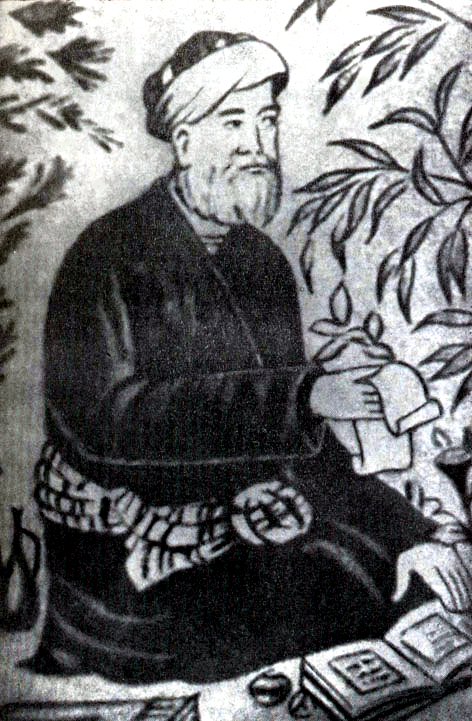
Nūr ad-Dīn 'Abd ar-Rahmān Jāmī , also known as Mawlanā Nūr al-Dīn 'Abd al-Rahmān or Abd-Al-Rahmān Nur-Al-Din Muhammad Dashti, or simply as Jami or Djāmī and in Turkey as Molla Cami, was a Sunni poet who is known for his achievements as a prolific scholar and writer of mystical Sufi literature. He was primarily a prominent poet-theologian of the school of Ibn Arabi and a Khwājagānī Sũfī, recognized for his eloquence and for his analysis of the metaphysics of mercy. His most famous poetic works are Haft Awrang, Tuhfat al-Ahrar, Layla wa Majnun, Fatihat al-Shabab, Lawa'ih, Al-Durrah al-Fakhirah. Jami belonged to the Naqshbandi Sufi order. Wikipedia
“It is best to avoid low company, whether they come in peace or in war.”
An argosy of fables, p. 245
about himself, Extracted from Baharīstān-e- Jami
“Good intentions are useless in the absence of common-sense.”
An argosy of fables, p. 240
about himself, Extracted from Baharīstān-e- Jami
“I was trapped in love
And this trap is enough for me.”
Jami book Haft Awrang
Haft Awrang, p. 101
Poetry, Poetry from Haft Awrang
“How a pleasant word of an old lover that said
When there is lovem there is no comfort.”
Joseph and Zuleika, p. 254
Poetry, Poetry from Joseph and Zuleika
Joseph and Zuleika, p. 113
Poetry, Poetry from Joseph and Zuleika
Joseph and Zuleika, p. 78
Poetry, Poetry from Joseph and Zuleika
“Happy is the man who knows the true from the false, and refuses to accept less.”
An argosy of fables, p. 243
about himself, Extracted from Baharīstān-e- Jami
An argosy of fables, p. 242
about himself, Extracted from Baharīstān-e- Jami
“The wise man refuses to be led beyond his own depth.”
An argosy of fables, p. 242
about himself, Extracted from Baharīstān-e- Jami
Lawāih, p. 20
Lawāih
Alluding to Rabia of Basra, Nafahat al-Uns, as quoted in A Literary History of Persia https://www.google.com/books/edition/A_Literary_History_of_Persia/q_n1DwAAQBAJ?hl=en&gbpv=1&pg=PA299 by E. G. Browne, p. 299.


