“Dying more like animals than human beings.”
Giovanni Boccaccio book The Decameron
Non come uomini, ma quasi come bestie, morieno.
First Day, Introduction
The Decameron (c. 1350)
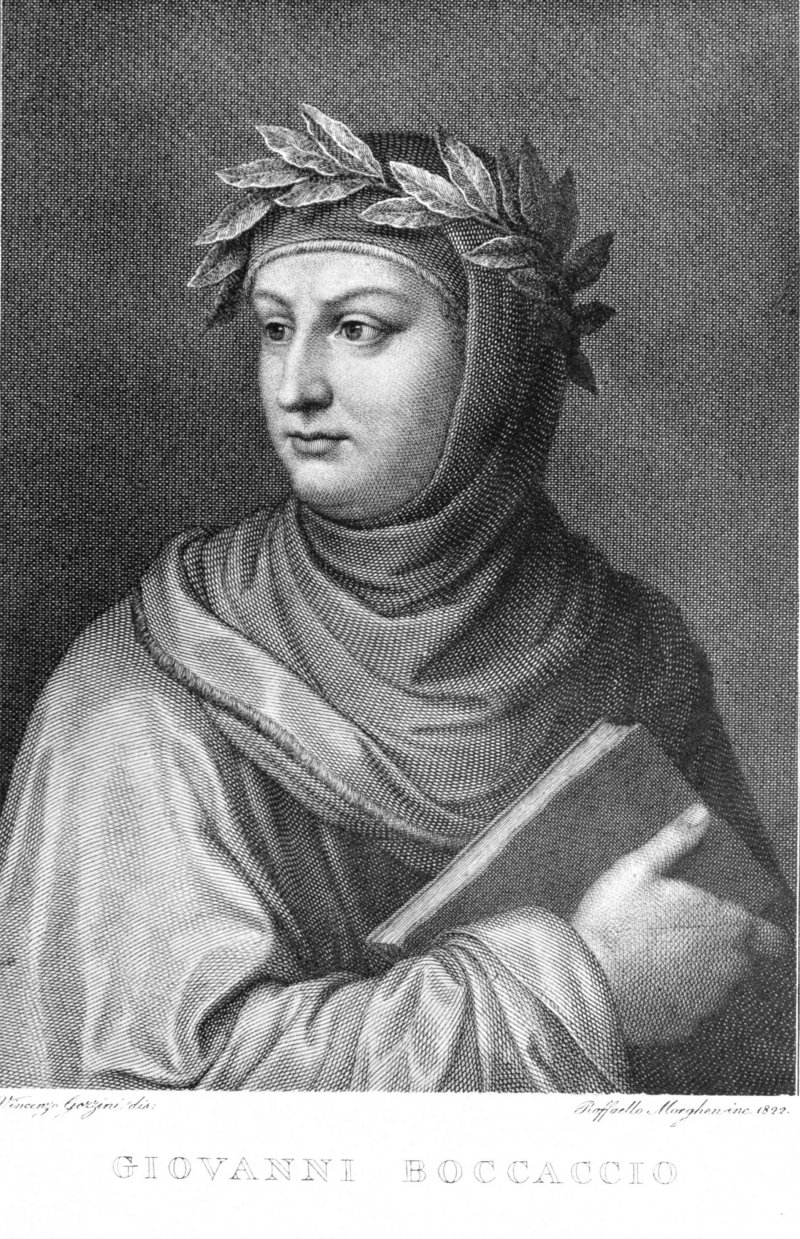
Giovanni Boccaccio was an Italian writer, poet, correspondent of Petrarch, and an important Renaissance humanist. Boccaccio wrote a number of notable works, including The Decameron and On Famous Women. He wrote his imaginative literature mostly in Tuscan vernacular, as well as other works in Latin, and is particularly noted for his realistic dialogue which differed from that of his contemporaries, medieval writers who usually followed formulaic models for character and plot. Wikipedia
“Dying more like animals than human beings.”
Giovanni Boccaccio book The Decameron
Non come uomini, ma quasi come bestie, morieno.
First Day, Introduction
The Decameron (c. 1350)
Giovanni Boccaccio book The Decameron
Le forze della penna sono troppo maggiori che coloro non estimano che quelle con conoscimento provato non hanno.
Eighth Day, Seventh Story
The Decameron (c. 1350)
Giovanni Boccaccio book The Decameron
Leggiadre donne, infra molte bianche colombe aggiugne più di bellezza uno nero corvo, che non farebbe un candido cigno.
Ninth Day, Tenth Story
The Decameron (c. 1350)
Giovanni Boccaccio book The Decameron
Fate quello che noi diciamo e non quello che noi facciamo.
Third Day, Seventh Story
The Decameron (c. 1350)
Giovanni Boccaccio book The Decameron
Chi mal ti vuol, mal ti sogna.
Ninth Day, Seventh Story (tr. J. M. Rigg)
The Decameron (c. 1350)
Giovanni Boccaccio book The Decameron
Uno amore...a lieto fin pervenuto, in una novelletta assai piccola intendo di raccontarvi.
Fifth Day, Fourth Story
The Decameron (c. 1350)
“A sin that's hidden is half forgiven.”
Giovanni Boccaccio book The Decameron
Peccato celato e mezzo perdonato. <br class="br">First Day, Introduction <br class="br"> J. M. Rigg's translation http://decameron.obdurodon.org/engdecameronviewreading.html: Sin that is hidden is half forgiven. <br class="br">The Decameron (c. 1350)
“People are more inclined to believe in bad intentions than in good ones.”
Giovanni Boccaccio book The Decameron
La gente è più acconcia a credere il male che il bene.
Third Day, Sixth Story
The Decameron (c. 1350)
Giovanni Boccaccio book The Decameron
Essere la natura de' motti cotale, che essi come la pecora morde deono cosi mordere l'uditore, e non come 'l cane: percio che, se come cane mordesse il motto, non sarebbe motto, ma villania.
Sixth Day, Third Story
The Decameron (c. 1350)
“And if his own joy knew no bounds, the girl was no less delighted on seeing him.”
Giovanni Boccaccio book The Decameron
Se egli fu lieto assai, la letizia della giovane non fu minore.
Fifth Day, Third Story
The Decameron (c. 1350)
“They banish us to the kitchen, there to tell stories to the cat.”
Giovanni Boccaccio book The Decameron
Ci cacciano in cucina a dir delle favole colla gatta.
Fifth Day, Tenth Story (tr. J. M. Rigg)
The Decameron (c. 1350)
“A kissed mouth doesn't lose its freshness, for like the moon it always renews itself.”
Giovanni Boccaccio book The Decameron
Bocca baciata non perde ventura, anzi rinnuova come fa la luna.
Second Day, Seventh Story
The Decameron (c. 1350)
Giovanni Boccaccio book The Decameron
Sempre non può l' uomo un cibo, ma talvolta desidera di variare.
Seventh Day, Sixth Story
The Decameron (c. 1350)
“The deceived has the better of the deceiver.”
Giovanni Boccaccio book The Decameron
Lo ingannatore rimane a pié dello ingannato.
Second Day, Ninth Story (tr. J. M. Rigg)
The Decameron (c. 1350)
“An oak is not felled by a single blow of the axe.”
Giovanni Boccaccio book The Decameron
Per lo primo colpo non cade la quercia.
Seventh Day, Ninth Story (tr. J. M. Rigg)
The Decameron (c. 1350)
“While superfluity engenders disgust, appetite is but whetted when fruit is forbidden.”
Giovanni Boccaccio book The Decameron
Come la copia delle cose genera fastidio, cosl l'esser le desiderate negate moltiplica l'appetito.
Fourth Day, Third Story (tr. J. M. Rigg)
The Decameron (c. 1350)
“In the affairs of this world, poverty alone is without envy.”
Giovanni Boccaccio book The Decameron
Sola la miseria è senza invidia nelle cose presenti.
Fourth Day, Introduction
The Decameron (c. 1350)
“Wrongs committed in the distant past are far easier to condemn than to rectify.”
Giovanni Boccaccio book The Decameron
Le cose mal fatte e di gran tempo passate son più agevoli a riprendere che ad emendare.
Second Day, Fifth Story
The Decameron (c. 1350)
Giovanni Boccaccio book Corbaccio
Se medesimi esaltando con parole da fare per istomacaggine le pietre saltar del muro e fuggirsi.
Il Corbaccio (c. 1355), "The Labyrinth of Love" (tr. Normand Cartier)
“A just king must be the first to observe those laws that he has himself prescribed.”
Giovanni Boccaccio book The Decameron
Ogni giusto re primo servatore dee essere delle leggi fatte da lui.
Seventh Day, Tenth Story
The Decameron (c. 1350)
“A sweet little mouth with lips like rubies.”
Giovanni Boccaccio book The Decameron
Una boccuccia piccolina, le cui labbra parevan due rubinetti.
Fourth Day, Conclusion
The Decameron (c. 1350)
“Shortly afterwards the moon rose with a very clear sky, and [he] kept watch.”
Giovanni Boccaccio book The Decameron
E poco appresso levatasi la luna, e 'l tempo essendo chiarissimo, [egli] vegghiava.
Fifth Day, Third Story (tr. J. M. Rigg)
The Decameron (c. 1350)
Giovanni Boccaccio book The Decameron
Natural ragione è di ciascuno che ci nasce, la sua vita, quanto può, aiutare e conservare e difendere.
First Day, Introduction
The Decameron (c. 1350)
“He who is wicked and held to be good, can cheat because no one imagines he would.”
Giovanni Boccaccio book The Decameron
Chi è reo e buono è tenuto
Può fare il male e non è creduto.
Fourth Day, Second Story
The Decameron (c. 1350)


