“History, like love, is so apt to surround her heroes with an atmosphere of imaginary brightness.”
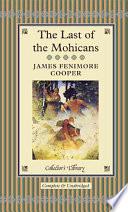
James Fenimore Cooper book The Last of the Mohicans
Source: The Last of the Mohicans (1826), Ch. 18
James Fenimore Cooper was a prolific and popular American writer of the early 19th century.
His historical romances of frontier and Indian life in the early American days created a unique form of American literature. He lived most of his life in Cooperstown, New York, which was founded by his father William on property that he owned. Cooper was a lifelong member of the Episcopal Church and, in his later years, contributed generously to it. He attended Yale University for three years, where he was a member of the Linonian Society, but was expelled for misbehavior.
Before embarking on his career as a writer, he served in the U.S. Navy as a midshipman, which greatly influenced many of his novels and other writings. The novel that launched his career was The Spy, a tale about counterespionage set during the Revolutionary War and published in 1821. He also wrote numerous sea stories, and his best-known works are five historical novels of the frontier period known as the Leatherstocking Tales. Among naval historians, Cooper's works on the early U.S. Navy have been well received, but they were sometimes criticized by his contemporaries. Among his most famous works is the Romantic novel The Last of the Mohicans, often regarded as his masterpiece.

“History, like love, is so apt to surround her heroes with an atmosphere of imaginary brightness.”
James Fenimore Cooper book The Last of the Mohicans
Source: The Last of the Mohicans (1826), Ch. 18
“tis hard to live in a world where all look upon you as below them.”
James Fenimore Cooper book The Deerslayer
Source: The Deerslayer
James Fenimore Cooper book The Pilot: A Tale of the Sea
The Pilot: A Tale of the Sea http://www.amazon.com/The-Pilot-A-Tale-Sea/dp/1490555811 (1829); Preface <br class="br">The Pilot: A Tale of the Sea (1823)
Preface
The Wing-and-Wing (1842)
The Sea Lions or The Lost Sealers (1849)
A Letter to His Countrymen (1834)
The Lake Gun http://www.gutenberg.org/files/2328/2328-h/2328-h.htm (1851)
Journal kept by Cooper from January to May 1848
Correspondence of James Fenimore-Cooper (1922)
Source: Oak Openings or The bee-hunter (1848), Ch. XI
The Crater; or, Vulcan's Peak: A Tale of the Pacific http://www.gutenberg.org/files/11573/11573-h/11573-h.htm (1847), Ch. XXX
James Fenimore Cooper book The Pilot: A Tale of the Sea
The Pilot: A Tale of the Sea (1824); Preface
The Pilot: A Tale of the Sea (1823)
James Fenimore Cooper The Eclipse
The Eclipse (1869), conclusion
Source: Oak Openings or The bee-hunter (1848), Ch. XXI
“It is better for a man to die at peace with himself than to live haunted by an evil conscience.”
James Fenimore Cooper book The Last of the Mohicans
The Last of the Mohicans (1826), Ch. 8
“Tis grand! 'tis solemn! 'tis an education of itself to look upon!”
James Fenimore Cooper book The Deerslayer
The Deerslayer (1841), Ch. 6
Journal kept by Cooper from January to May 1848
Correspondence of James Fenimore-Cooper (1922)
The Sea Lions or The Lost Sealers (1849)
James Fenimore Cooper book The Last of the Mohicans
The Last of the Mohicans (1826), Introduction
Preface
Oak Openings or The bee-hunter (1848)
The Sea Lions or The Lost Sealers (1849)
Source: The Sea Lions or The Lost Sealers (1849), Ch. XII
Source: Oak Openings or The bee-hunter (1848), Ch. XVI
“Those families, you know, are our upper crust—not upper ten thousand.”
The Ways of the Hour (1850), Ch. 6
James Fenimore Cooper book The Prairie
The Prairie (1827)
“Chapter XXX, conclusion of the novel”
The Sea Lions or The Lost Sealers (1849)


