“We are divided of course between liking to feel the past strange and liking to feel it familiar.”
Henry James book The Aspern Papers
The Aspern Papers; The Turn of the Screw; The Liar; The Two Faces.
Prefaces (1907-1909)
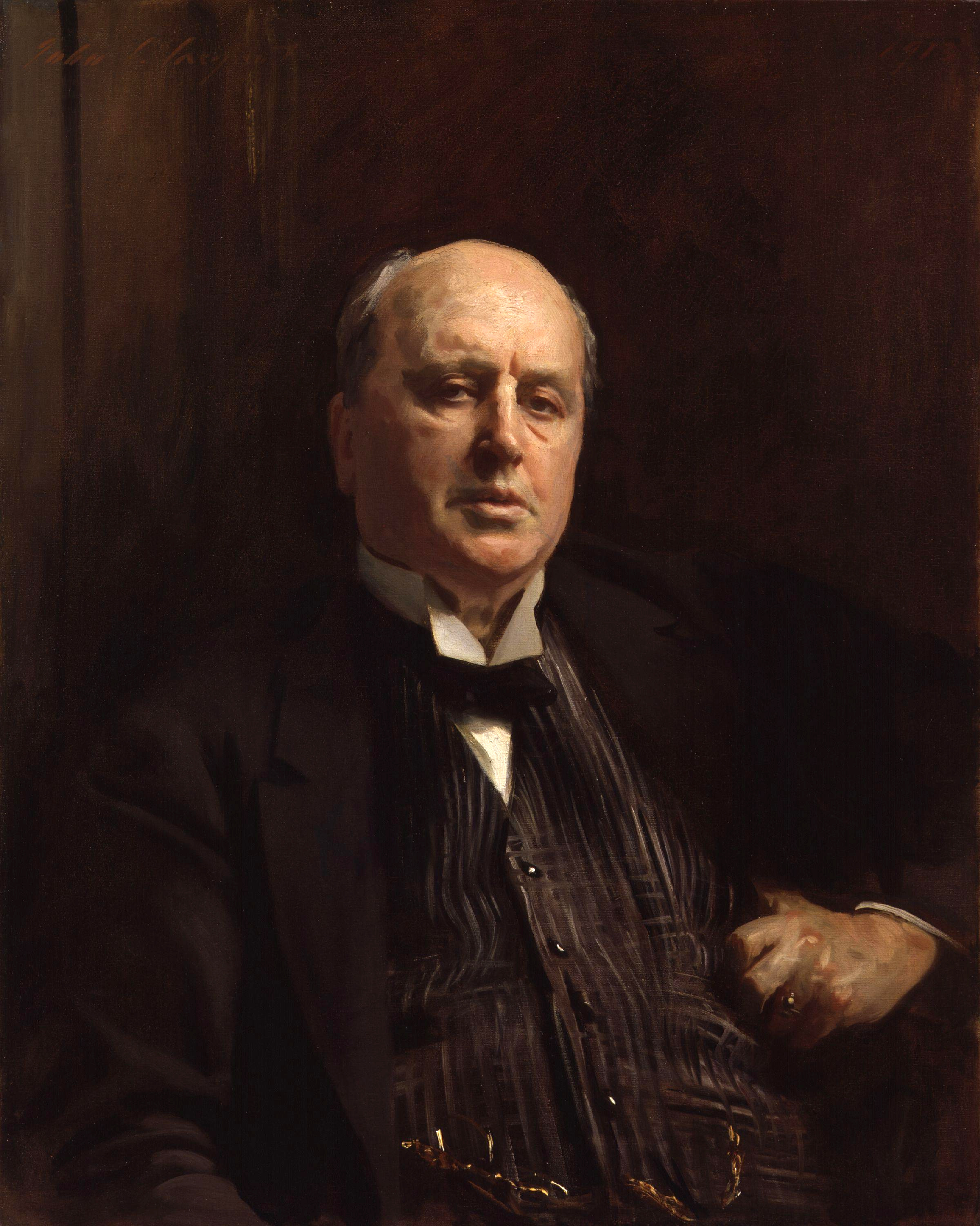
Henry James, OM was an American author regarded as a key transitional figure between literary realism and literary modernism, and is considered by many to be among the greatest novelists in the English language. He was the son of Henry James, Sr. and the brother of renowned philosopher and psychologist William James and diarist Alice James.
He is best known for a number of novels dealing with the social and marital interplay between emigre Americans, English people, and continental Europeans – examples of such novels include The Portrait of a Lady, The Ambassadors, and The Wings of the Dove. His later works were increasingly experimental. In describing the internal states of mind and social dynamics of his characters, James often made use of a personal style in which ambiguous or contradictory motivations and impressions were overlaid or closely juxtaposed in the discussion of a single character's psyche. For their unique ambiguity, as well as for other aspects of their composition, his late works have been compared to impressionist painting.
In addition to voluminous works of fiction, James published articles and books of criticism, travel, biography, autobiography, and plays. Born in the United States, James largely relocated to Europe as a young man and eventually settled in England, becoming a British subject in 1915, one year before his death. James was nominated for the Nobel Prize in Literature in 1911, 1912, and 1916.
“We are divided of course between liking to feel the past strange and liking to feel it familiar.”
Henry James book The Aspern Papers
The Aspern Papers; The Turn of the Screw; The Liar; The Two Faces.
Prefaces (1907-1909)
Henry James book The Turn of the Screw
Source: The Turn of the Screw (1898), Ch. II.
The Art of Fiction http://public.wsu.edu/~campbelld/amlit/artfiction.html (1884)
The Art of Fiction http://public.wsu.edu/~campbelld/amlit/artfiction.html (1884)
Henry James book The Turn of the Screw
Source: The Turn of the Screw (1898), Ch. XXIV
Henry James book The Portrait of a Lady
Source: The Portrait of a Lady (1881), Ch. XLII.
“Everything about Florence seems to be coloured with a mild violet, like diluted wine.”
Letter to Henry James Sr. (26 October 1869).
“I hold any writer sufficiently justified who is himself in love with his theme.”
"Venice," The Century Magazine, vol. XXV (November 1882), reprinted in Portraits of Places (1883) and later in Italian Hours http://www.gutenberg.org/dirs/etext04/8ihou10.txt (1909), ch: I: Venice, pt. I.
“A tradition is kept alive only by something being added to it.”
"Robert Louis Stevenson," Century Magazine (April 1888).
Henry James book The Turn of the Screw
Source: The Turn of the Screw (1898), Ch. XXII.
Henry James book The Turn of the Screw
Source: The Turn of the Screw (1898), Ch. XIII.
Henry James book The Portrait of a Lady
The Portrait of a Lady.
Prefaces (1907-1909)
The Art of Fiction http://public.wsu.edu/~campbelld/amlit/artfiction.html (1884)
Henry James book Hawthorne
Hawthorne, ch. IV: Brook Farm and Concord.
“My choice is the old world — my choice, my need, my life.”
Notebook entry, Boston, (25 November 1881).
Letter to Hugh Walpole (21 August 1913).
Criticism.
Henry James book The Turn of the Screw
Source: The Turn of the Screw (1898), Ch. I.
Henry James book The Turn of the Screw
Source: The Turn of the Screw (1898), Ch. XXIV.
Henry James book The Portrait of a Lady
Source: The Portrait of a Lady (1881), Ch. XXIX
“The time-honored bread-sauce of the happy ending.”
Henry James book Theatricals
Theatricals: Second Series (1895).
Henry James book The Portrait of a Lady
The Portrait of a Lady.
Prefaces (1907-1909)
Henry James book The Portrait of a Lady
Source: The Portrait of a Lady (1881), Ch. XVI.
Henry James book The Portrait of a Lady
Source: The Portrait of a Lady (1881), Ch. LI
Henry James book The Portrait of a Lady
XLIV
The Portrait of a Lady (1881)
Henry James book The Tragic Muse
The Tragic Muse (1890), ch. IX.
Henry James book The Portrait of a Lady
Source: The Portrait of a Lady (1881), Ch. XXII.
“She was a woman who, between courses, could be graceful with her elbows on the table.”
Henry James book The Ambassadors
The Ambassadors, book VII, ch. I.
“The ever importunate murmur, "Dramatize it, dramatize it!"”
Henry James book The Altar of the Dead
The Altar of the Dead.
Prefaces (1907-1909)
Henry James book The Turn of the Screw
It was like fighting with a demon for a human soul, and when I had fairly so appraised it I saw how the human soul—held out, in the tremor of my hands, at arm's length—had a perfect dew of sweat on a lovely childish forehead.
Source: The Turn of the Screw (1898), Ch. XXIV.
“[T]here are women who are for all your "times of life."”
Henry James book The Ambassadors
They're the most wonderful sort.
Book V, ch. III.
The Ambassadors (1903)
“Most English talk is a quadrille in a sentry-box.”
Henry James book The Awkward Age
Said by the Duchess in Book V, ch. XIX.
The Awkward Age (1899)
Henry James book The Awkward Age
Said by Vanderbank in Book I, ch. II.
The Awkward Age (1899)
“Don't undervalue irony; it is often of great use.”
Henry James book Washington Square
Source: Washington Square (1881), Ch. XXVII.
“When it's for each other that people give things up they don't miss them.”
Henry James book The Ambassadors
Book VI, ch. III
The Ambassadors (1903)


