Henry Brougham, 1st Baron Brougham and Vaux
Speech to the House of Commons (January 29, 1828).
Henry Peter Brougham, 1st Baron Brougham and Vaux, was a British statesman who became Lord Chancellor of Great Britain.
As a young lawyer in Scotland, Brougham helped to found the Edinburgh Review in 1802 and contributed many articles to it. He went to London, and was called to the English bar in 1808. In 1810 he entered the House of Commons as a Whig. Brougham took up the fight against the slave trade and opposed restrictions on trade with continental Europe. In 1820, he won popular renown as chief attorney to Queen Caroline, and in the next decade he became a liberal leader in the House. He not only proposed educational reforms in Parliament but also was one of the founders of the Society for the Diffusion of Useful Knowledge in 1825 and of University College London in 1826. As Lord Chancellor from 1830 to 1834 he effected many legal reforms to speed procedure and established the Central Criminal Court. In later years he spent much of his time in Cannes, which he established as a popular resort.
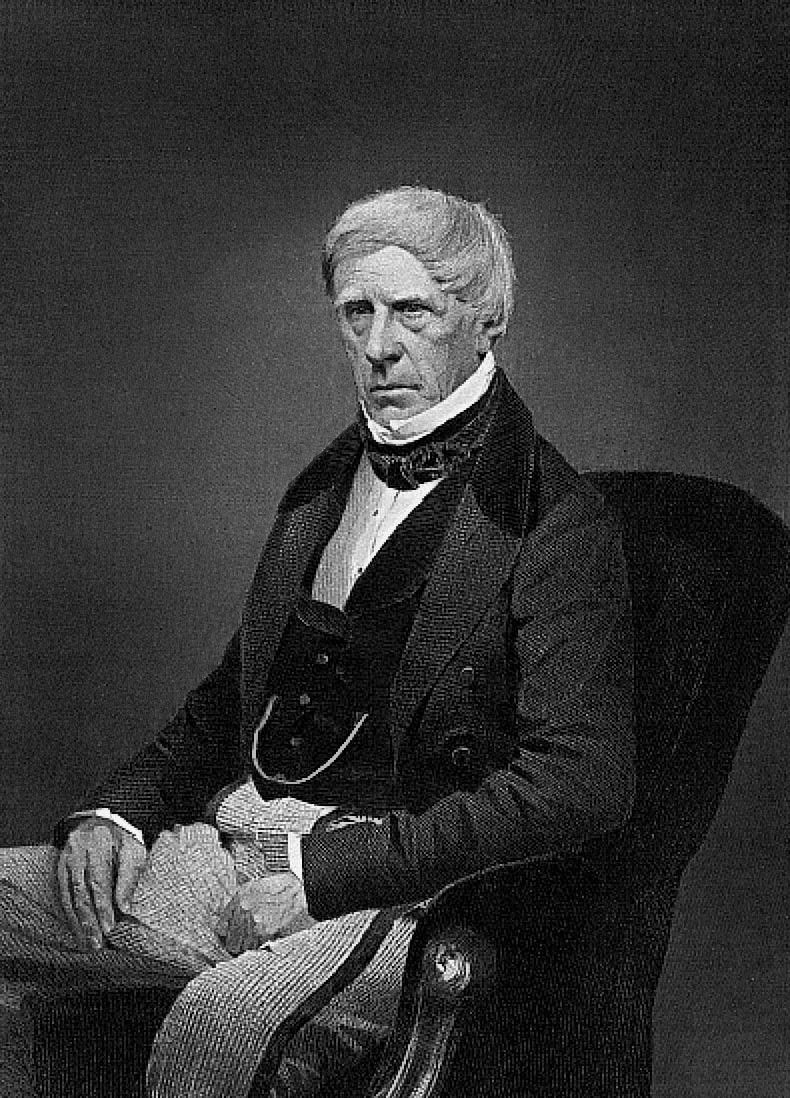
Henry Brougham, 1st Baron Brougham and Vaux
Speech to the House of Commons (January 29, 1828).
Henry Brougham, 1st Baron Brougham and Vaux
Present State of the Law (February 7, 1828).
Variant: In my mind, he was guilty of no error, he was chargeable with no exaggeration, he was betrayed by his fancy into no metaphor, who once said, that all we see about us, Kings, Lords, and Commons, the whole machinery of the State, all the apparatus of the system, and its varied workings, end in simply bringing twelve good men into a box.
Henry Brougham, 1st Baron Brougham and Vaux
Brownlow v. Egerton (1854), 23 L. J. Rep. Part 5 (N. S.), Ch. 390; 8 St. Tr. (N. S.) 258.
“A contract executed without any part performance.”
Henry Brougham, 1st Baron Brougham and Vaux
R. v. Millis (1844), 16 C1. & Fin. 719; describing marriage.
Henry Brougham, 1st Baron Brougham and Vaux
Quote reported in Josiah Hotchkiss Gilbert, Dictionary of Burning Words of Brilliant Writers (1895) p. 366.
“Equity has not relieved against gross improvidence.”
Henry Brougham, 1st Baron Brougham and Vaux
Duke of Beaufort v. Neeld (1845), 12 CI. & F. 260.
Henry Brougham, 1st Baron Brougham and Vaux
The British Constitution (1844), 322, 323; reported in James William Norton-Kyshe, The Dictionary of Legal Quotations (1904), p. 2-8.
Henry Brougham, 1st Baron Brougham and Vaux
Speech, Opening of Parliament (January 29, 1828), reported in James William Norton-Kyshe, The Dictionary of Legal Quotations (1904), p. 221.
“Do you think that a reporter has a right to supply or suppress any part of a judgment?”
Henry Brougham, 1st Baron Brougham and Vaux
Cadell v. Palmer (1833), 1 Cl. & F. 372.
Henry Brougham, 1st Baron Brougham and Vaux
Joseph William Chitty, J., In re Dawson; Johnston v. Hill (1888), L. R. 39 C. D. 152.
About
Henry Brougham, 1st Baron Brougham and Vaux
Reported in Josiah Hotchkiss Gilbert, Dictionary of Burning Words of Brilliant Writers (1895), p. 274.
Henry Brougham, 1st Baron Brougham and Vaux
Reported in Josiah Hotchkiss Gilbert, Dictionary of Burning Words of Brilliant Writers (1895), p. 261.
“Pursuit of Knowledge Under Difficulties”
Henry Brougham, 1st Baron Brougham and Vaux
Title of book (published 1830).
“Death was now armed with a new terror.”
Henry Brougham, 1st Baron Brougham and Vaux
Reported in Bartlett's Familiar Quotations, 10th ed. (1919). Brougham delivered a very warm panegyric upon the ex-Chancellor, and expressed a hope that he would make a good end, although to an expiring Chancellor death was now armed with a new terror. Thomas Campbell, Lives of the Chancellors, vol. vii. p. 163. Lord St. Leonards attributes this phrase to Sir Charles Wetherell, who used it on the occasion referred to by Lord Campbell. It likely originates with the practice of Edmund Curll, who issued miserable catch-penny lives of every eminent person immediately after that person's decease. John Arbuthnot wittily styled him "one of the new terrors of death", Carruthers, Life of Pope (second edition), p. 149.
“What is valuable is not new, and what is new is not valuable.”
Henry Brougham, 1st Baron Brougham and Vaux
From The Edinburgh Review, The Work of Thomas Young (c. 1802).


