“Bourgeois scientists make sure that their theories are not dangerous to God or Capital.”
The Faber Book of Aphorisms, W. H. Auden and Louis Kronenberger (ed.), p. 261.
Attributed
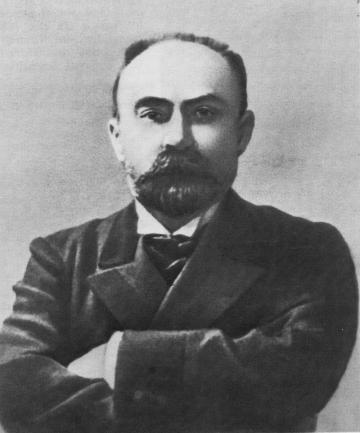
Georgi Valentinovich Plekhanov was a Russian revolutionary, philosopher and a Marxist theoretician. He was a founder of the social-democratic movement in Russia and was one of the first Russians to identify himself as "Marxist". Facing political persecution, Plekhanov emigrated to Switzerland in 1880, where he continued in his political activity attempting to overthrow the Tsarist regime in Russia.
Although he supported the Bolshevik faction at the 2nd Congress of the Russian Social Democratic Labour Party in 1903, Plekhanov soon rejected the idea of democratic centralism, and became one of Lenin and Trotsky's principal antagonists in the 1905 St. Petersburg Soviet.
During World War I Plekhanov rallied to the cause of the Entente powers against Germany and he returned home to Russia following the 1917 February Revolution. Plekhanov was an opponent of the Soviet state which came to power in the autumn of 1917. He died the following year. Despite his vigorous and outspoken opposition to Lenin's political party in 1917, Plekhanov was held in high esteem by the Communist Party of the Soviet Union following his death as a founding father of Russian Marxism and a philosophical thinker. Wikipedia
“Bourgeois scientists make sure that their theories are not dangerous to God or Capital.”
The Faber Book of Aphorisms, W. H. Auden and Louis Kronenberger (ed.), p. 261.
Attributed
“Children like to work, and are always eager to imitate the work of adults.”
Utopian Socialism in the Nineteenth Century, 1913, Ch. 5.
The Materialist Conception of History, 1891, Ch. 6.


