“Evidence exhausts the truth.”
as quoted in Conversations with Samuel Beckett and Bram van Velde, ed. Charles Juliet, First Dalkey Archive edition, 2009, London and Champaign pp. 60-61
posthumous quotes
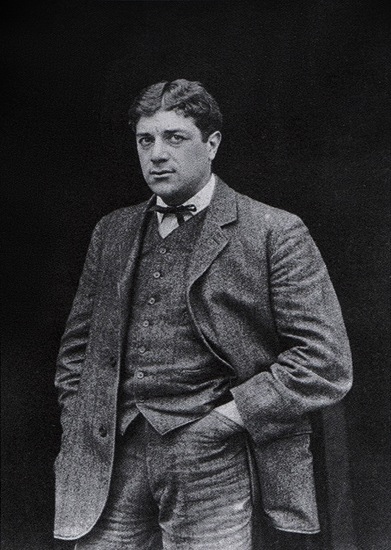
Georges Braque was a major 20th-century French painter, collagist, draughtsman, printmaker and sculptor. His most important contributions to the history of art were in his alliance with Fauvism from 1905, and the role he played in the development of Cubism. Braque's work between 1908 and 1912 is closely associated with that of his colleague Pablo Picasso. Their respective Cubist works were indistinguishable for many years, yet the quiet nature of Braque was partially eclipsed by the fame and notoriety of Picasso. Wikipedia
“Evidence exhausts the truth.”
as quoted in Conversations with Samuel Beckett and Bram van Velde, ed. Charles Juliet, First Dalkey Archive edition, 2009, London and Champaign pp. 60-61
posthumous quotes
“Whatever is valuable in painting is precisely what one is incapable of talking about.”
two quotes by Braque, in 'Les Problèmes de la Peinture', interview with Gaston Diehl Paris 1945
1921 - 1945
Source: 1946 - 1963, Cahiers d'art', 1954, p. 16
Braque admired Corot and frequently used Corot's young country-ladies as models, for instance in his painting 'Souvenirs de Corot' he made in 1922/23
Source: 1921 - 1945, p. 96 - quote of Braque from 'Cahiers d'art', No. 10, 1935, ed. Christian Zervos - quote of Braque is referring to Corot's impact on his painting art
1946 - 1963, interview with John Richardson' (1957)
Source: 1946 - 1963, In conversation with Dora Vallier' (1954), p. 265
Source: 1908 - 1920, quotes from Artists on Art...(1972), p. 423 - short quotes by Georges Braque on 'Means' - Paris, 1917
Quote by Braque, from 'Le Monologue du Peintre', George Charbonnier, Paris 1959
1946 - 1963
Source: posthumous quotes, Braque', (1968), p. 41
Quote of Braque to John Richardson, in 'Braque Discusses His Art', in 'Realités', no. 93, August 1958, p. 28
1946 - 1963
Source: 1946 - 1963, In conversation with Dora Vallier' (1954), p. 264
Quote of Braque, late 1908; as cited in The wild men of Paris, Gelett Burgess, https://monoskop.org/images/f/f3/Burgess_Gelett_1910_The_Wild_Men_of_Paris.pdf in 'The Architectural Record', p. 405, May 1910; as cited in Braque, by Edwin Mullins, Thames and Hudson, London 1968, p. 34 <br class="br">1908 - 1920
the letters
Source: posthumous quotes, Braque', (1968), p. 68
Source: 1908 - 1920, quotes from Artists on Art...(1972), p. 422 - Braque's quote, Paris 1917
1946 - 1963, interview with John Richardson' (1957)
Source: posthumous quotes, Braque', (1968), p. 30 - Braque's quote from the book, written by John Rusell, London 1959
Source: posthumous quotes, Braque', (1968), p. 75
Source: posthumous quotes, Braque', (1968), p. 55
“It is the act of painting, not the finished painting.”
1946 - 1963, interview with John Richardson' (1957)
Source: 1946 - 1963, In conversation with Dora Vallier' (1954), p. 264 - Braque's quote is referring to the early common starting years of Cubism in Paris with Picasso, ca. 1907 -1910
Source: 1946 - 1963, In conversation with Dora Vallier' (1954), p. 265
Source: 1946 - 1963, In conversation with Dora Vallier' (1954), p. 265
Braque is referring in this quote to the early common start of Cubism ca. 1907 -1910, in Paris with Picasso
Source: 1946 - 1963, In conversation with Dora Vallier' (1954), p. 265
1946 - 1963, interview with John Richardson' (1957)
1946 - 1963, interview with John Richardson' (1957)
[Braque refers to their common years in Paris, c. 1907 - 1912]
Source: posthumous quotes, Braque', (1968), p. 10
Quote from: 'Entretien avec Jauqes Lassaigne' - 1961; as quoted in Futurism, ed. Didier Ottinger; Centre Pompidou / 5 Continents Editions, Milan, 2008, p. 94
1946 - 1963
1946 - 1963, interview with John Richardson' (1957)
Source: 1946 - 1963, Cahiers d'art', 1954, p. 14 - In: 'Braque, la peinture et nous'
Source: 1921 - 1945, p. 76 - quote of Braque from 'Cahiers d'art', 1954, ed. Dora Vallier
Quote from The Power of Mystery (7 December 1957), a London Observer interview with John Richardson, as quoted in Braque: The Late Works (1997), by John Golding, Introduction, p. 10
unsourced variant translation: I made a great discovery. I don't believe in anything anymore. Objects do not exist for me, except that there is a harmonious relationship among them, and also between them and myself. When one reaches this harmony, one reaches a sort of intellectual void. This was everything becomes possible, everything becomes legitimate, and life is a perpetual revelation. This is true song.
1946 - 1963
“Thanks to the oval I have discovered the meaning of the horizontal and the vertical.”
as quoted in Abstract Painting, Michel Seuphor, Dell Publishing Co. (1964); p. 39
posthumous quotes
1946 - 1963, interview with John Richardson' (1957)
Source: 1946 - 1963, In conversation with Dora Vallier' (1954), p. 264
Source: 1908 - 1920, quotes from Artists on Art...(1972), p. 422 - Braque's quote, Paris 1917
“In art progress consists not in extension but in the knowledge of its limits.”
Quote from the review 'Nord-Sud', December 1917
a remark of Braque's writings, he wrote during his long convalescence in the hospital, after he was seriously wounded in World War 1, in 1915
1908 - 1920
“The painting is finished when it has erased the idea.”
as quoted in Georges Braque: A Life (2005), p. 191 https://books.google.com/books?id=G2aWVKnJWaYC&pg=PA191 <br class="br">posthumous quotes
Source: 1908 - 1920, quotes from Artists on Art...(1972), p. 423 - Braque's quote, Paris 1917
“Art is polymorphic. A picture appears to each onlooker under a different guise.”
Quote by Braque from: 'Cahiers d'Art', No. 10, 1935, ed. Christian Zervos
1921 - 1945
Source: 1946 - 1963, Cahiers d'art', 1954, p. 16 - In: 'Braque, la peinture et nous'
Source: 1946 - 1963, Cahiers d'art', 1954, p. 14


