“All reformers are bachelors.”
Act I http://books.google.com/books?id=HWs-AAAAYAAJ&q=%22All+reformers+are+bachelors%22&pg=PA14#v=onepage <br class="br">The Bending of the Bough (1900)
George Augustus Moore was an Irish novelist, short-story writer, poet, art critic, memoirist and dramatist. Moore came from a Roman Catholic landed family who lived at Moore Hall in Carra, County Mayo. He originally wanted to be a painter, and studied art in Paris during the 1870s. There, he befriended many of the leading French artists and writers of the day.
As a naturalistic writer, he was amongst the first English-language authors to absorb the lessons of the French realists, and was particularly influenced by the works of Émile Zola. His writings influenced James Joyce, according to the literary critic and biographer Richard Ellmann, and, although Moore's work is sometimes seen as outside the mainstream of both Irish and British literature, he is as often regarded as the first great modern Irish novelist.
Wikipedia
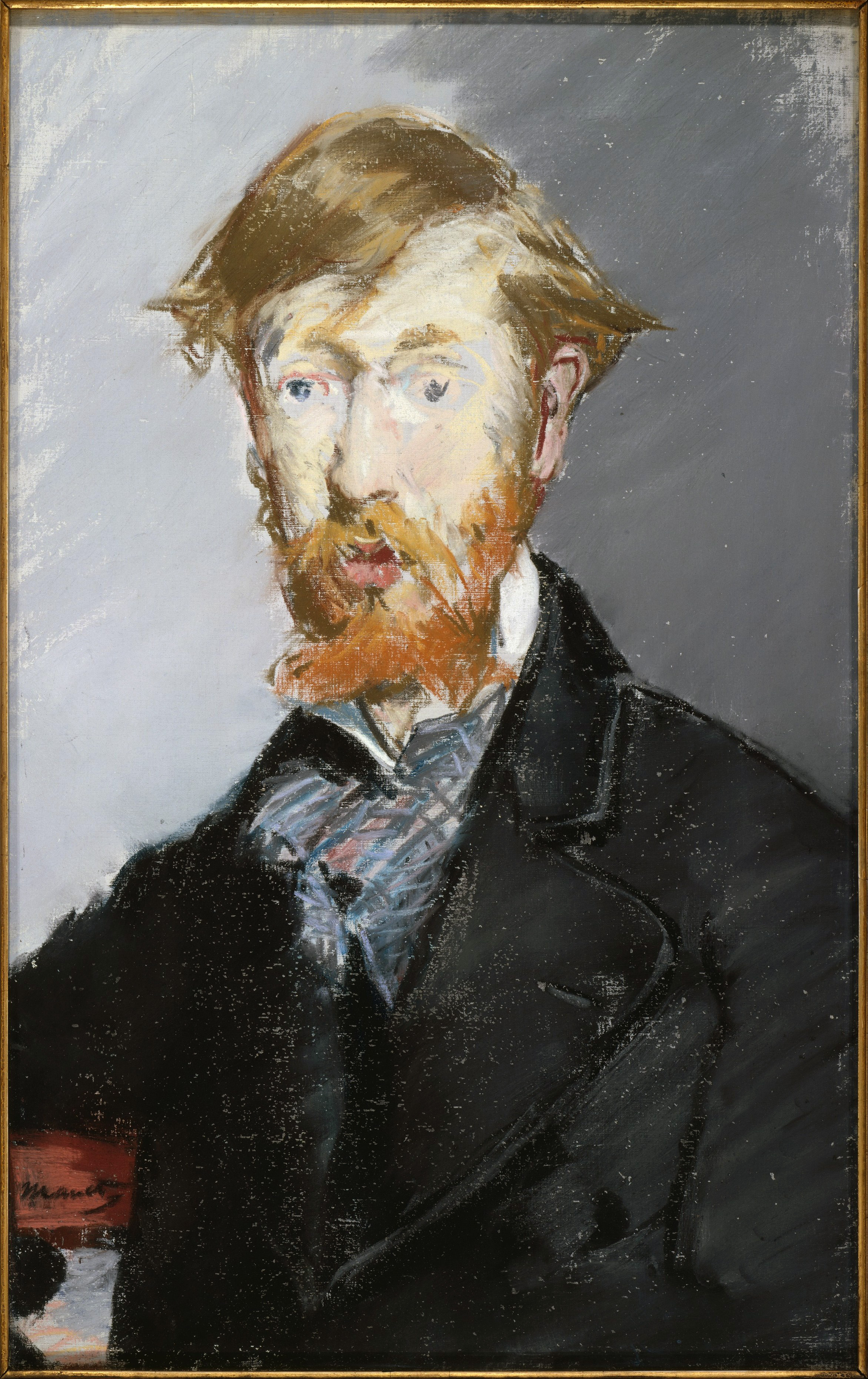
“All reformers are bachelors.”
Act I http://books.google.com/books?id=HWs-AAAAYAAJ&q=%22All+reformers+are+bachelors%22&pg=PA14#v=onepage <br class="br">The Bending of the Bough (1900)
“Acting is therefore the lowest of the arts, if it is an art at all.”
Impressions and Opinions (1891): "Mummer-Worship".
Source: Confessions of a Young Man http://www.gutenberg.org/files/12278/12278-h/12278-h.htm (1886), Ch. 16.
“The public will accept a masterpiece, but it will not accept an attempt to write a masterpiece.”
Vain Fortune http://www.gutenberg.org/files/11303/11303.txt, Chapter 1 (1891).
“A man travels the world over in search of what he needs and returns home to find it.”
The Brook Kerith http://www.gutenberg.org/files/12821/12821-h/12821-h.htm, ch. 11 (1916).
Source: Confessions of a Young Man http://www.gutenberg.org/files/12278/12278-h/12278-h.htm (1886), Ch. 2.
Source: Confessions of a Young Man http://www.gutenberg.org/files/12278/12278-h/12278-h.htm (1886), Ch. 10.
Source: Confessions of a Young Man http://www.gutenberg.org/files/12278/12278-h/12278-h.htm (1886), Ch. 7.
Apologia Pro Scriptis Meis. <br class="br"> Memoirs of My Dead Life http://www.gutenberg.org/dirs/etext05/8mmdl10.txt (1906)
Source: Confessions of a Young Man http://www.gutenberg.org/files/12278/12278-h/12278-h.htm (1886), Ch. 1.
Source: Confessions of a Young Man http://www.gutenberg.org/files/12278/12278-h/12278-h.htm (1886), Ch. 12.
Letter to Lady Emerald Cunard, quoted in The Everything Wedding Vows Book : Anything and Everything You Could Possibly Say at the Altar, and then Some. (2001) by Janet Anastasio and Michelle Bevilacqua, p. 97.
Apologia Pro Scriptis Meis. <br class="br"> Memoirs of My Dead Life http://www.gutenberg.org/dirs/etext05/8mmdl10.txt (1906)
Source: Confessions of a Young Man http://www.gutenberg.org/files/12278/12278-h/12278-h.htm (1886), Ch. 12. <br class="br">Context: I will admit that an artist may be great and limited; by one word he may light up an abyss of soul; but there must be this one magical and unique word. Shakespeare gives us the word, Balzac, sometimes, after pages of vain striving, gives us the word, Tourgueneff gives it with miraculous certainty; but Henry James, no; a hundred times he flutters about it; his whole book is one long flutter near to the one magical and unique word, but the word is not spoken; and for want of the word his characters are never resolved out of the haze of nebulae. You are on a bowing acquaintance with them; they pass you in the street, they stop and speak to you, you know how they are dressed, you watch the colour of their eyes.
Source: Confessions of a Young Man http://www.gutenberg.org/files/12278/12278-h/12278-h.htm (1886), Ch. 1.
Source: Confessions of a Young Man http://www.gutenberg.org/files/12278/12278-h/12278-h.htm (1886), Ch. 9.
“One must be in London to see the spring.”
Source: Memoirs of My Dead Life http://www.gutenberg.org/dirs/etext05/8mmdl10.txt (1906), Ch. 1: Spring in London
Source: Memoirs of My Dead Life http://www.gutenberg.org/dirs/etext05/8mmdl10.txt (1906), Ch. 12: Sunday Evening in London
“Ugliness is trivial, the monstrous is terrible.”
Source: Confessions of a Young Man http://www.gutenberg.org/files/12278/12278-h/12278-h.htm (1886), Ch. 3.
“Humanity is a pigsty, where lions, hypocrites, and the obscene in spirit congregate.”
Source: Confessions of a Young Man http://www.gutenberg.org/files/12278/12278-h/12278-h.htm (1886), Ch. 16.
“Faith goes out of the window when beauty comes in at the door.”
The Lake http://www.gutenberg.org/files/11304/11304-8.txt (1905) [Appleton, 2005, digitized edition], ch. IX (p. 169).
Hail and Farewell (1912), vol. 2: Salve, Kessinger Publishing, 2005, ISBN 1-417-93272-4, ch. XV (p. 36).
“But if you want to be a painter you must go to France — France is the only school of Art.”
Source: Confessions of a Young Man http://www.gutenberg.org/files/12278/12278-h/12278-h.htm (1886), Ch. 1.
“The difficulty in life is the choice.”
Act IV
The Bending of the Bough (1900)
“After all there is but one race — humanity.”
Act III
The Bending of the Bough (1900)
“It does not matter how badly you paint so long as you don't paint badly like other people.”
Source: Confessions of a Young Man http://www.gutenberg.org/files/12278/12278-h/12278-h.htm (1886), Ch. 6.
Source: Confessions of a Young Man http://www.gutenberg.org/files/12278/12278-h/12278-h.htm (1886), Ch. 13.
“A great artist is always before his time or behind it.”
Source: As quoted in Conversations with George Moore (1929) by Geraint Goodwin, p. 123
“We humans are more complicated than animals, and we love through the imagination.”
Source: Memoirs of My Dead Life http://www.gutenberg.org/dirs/etext05/8mmdl10.txt (1906), Ch. 6: Spent Loves.
“The wrong way always seems the more reasonable.”
Act IV
The Bending of the Bough (1900)
“The lot of critics is to be remembered by what they failed to understand.”
Impressions and Opinions (1891): "Balzac" http://books.google.com/books?id=QCQ7AAAAYAAJ&q=%22The+lot+of+critics+is+to+be+remembered+by+what+they+failed+to+understand%22&pg=PA2#v=onepage.


