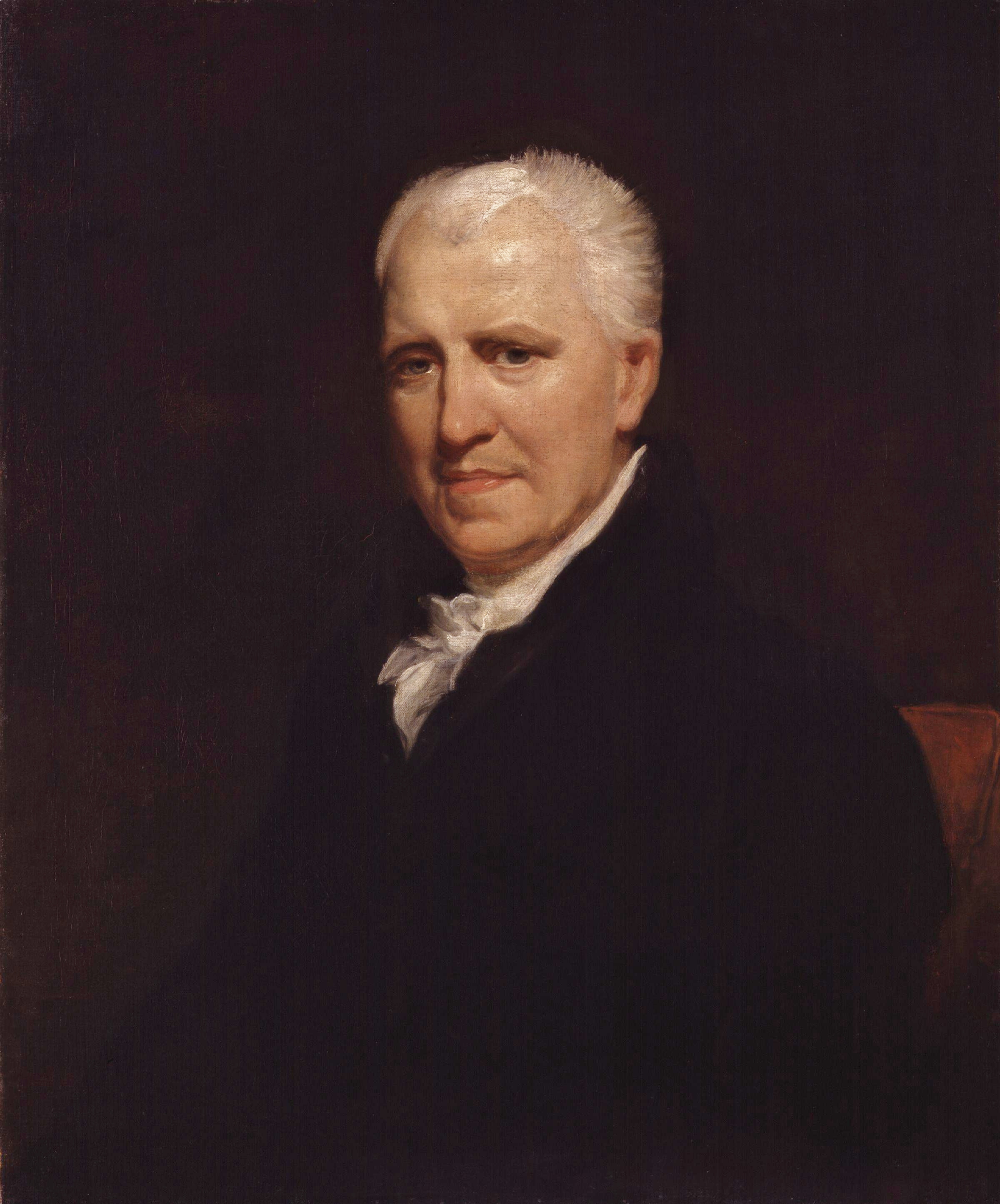
George Crabbe Quotes

George Crabbe was an English poet, surgeon and clergyman. He is best known for his early use of the realistic narrative form and his descriptions of middle and working-class life and people.

In the 1770s, Crabbe began his career as a doctor's apprentice, later becoming a surgeon. In 1780, he travelled to London to make a living as a poet. After encountering serious financial difficulty and being unable to have his work published, he wrote to the statesman and author Edmund Burke for assistance. Burke was impressed enough by Crabbe's poems to promise to help him in any way he could. The two became close friends and Burke helped Crabbe greatly both in his literary career and in building a role within the church.

Burke introduced Crabbe to the literary and artistic society of London, including Sir Joshua Reynolds and Samuel Johnson, who read The Village before its publication and made some minor changes. Burke secured Crabbe the important position of Chaplain to the Duke of Rutland. Crabbe served as a clergyman in various capacities for the rest of his life, with Burke's continued help in securing these positions. He developed friendships with many of the great literary men of his day, including Sir Walter Scott, whom he visited in Edinburgh, and William Wordsworth and some of his fellow Lake Poets, who frequently visited Crabbe as his guests.

Lord Byron described him as "nature's sternest painter, yet the best." Crabbe's poetry was predominantly in the form of heroic couplets, and has been described as unsentimental in its depiction of provincial life and society. The modern critic Frank Whitehead wrote that "Crabbe, in his verse tales in particular, is an important—indeed, a major—poet whose work has been and still is seriously undervalued." Crabbe's works include The Village , Poems , The Borough , and his poetry collections Tales and Tales of the Hall . Wikipedia  

✵ 24. December 1754 – 3. February 1832
George Crabbe photo
George Crabbe: 20 quotes0 likes

Famous George Crabbe Quotes

“A master passion is the love of news.”

George Crabbe

The Newspaper (1785), line 279.

“Time has touched me gently in his race,
And left no odious furrows in my face.”

George Crabbe

Book xvii, "The Widow". Compare: "Touch us gently, Time", Bryan W. Procter, Touch us gently, Time; "Time has laid his hand / Upon my heart, gently", Henry Wadsworth Longfellow, The Golden Legend, iv.
Tales of the Hall (1819)

“Oh, rather give me commentators plain,
Who with no deep researches vex the brain;
Who from the dark and doubtful love to run,
And hold their glimmering tapers to the sun.”

George Crabbe

The Parish Register (1807), Part i, "Introduction". Compare "How commentators each dark passage shun, / And hold their farthing candle to the sun", Edward Young, Love of Fame, Satire vii, Line 97.

“Better to love amiss than nothing to have loved.”

George Crabbe

Tale xiv, "The Struggles of Conscience". Compare: "'T is better to have loved and lost, Than never to have loved at all", Alfred Tennyson, In Memoriam, xxvii.
Tales in Verse (1812)

“Our farmers round, well pleased with constant gain,
Like other farmers, flourish and complain.”

George Crabbe

The Parish Register (1807), Part 1: "Baptisms", line 273.

“In idle wishes fools supinely stay;
Be there a will, and wisdom finds a way.”

George Crabbe

The Birth of Flattery, reported in Bartlett's Familiar Quotations, 10th ed. (1919).

George Crabbe Quotes

“Habit with him was all the test of truth,
It must be right: I’ve done it from my youth.”

George Crabbe

The Borough (1810), Letter iii, "The Vicar", line 138.

“T was good advice, and meant, my son, Be good.”

George Crabbe

Tale xxi, "The Learned Boy".
Tales in Verse (1812)

“Who calls a lawyer rogue, may find, too late
Upon one of these depends his whole estate.”

George Crabbe

Tales iii, "The Gentleman Farmer".
Tales in Verse (1812)

“But 'twas a maxim he had often tried,
That right was right, and there he would abide.”

George Crabbe

Tale xv, "The Squire and the Priest". Compare: "For right is right, since God is God", Frederick William Faber, The Right must win.
Tales in Verse (1812)

“He tried the luxury of doing good.”

George Crabbe

Book iii, "Boys at School". Compare: "And learn the luxury of doing good", Oliver Goldsmith, The Traveller, Line 22.
Tales of the Hall (1819)

“The murmuring poor, who will not fast in peace.”

George Crabbe

The Newspaper (1785), line 158.

“Books cannot always please, however good;
Minds are not ever craving for their food.”

George Crabbe

The Borough (1810), Letter xxiv, "Schools".

“In this fool's paradise he drank delight.”

George Crabbe

The Borough (1810), Letter xii, "Players".

“Secrets with girls, like loaded guns with boys,
Are never valued till they make a noise.”

George Crabbe

"The Maid's Story", line 84 (1819).
Tales of the Hall (1819)

“And took for truth the test of ridicule.”

George Crabbe

Book viii, "The Sisters".
Tales of the Hall (1819)

“To sigh, yet not recede; to grieve, yet not repent.”

George Crabbe

Book iii, "Boys at School". Compare: To sigh, yet feel no pain", Thomas Moore The Blue Stocking.
Tales of the Hall (1819)

“Cut and come again.”

George Crabbe

Tale vii, "The Widow's Tale".
Tales in Verse (1812)

Similar authors

Emily Brontë photo
Emily Brontë151
English novelist and poet None
Percy Bysshe Shelley photo
Percy Bysshe Shelley246
English Romantic poet None
Elizabeth Barrett Browning photo
Elizabeth Barrett Browning88
English poet, author None
Thomas Hardy photo
Thomas Hardy171
English novelist and poet None
Samuel Taylor Coleridge photo
Samuel Taylor Coleridge220
English poet, literary critic and philosopher None
Robert Southey photo
Robert Southey51
British poet None
Matthew Arnold photo
Matthew Arnold166
English poet and cultural critic who worked as an inspector… None
George Gordon Byron photo
George Gordon Byron227
English poet and a leading figure in the Romantic movement None
William Blake photo
William Blake249
English Romantic poet and artist None
Robert Browning photo
Robert Browning179
English poet and playwright of the Victorian Era None