
“[Change is] the only evidence of life.”
Source: Brideshead Revisited: The Sacred and Profane Memories of Captain Charles Ryder
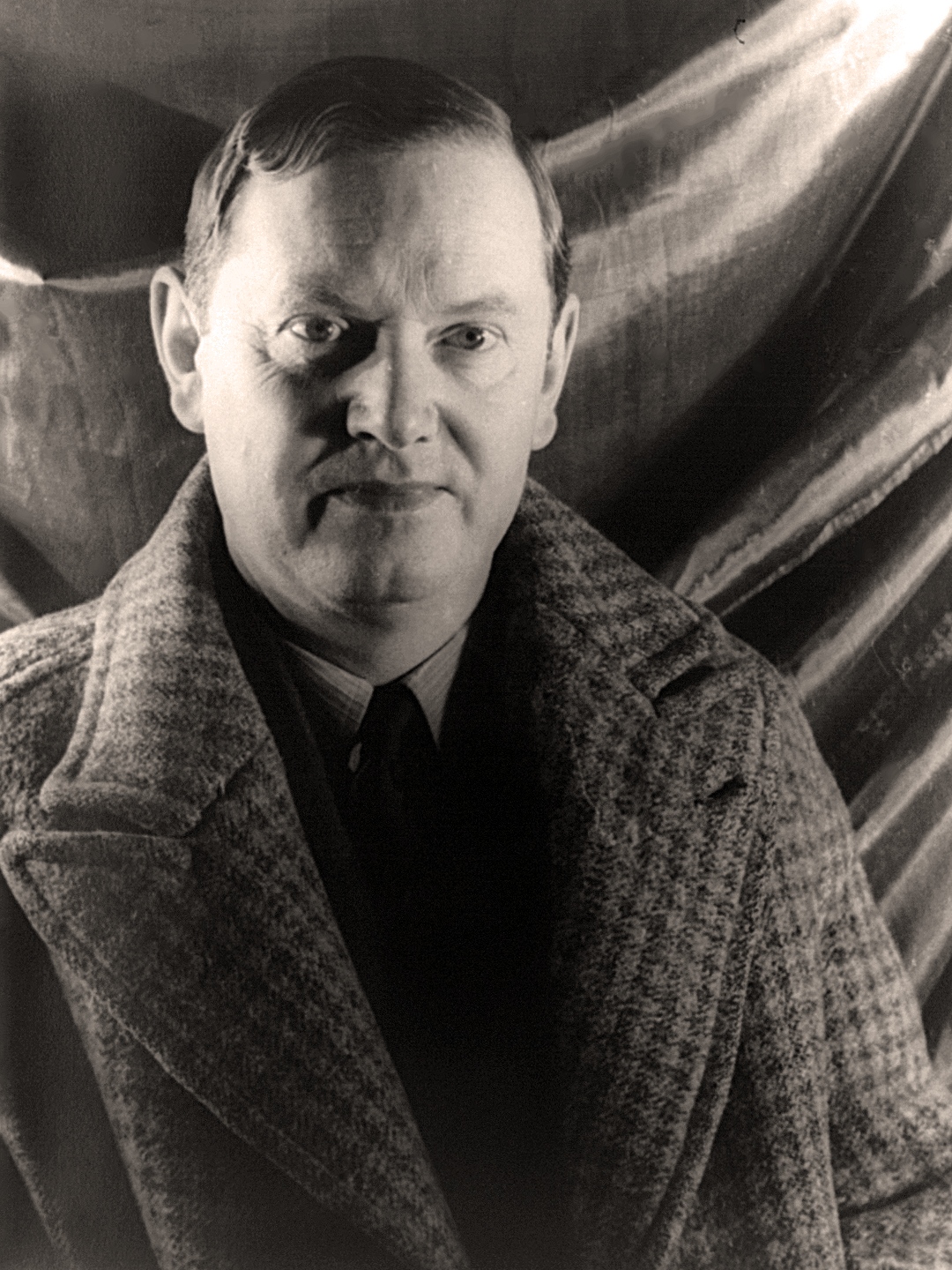
Arthur Evelyn St. John Waugh was an English writer of novels, biographies, and travel books; he was also a prolific journalist and book reviewer. His most famous works include the early satires Decline and Fall and A Handful of Dust , the novel Brideshead Revisited , and the Second World War trilogy Sword of Honour . He is recognised as one of the great prose stylists of the English language in the 20th century.Waugh was the son of a publisher, educated at Lancing College and then at Hertford College, Oxford. He worked briefly as a schoolmaster before he became a full-time writer. As a young man, he acquired many fashionable and aristocratic friends and developed a taste for country house society. He travelled extensively in the 1930s, often as a special newspaper correspondent; he reported from Abyssinia at the time of the 1935 Italian invasion. He served in the British armed forces throughout the Second World War, first in the Royal Marines and then in the Royal Horse Guards. He was a perceptive writer who used the experiences and the wide range of people whom he encountered in his works of fiction, generally to humorous effect. Waugh's detachment was such that he fictionalised his own mental breakdown which occurred in the early 1950s.
Waugh converted to Catholicism in 1930 after his first marriage failed. His traditionalist stance led him to strongly oppose all attempts to reform the Church, and the changes by the Second Vatican Council greatly disturbed his sensibilities, especially the introduction of the vernacular Mass. That blow to his religious traditionalism, his dislike for the welfare state culture of the postwar world, and the decline of his health all darkened his final years, but he continued to write. He displayed to the world a mask of indifference, but he was capable of great kindness to those whom he considered his friends. After his death in 1966, he acquired a following of new readers through the film and television versions of his works, such as the television serial Brideshead Revisited . Wikipedia
“[Change is] the only evidence of life.”
Source: Brideshead Revisited: The Sacred and Profane Memories of Captain Charles Ryder
Evelyn Waugh book The Ordeal of Gilbert Pinfold
Source: The Ordeal of Gilbert Pinfold (1957), Chapter 1
Evelyn Waugh book Brideshead Revisited
Part 1, Chapter 1
Brideshead Revisited (1945)
“Mrs. Ape's famous hymn, There ain't no flies on the Lamb of God.”
Evelyn Waugh book Vile Bodies
Source: Vile Bodies (1930), Chapter 1
“One can write, think and pray exclusively of others; dreams are all egocentric.”
Diary entry (5 October 1962)
Source: Brideshead Revisited: The Sacred and Profane Memories of Captain Charles Ryder
“You can't ever tell what's going to hurt people.”
Evelyn Waugh book A Handful of Dust
Source: A Handful of Dust
“It doesn't matter what people call you unless they call you pigeon pie and eat you up.”
Part 2, Chapter 3
Brideshead Revisited (1945)
Source: Brideshead Revisited: The Sacred and Profane Memories of Captain Charles Ryder
Source: Brideshead Revisited: The Sacred And Profane Memories Of Captain Charles Ryder
“O God, make me good, but not yet”
Part 1, start of chapter 5
Brideshead Revisited (1945)
Source: Brideshead Revisited: The Sacred and Profane Memories of Captain Charles Ryder
Source: Brideshead Revisited: The Sacred and Profane Memories of Captain Charles Ryder
Evelyn Waugh book Decline and Fall
Mr Prendergast, Part One , Chapter IV
Decline and Fall (1928)
Evelyn Waugh book Brideshead Revisited
Part 3, near end of chapter 5
Brideshead Revisited (1945)
Evelyn Waugh book Black Mischief
First lines
Black Mischief (1932)
Evelyn Waugh book A Handful of Dust
"No one I am thankful to say," said Mrs. Beaver, "except two housemaids who lost their heads and jumped through a glass roof into the paved court."
First lines
A Handful of Dust (1934)
Source: Brideshead Revisited: The Sacred and Profane Memories of Captain Charles Ryder
“In the dying world I come from, quotation is a national vice.”
Evelyn Waugh book The Loved One
Source: The Loved One (1948), Chapter 9
Context: In the dying world I come from, quotation is a national vice. No one would think of making an after-dinner speech without the help of poetry. It used to be the classics, now it's lyric verse.
Source: Brideshead Revisited: The Sacred and Profane Memories of Captain Charles Ryder
Source: Brideshead Revisited: The Sacred and Profane Memories of Captain Charles Ryder
“To understand all is to forgive all.”
Source: Brideshead Revisited: The Sacred and Profane Memories of Captain Charles Ryder
“No one is ever holy without suffering.”
Source: Brideshead Revisited: The Sacred and Profane Memories of Captain Charles Ryder
“Where can we hide in fair weather, we orphans of the storm?”
Source: Brideshead Revisited: The Sacred and Profane Memories of Captain Charles Ryder
“There's only one great evil in the world today. Despair.”
Evelyn Waugh book Vile Bodies
Source: Vile Bodies
Source: Brideshead Revisited: The Sacred and Profane Memories of Captain Charles Ryder
Source: Brideshead Revisited: The Sacred and Profane Memories of Captain Charles Ryder
“To know and love one other human being is the root of all wisdom.”
Part 1, Chapter 1
Brideshead Revisited (1945)
Source: Brideshead Revisited: The Sacred and Profane Memories of Captain Charles Ryder
Diaries of Evelyn Waugh (1976) p. 786
Source: Brideshead Revisited: The Sacred and Profane Memories of Captain Charles Ryder
Source: Brideshead Revisited: The Sacred and Profane Memories of Captain Charles Ryder
“All this fuss about sleeping together. For physical pleasure I'd sooner go to my dentist any day.”
Evelyn Waugh book Vile Bodies
Source: Vile Bodies (1930)
“His heart; some long word at the heart. He is dying of a long word.”
Source: Brideshead Revisited: The Sacred and Profane Memories of Captain Charles Ryder
Source: Brideshead Revisited: The Sacred and Profane Memories of Captain Charles Ryder
“He did not fail in love, but he lost the joy of it […]”
Source: Brideshead Revisited: The Sacred and Profane Memories of Captain Charles Ryder
“I had been there before; I knew all about it.”
Source: Brideshead Revisited: The Sacred and Profane Memories of Captain Charles Ryder
Source: Brideshead Revisited: The Sacred and Profane Memories of Captain Charles Ryder
“Art is the symbol of the two noblest human efforts: to construct and to refrain from destruction.”
Simone Weil, The Pre-War Notebook (1933-1939), published in First and Last Notebooks (1970) edited by Richard Rees
Misattributed
Evelyn Waugh book Brideshead Revisited
First lines part 1, chapter 1
Brideshead Revisited (1945)
“You never find an Englishman among the under-dogs—except in England, of course.”
Evelyn Waugh book The Loved One
Source: The Loved One (1948), Chapter 1
"The Way to Fame" HTTP://BOOKS.GOOGLE.COM/books?&id=FWxbAAAAMAAJ&q=%22there+is+a+great+deal+to+be+said+for+the+arts+for+one+thing+they+offer+the+only+career+in+which+commercial+failure+is+not+necessarily+discreditable%22&pg=PA9#v=onepage
Evelyn Waugh book Decline and Fall
Part One, Chapter One
Decline and Fall (1928)
Evelyn Waugh book Brideshead Revisited
This quotes The Queer Feet http://www.cse.dmu.ac.uk/~mward/gkc/books/Complete_Father_Brown/chapter3.html by G. K. Chesterton <br class="br">Brideshead Revisited (1945)
Letter to his wife (31 May 1942)
“It is typical of Oxford," I said, "to start the new year in autumn.”
Evelyn Waugh book Brideshead Revisited
Part 1, start of chapter 4
Brideshead Revisited (1945)
Evelyn Waugh book Vile Bodies
Source: Vile Bodies (1930), Chapter 2
“The trouble with modern education is you never know how ignorant they are”
Evelyn Waugh book Brideshead Revisited
Part 1, Chapter 3
Brideshead Revisited (1945)
Evelyn Waugh book Decline and Fall
Part One, Chapter XII
Decline and Fall (1928)
Evelyn Waugh book Put Out More Flags
Source: Put Out More Flags (1942), Ch. 1: Autumn, § 7


