
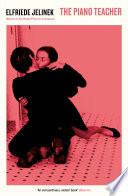
“Sometimes, of course, art creates the suffering in the first place.”
Elfriede Jelinek book The Piano Teacher
P 23
The Piano Teacher (1988)
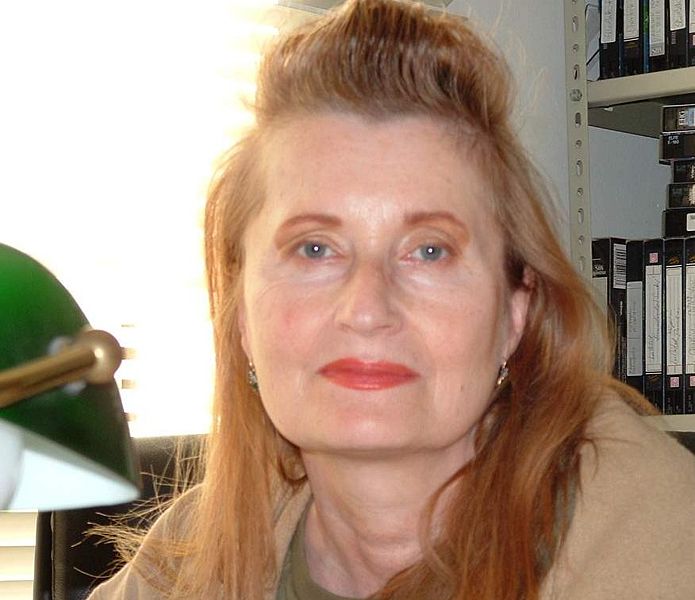
Elfriede Jelinek is an Austrian playwright and novelist. She was awarded the Nobel Prize in Literature in 2004 for her "musical flow of voices and counter-voices in novels and plays that, with extraordinary linguistic zeal, reveal the absurdity of society's clichés and their subjugating power". Wikipedia
“Sometimes, of course, art creates the suffering in the first place.”
Elfriede Jelinek book The Piano Teacher
P 23
The Piano Teacher (1988)
Elfriede Jelinek book Wonderful, Wonderful Times
p 44
Wonderful, Wonderful Times (1990)
“He lies like a book. And he reads a lot of books.”
Elfriede Jelinek book Wonderful, Wonderful Times
Source: Wonderful, Wonderful Times
Elfriede Jelinek book The Piano Teacher
P 65
The Piano Teacher (1988)
“Just keep following my tears, and the brook will take you in.”
Elfriede Jelinek book The Piano Teacher
p 44
The Piano Teacher (1988)
Elfriede Jelinek book Wonderful, Wonderful Times
55
Wonderful, Wonderful Times (1990)
Elfriede Jelinek book Wonderful, Wonderful Times
p 40
Wonderful, Wonderful Times (1990)
Elfriede Jelinek book Wonderful, Wonderful Times
123
Wonderful, Wonderful Times (1990)
“The criteria of art are the imponderable, the immeasurable.”
Elfriede Jelinek book The Piano Teacher
P 118
The Piano Teacher (1988)
“There are no holidays for art; and that’s just fine with the artist.”
Elfriede Jelinek book The Piano Teacher
P 29
The Piano Teacher (1988)
“Art and order, the relative that refuse to relate.”
Elfriede Jelinek book The Piano Teacher
P 124
The Piano Teacher (1988)
“often these women marry or they are ruined some other way.”
p 2
Women As Lovers (1994)
“The artist is lonesome and admits his solitude.”
Elfriede Jelinek book The Piano Teacher
P 24
The Piano Teacher (1988)
Elfriede Jelinek book Wonderful, Wonderful Times
Wonderful, Wonderful Times (1990)
“A sensitive person gets burned, like a delicate moth.”
Elfriede Jelinek book The Piano Teacher
Der Sensible muß verbrennen, dieser zarte Nachtfalter.
P 71
The Piano Teacher (1988)
“Better to wear worn shoes than to polish the boots of shop owner.”
Elfriede Jelinek book The Piano Teacher
P 30
The Piano Teacher (1988)
“Every child instinctively heads toward dirt and filth unless you pull it back.”
Elfriede Jelinek book The Piano Teacher
P 24
The Piano Teacher (1988)
“Nothing is natural, yet everything is as it is by nature.”
Elfriede Jelinek book Wonderful, Wonderful Times
p 48
Wonderful, Wonderful Times (1990)
Elfriede Jelinek book Wonderful, Wonderful Times
109
Wonderful, Wonderful Times (1990)
“Death the Laveller annihilates all distinctions.”
Elfriede Jelinek book Wonderful, Wonderful Times
250
Wonderful, Wonderful Times (1990)
Elfriede Jelinek book Wonderful, Wonderful Times
P 179
Wonderful, Wonderful Times (1990)
Elfriede Jelinek book Wonderful, Wonderful Times
P 189
Wonderful, Wonderful Times (1990)
“if someone has a fate, then it's a man, if someone gets a fate, then it's a woman.”
p 3
Women As Lovers (1994)
Elfriede Jelinek book Wonderful, Wonderful Times
53
Wonderful, Wonderful Times (1990)
“In this new era, what sets you free is knowledge, not work.”
Elfriede Jelinek book Wonderful, Wonderful Times
p 33,34
Wonderful, Wonderful Times (1990)
“In the case of a writer like Musil writing is often a graceful act, like a silvery fish leaping.”
Elfriede Jelinek book Wonderful, Wonderful Times
p 37
Wonderful, Wonderful Times (1990)
Elfriede Jelinek book The Piano Teacher
P 151
The Piano Teacher (1988)
Elfriede Jelinek book The Piano Teacher
P 66
The Piano Teacher (1988)
Elfriede Jelinek book The Piano Teacher
P159
The Piano Teacher (1988)
“Money is unimportant, but it is reassuring to have it.”
Elfriede Jelinek book Wonderful, Wonderful Times
P 203
Wonderful, Wonderful Times (1990)
“Don’t start anything you can’t finish.”
Elfriede Jelinek book The Piano Teacher
The Piano Teacher (1988)
“Happiness happens by chance, and is not a law or the logical consequences of actions.”
P 8
Women As Lovers (1994)
“Intellectuals will still go on emphasizing free will even when they’ve got nothing left to eat.”
Elfriede Jelinek book Wonderful, Wonderful Times
62
Wonderful, Wonderful Times (1990)


