D.H. Lawrence book Women in Love
Source: Women in Love (1920), Ch. 11
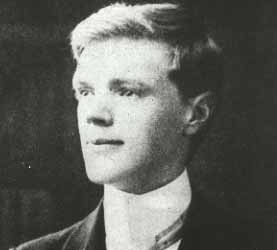
David Herbert Lawrence was an English writer and poet. His collected works represent, among other things, an extended reflection upon the dehumanising effects of modernity and industrialisation. Some of the issues Lawrence explores are sexuality, emotional health, vitality, spontaneity, and instinct.
Lawrence's opinions earned him many enemies and he endured official persecution, censorship, and misrepresentation of his creative work throughout the second half of his life, much of which he spent in a voluntary exile he called his "savage pilgrimage". At the time of his death, his public reputation was that of a pornographer who had wasted his considerable talents. E. M. Forster, in an obituary notice, challenged this widely held view, describing him as "the greatest imaginative novelist of our generation." Later, the literary critic F. R. Leavis championed both his artistic integrity and his moral seriousness. Wikipedia
D.H. Lawrence book Women in Love
Source: Women in Love (1920), Ch. 11
“We have to hate our immediate predecessors to get free from their authority.”
Letter http://books.google.com/books?id=U-SLXgFQ0hoC&q="We+have+to+hate+our+immediate+predecessors+to+get+free+from+their+authority"&pg=PA509#v=onepage to Edward Garnett (1 February 1913)
“The dead don't die. They look on and help.”
Letter to John Middleton Murry (2 February 1923)
Letter to Edward Garnett, expressing anger that his manuscript for Sons and Lovers was rejected by Heinemann (3 July 1912)
Sons and Lovers - Edited out of the 1913 edition, restored in 1992
D.H. Lawrence book Lady Chatterley's Lover
First paragraph
Lady Chatterley's Lover (1928)
Source: 'A Letter from Germany', written 19 February 1924, printed in The New Statesman (13 October 1934), quoted in D. H. Lawrence, Selected Essays (1950), pp. 175-176


