Clive Staples Lewis book The Great Divorce
Source: The Great Divorce (1944–1945), Ch. 9
Clive Staples Lewis was a British writer and lay theologian. He held academic positions in English literature at both Oxford University and Cambridge University . He is best known for his works of fiction, especially The Screwtape Letters, The Chronicles of Narnia, and The Space Trilogy, and for his non-fiction Christian apologetics, such as Mere Christianity, Miracles, and The Problem of Pain.
Lewis and fellow novelist J. R. R. Tolkien were close friends. They both served on the English faculty at Oxford University and were active in the informal Oxford literary group known as the Inklings. According to Lewis's memoir Surprised by Joy, he was baptised in the Church of Ireland, but fell away from his faith during adolescence. Lewis returned to Anglicanism at the age of 32, owing to the influence of Tolkien and other friends, and he became an "ordinary layman of the Church of England". Lewis's faith profoundly affected his work, and his wartime radio broadcasts on the subject of Christianity brought him wide acclaim.
Lewis wrote more than 30 books which have been translated into more than 30 languages and have sold millions of copies. The books that make up The Chronicles of Narnia have sold the most and have been popularised on stage, TV, radio, and cinema. His philosophical writings are widely cited by Christian apologists from many denominations.
In 1956, Lewis married American writer Joy Davidman; she died of cancer four years later at the age of 45. Lewis died on 22 November 1963 from kidney failure, one week before his 65th birthday. In 2013, on the 50th anniversary of his death, Lewis was honoured with a memorial in Poets' Corner in Westminster Abbey. Wikipedia
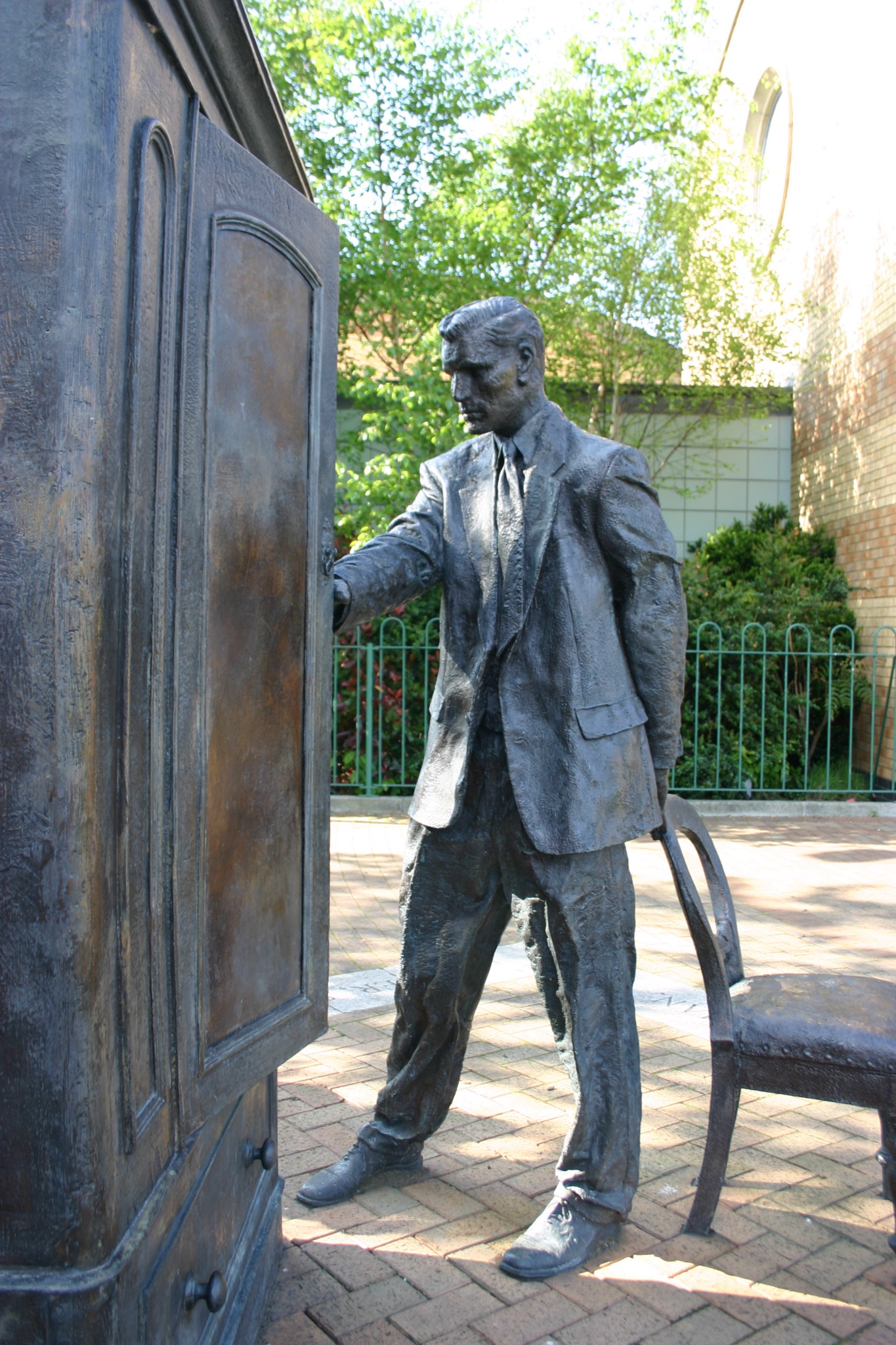
Clive Staples Lewis book The Great Divorce
Source: The Great Divorce (1944–1945), Ch. 9
Clive Staples Lewis book Mere Christianity
Book III, Chapter 11, "Faith"
Mere Christianity (1952)
Clive Staples Lewis book A Preface to Paradise Lost
A Preface to Paradise Lost (1942), Chapter 6: "Virgil and the Subject of Secondary Epic"
Clive Staples Lewis book A Grief Observed
A Grief Observed (1961)
The World's Last Night (1952)
Clive Staples Lewis book Mere Christianity
Book I, Chapter 4, "What Lies behind the Law"
Mere Christianity (1952)
The World's Last Night (1952)
Clive Staples Lewis book The Pilgrim's Regress
Pilgrim’s Regress 132–133
The Pilgrim's Regress (1933)
Clive Staples Lewis book The Pilgrim's Regress
Pilgrim’s Regress 90
The Pilgrim's Regress (1933)
“The process of being brought up, however well it is done, cannot fail to offend.”
The Funeral of a Great Myth (1967)
Clive Staples Lewis book The Great Divorce
Source: The Great Divorce (1944–1945), Ch. 11
Clive Staples Lewis book Surprised by Joy
Surprised by Joy (1955)
Clive Staples Lewis book Surprised by Joy
Surprised by Joy (1955)
Clive Staples Lewis book The Pilgrim's Regress
Pilgrim’s Regress 181
The Pilgrim's Regress (1933)
“We reduce things to mere Nature in order that we may 'conquer' them.”
Clive Staples Lewis book The Abolition of Man
The Abolition of Man (1943)
“This is where dreams—dreams, do you understand—come to life, come real. Not daydreams: dreams.”
Clive Staples Lewis The Chronicles of Narnia
The Voyage of the Dawn Treader (1952), Ch. 12: The Dark Island
The Chronicles of Narnia (1950–1956)
“The more you obey your conscience, the more your conscience will demand of you.”
Clive Staples Lewis book Mere Christianity
Book IV, Chapter 8, "Is Christianity Hard or Easy?"
Mere Christianity (1952)
Clive Staples Lewis book That Hideous Strength
There is consequently a phatic hiatus."
Source: That Hideous Strength (1945), Ch. 8 : Moonlight at Belbury, section 2
Clive Staples Lewis book Mere Christianity
Preface
Mere Christianity (1952)
Clive Staples Lewis book The Pilgrim's Regress
Pilgrim’s Regress 59
The Pilgrim's Regress (1933)
Clive Staples Lewis The Chronicles of Narnia
The Silver Chair (1953), Ch. 16: The Healing of Harms
The Chronicles of Narnia (1950–1956)
Clive Staples Lewis book The Screwtape Letters
Letter V
The Screwtape Letters (1942)
"On Three Ways of Writing for Children" (1952) — in Of Other Worlds: Essays and Stories (1967), p. 24
"Bluspels and Flalansferes: A Semantic Nightmare", Rehabilitations and Other Essays (1939)
Clive Staples Lewis book The Problem of Pain
The Problem of Pain (1940)
Clive Staples Lewis book Mere Christianity
Book I, Chapter 5, "We Have Cause to Be Uneasy"
Mere Christianity (1952)
“I believe Buddhism to be a simplification of Hinduism and Islam to be a simplification of Xianity.”
Letter to Sheldon Vanauken (14 December 1950), quoted in Sleuthing C. S. Lewis (2001) by Kathryn Ann Lindskoog, p. 393 http://books.google.com/books?id=8ZfLXXLZM9UC&pg=PA393&dq=%22I+believe+Buddhism+to+be+a+simplification+of+Hinduism+and+Islam+to+be+a+simplification+of+Xianity.%22
“Some day you will be old enough to start reading fairy tales again.”
Clive Staples Lewis The Chronicles of Narnia
The Lion, the Witch and the Wardrobe (1950), Dedication: "To Lucy Barfield"
The Chronicles of Narnia (1950–1956)
“Every story of conversion is the story of a blessed defeat.”
Foreword to Joy Davidman's Smoke on the Mountain (1954)
Clive Staples Lewis book Surprised by Joy
Surprised by Joy (1955)
“Badness is only spoiled goodness.”
Clive Staples Lewis book Mere Christianity
Book II, Chapter 2, "The Invasion"
Mere Christianity (1952)
Orual
Till We Have Faces: A Myth Retold (1956)
Orual
Till We Have Faces: A Myth Retold (1956)
"The Seeing Eye", in Christian Reflections (1967), p. 167
Clive Staples Lewis book God in the Dock
"The Humanitarian Theory of Punishment" (1949), p. 292
Similar statements were included in "A Reply to Professor Haldane" (1946) (see above), published posthumously.
God in the Dock (1970)
Clive Staples Lewis book God in the Dock
"Miracles" (1942), p. 29
God in the Dock (1970)
“They have an engine called the Press whereby the people are deceived.”
Clive Staples Lewis book That Hideous Strength
Source: That Hideous Strength (1945), Ch. 13 : They Have Pulled Down Deep Heaven on Their Heads
Clive Staples Lewis book The Pilgrim's Regress
Though they lay flat the mountains and dry up the sea, Wilt thou yet change, as though God were a god?
Pilgrim’s Regress 186–187
The Pilgrim's Regress (1933)
“But what of the poor Ghosts who never get into the omnibus at all?”
Clive Staples Lewis book The Great Divorce
'Everyone who wishes it does. Never fear. There are only two kinds of people in the end: those who say to God, "Thy will be done," and those to whom God says, in the end, "Thy will be done." All that are in Hell, choose it. Without that self-choice there could be no Hell. No soul that seriously and constantly desires joy will ever miss it. Those who seek find. To those who knock it is opened.'
Ch. 9, p. 72; part of this has also been rendered in a variant form, and quoted as:
There are two kinds of people: those who say to God, "Thy will be done," and those to whom God says, "All right, then, have it your way."
The Great Divorce (1944–1945)


