Christine de Pizan Quotes

Christine de Pizan was an Italian French late medieval author. She served as a court writer for several dukes and the French royal court during the reign of Charles VI. She wrote both poetry and prose works such as biographies and books containing practical advice for women. She completed forty-one works during her 30-year career from 1399 to 1429. She married in 1380 at the age of 15, and was widowed 10 years later. Much of the impetus for her writing came from her need to earn a living to support her mother, a niece and her two surviving children. She spent most of her childhood and all of her adult life in Paris and then the abbey at Poissy, and wrote entirely in her adopted language, Middle French.

Her early courtly poetry is marked by her knowledge of aristocratic custom and fashion of the day, particularly involving women and the practice of chivalry. Her early and later allegorical and didactic treatises reflect both autobiographical information about her life and views and also her own individualized and humanist approach to the scholastic learned tradition of mythology, legend, and history she inherited from clerical scholars and to the genres and courtly or scholastic subjects of contemporary French and Italian poets she admired. Supported and encouraged by important royal French and English patrons, she influenced 15th-century English poetry. Her success stems from a wide range of innovative writing and rhetorical techniques that critically challenged renowned writers such as Jean de Meun, author of the Romance of the Rose, which she criticized as immoral.

In recent decades, Christine de Pizan's work has been returned to prominence by the efforts of scholars such as Charity Cannon Willard, Earl Jeffrey Richards and Simone de Beauvoir. Certain scholars have argued that she should be seen as an early feminist who efficiently used language to convey that women could play an important role within society. This characterization has been challenged by other critics, who say that it is either an anachronistic use of the word or a misinterpretation of her writing and intentions.

✵ 1365 – 1430
Christine de Pizan photo

Works

Christine de Pizan: 12 quotes27 likes

Famous Christine de Pizan Quotes

“How many women are there…who because of their husbands' harshness spend their weary lives in the bond of marriage in greater suffering than if they were slaves among the Saracens?”

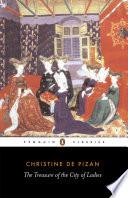
Christine de Pizan book The Book of the City of Ladies

Quantes femmes est il qui usent leur vie au lien de mariage par la durte de leurs maris en plus grant penitence que se elles feussent esclaves entre les sarazins.
Part II, ch. 13, pp. 118-19.
Le Livre de la Cité des Dames (c. 1405)
Source: The Book of the City of Ladies

“If it were customary to send daughters to school like sons, and if they were then taught the natural sciences, they would learn as thoroughly and understand the subtleties of all the arts and sciences as well as sons.”

Christine de Pizan book The Book of the City of Ladies

Si la coustume estoit de mettre les petites filles a l'escole, et que communement on les fist apprendre les sciences comme on fait aux filz, qu'elles apprendroient aussi parfaitement et entenderoient les subtilités de toutes les arz et sciences comme ils font.
Part I, ch. 27, p. 63.
Le Livre de la Cité des Dames (c. 1405)
Source: The Book of the City of Ladies

Christine de Pizan Quotes
“The man or the woman in whom resides greater virtue is the higher; neither the loftiness nor the lowliness of a person lies in the body according to the sex, but in the perfection of conduct and virtues.”

Christine de Pizan book The Book of the City of Ladies

Cellui ou celle en qui plus a vertus est le plus hault, ne la haulteur ou abbaisement des gens ne gist mie es corps selon le sexe mais en la perfeccion des meurs et des vertus.
Part I, ch. 9, p. 24.
Le Livre de la Cité des Dames (c. 1405)
Source: The Book of the City of Ladies

“For what would I be otherwise but sport,
In love with one who does not care for me?
I will hide pain in smiles, sooner than be
The common talk. It is a bitter art
To sing a happy song with a sad heart.”

Christine de Pizan De triste cuer chanter joyeusement

Car en mon cuer porte couvertement<br>Le dueil qui soit qui plus me puet desplaire,<br>Et si me fault, pour les gens faire taire,<br>Rire en plorant et très amerement<br>De triste cuer chanter joyeusement. <br class="br">Rondeau &quot;De triste cuer chanter joyeusement&quot;, line 8; Maurice Roy (ed.) Œuvres Poétiques de Christine de Pisan (1886) vol. 1, p. 154, as translated by http://www.brindin.com/pfpistri.htm by Sheenagh Pugh.

“Alone am I, and alone I wish to be;
Alone my sweet love has left me.
Alone am I, without friend or mate,
Alone am I, mournful and angry.”

Christine de Pizan

Seulete suy et seulete vueil estre,
Seulete m'a mon doulz ami laissiée,
Seulete suy, sanz compaignon ne maistre,
Seulette suy, dolente et courrouciée.
Cent Balades, no. 11, line 1; Maurice Roy (ed.) Œuvres Poétiques de Christine de Pisan (1886) vol. 1, p. 12. Translation from Aliki Barnstone & Willis Barnstone (eds.) A Book of Women Poets from Antiquity to Now (1980) p. 203.

Similar authors

Giovanni Boccaccio photo
Giovanni Boccaccio27
Italian author and poet None
Avicenna photo
Avicenna8
medieval Persian polymath, physician, and philosopher None
Peter Abelard photo
Peter Abelard20
French scholastic philosopher, theologian and preeminent lo… None
Roger Bacon photo
Roger Bacon21
medieval philosopher and theologian None
Francois Villon photo
Francois Villon18
Mediæval French poet None
Catherine of Genoa photo
Catherine of Genoa29
Italian author and nurse None
Dante Alighieri photo
Dante Alighieri105
Italian poet None
Francesco Petrarca photo
Francesco Petrarca73
Italian scholar and poet None
Angela of Foligno photo
Angela of Foligno13
Italian saint None
Bernard of Clairvaux photo
Bernard of Clairvaux24
French abbot, theologian None