Carl Safina Quotes

Carl Safina is author of various books and many other writings about how the ocean is changing, lives of free-living animals, and the human relationship with the natural world. His books include among others the award-winning Song for the Blue Ocean and Eye of the Albatross, as well as The View From Lazy Point; A Natural Year in an Unnatural World, and Beyond Words; What Animals Think and Feel. He is founding president of the Safina Center, and an endowed research professor at Stony Brook University where he is active both in ocean sciences and as co-chair of the Alan Alda Center for Communicating Science. Safina is host of the PBS series, "Saving the Ocean with Carl Safina."

✵ 1955
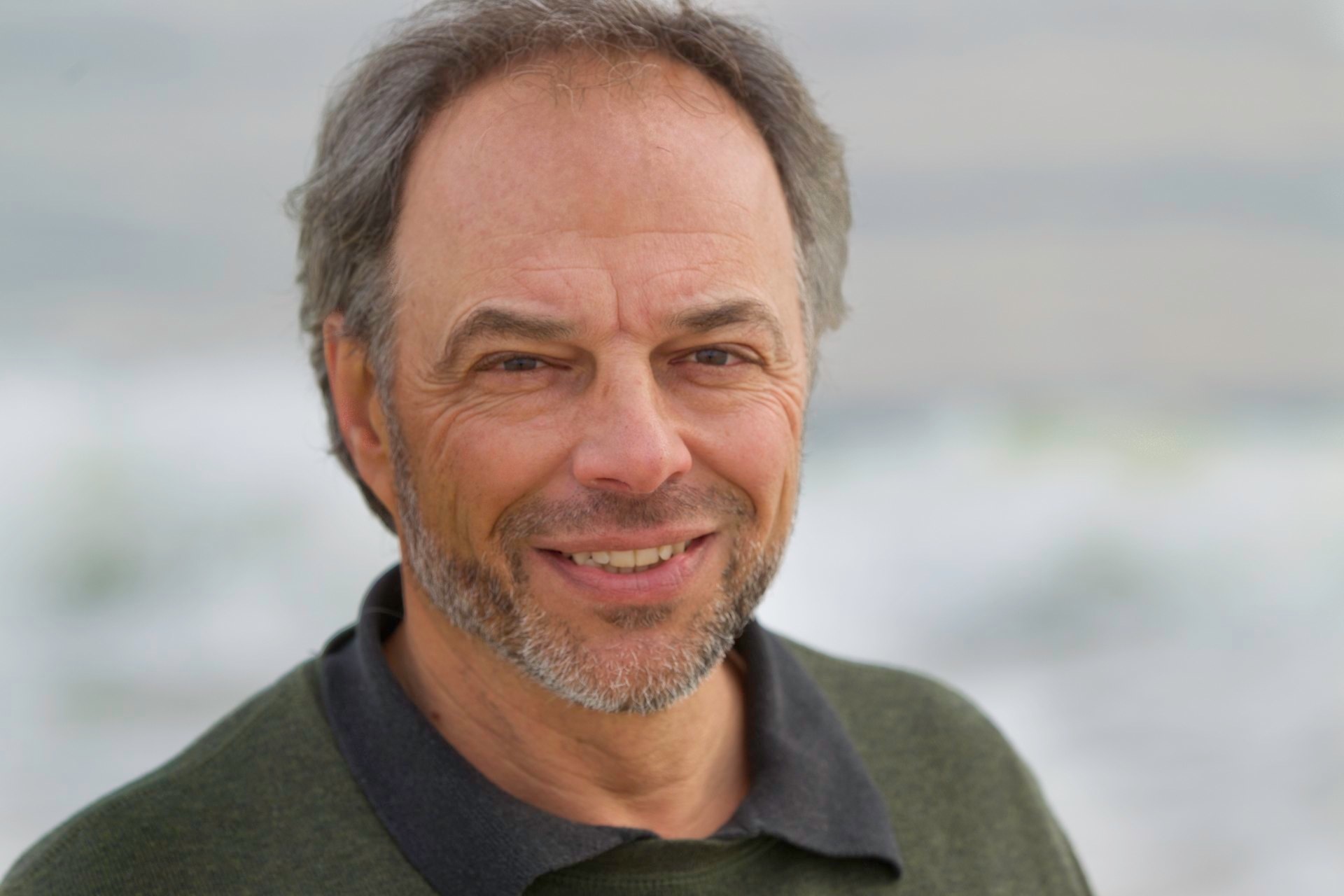
Carl Safina photo
Carl Safina: 5 quotes0 likes

Famous Carl Safina Quotes

“Most of the oxygen we breathe is made by ocean plankton. And when animals left the seas in which life arose, they took seawater with them, in their bodies — an internal environment crucial for cellular survival. We are, in a sense, soft vessels of seawater.”

Carl Safina

Source: [A sea ethic: floating the Ark, Blue Ocean Institute, 2005, http://citeseerx.ist.psu.edu/viewdoc/download?doi=10.1.1.495.177&rep=rep1&type=pdf]

“From the happy-go-lucky days of oil exploration and drilling, when a lot of easy sources were being found and easily managed, we're gotten ourselves into this sort of apocalyptic time. We're willing to destroy almost everything, risk almost anything, and go ahead with techniques for which we have no way of responding to the known problems. And that is truly an addiction in the real sense of the word, an addiction by which people destroy their own bodies to continue to have a supply of something that is killing them.”

Carl Safina

[The Atlantic, Deepwater Horizon, One Year Later: A Conversation With Carl Safina, 20 April 2011, http://www.theatlantic.com/entertainment/archive/2011/04/deepwater-horizon-a-convesation-with-carl-safina/237043/] (Talking to the author of "A Sea in Flames" about how offshore drilling has—and hasn't changed—since the Gulf spill — interview by Douglas Gorney)

“When two sympatric, closely related species appear to have very similar needs, we may ask whether mechanisms exist that enable them to avoid direct competition. Implicit in this questions the presumption that two species with identical requirements cannot coexist”

Carl Safina

Gause 1934
[Foraging habitat partitioning in Roseate and Common Terns, The Auk, 107, 2, April 1990, 351–358, 10.2307/4087619, https://www.jstor.org/stable/4087619]

Similar authors

Richard Dawkins photo
Richard Dawkins322
English ethologist, evolutionary biologist and author None
Pierre Teilhard De Chardin photo
Pierre Teilhard De Chardin64
French philosopher and Jesuit priest None
Toni Morrison photo
Toni Morrison184
American writer None
Albert A. Michelson photo
Albert A. Michelson5
American physicist None
Tennessee Williams photo
Tennessee Williams139
American playwright None
Robert Fulghum photo
Robert Fulghum82
American writer None
Robert Frost photo
Robert Frost265
American poet None
Neale Donald Walsch photo
Neale Donald Walsch69
American writer None
 M. Scott Peck photo
M. Scott Peck26
American psychiatrist None
Martin Lewis Perl photo
Martin Lewis Perl9
American scientist None