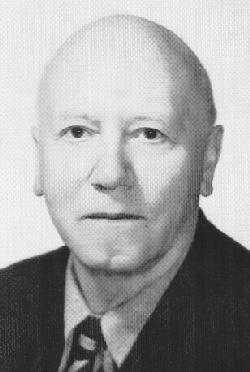
C. D. Broad Quotes

Charlie Dunbar Broad , usually cited as C. D. Broad, was an English epistemologist, historian of philosophy, philosopher of science, moral philosopher, and writer on the philosophical aspects of psychical research. He was known for his thorough and dispassionate examinations of arguments in such works as Scientific Thought , The Mind and Its Place in Nature , and Examination of McTaggart's Philosophy .

Broad's essay on "Determinism, Indeterminism, and Libertarianism" in Ethics and the History of Philosophy introduced the philosophical terms occurrent causation and non-occurrent causation, which became the basis for the contemporary distinction between "agent-causal" and "event-causal" in debates on libertarian free will. Wikipedia  

✵ 30. December 1887 – 11. March 1971
C. D. Broad photo
C. D. Broad: 11 quotes0 likes

Famous C. D. Broad Quotes

“Those who, like the present writer, never had the privilege of meeting Sidgwick can infer from his writings, and still more from the characteristic philosophic merits of such pupils of his as McTaggart and Moore, how acute and painstaking a thinker and how inspiring a teacher he must have been. Yet he has grave defects as a writer which have certainly detracted from his fame. His style is heavy and involved, and he seldom allowed that strong sense of humour, which is said to have made him a delightful conversationalist, to relieve the uniform dull dignity of his writing. He incessantly refines, qualifies, raises objections, answers them, and then finds further objections to the answers. Each of these objections, rebuttals, rejoinders, and surrejoinders is in itself admirable, and does infinite credit to the acuteness and candour of the author. But the reader is apt to become impatient; to lose the thread of the argument: and to rise from his desk finding that he has read a great deal with constant admiration and now remembers little or nothing. The result is that Sidgwick probably has far less influence at present than he ought to have, and less than many writers, such as Bradley, who were as superior to him in literary style as he was to them in ethical and philosophical acumen. Even a thoroughly second-rate thinker like T. H. Green, by diffusing a grateful and comforting aroma of ethical "uplift", has probably made far more undergraduates into prigs than Sidgwick will ever make into philosophers.”

C. D. Broad

From Five Types of Ethical Theory (1930)

“Induction is the glory of science and the scandal of philosophy.”

C. D. Broad

Broad, C.D. (1926). The philosophy of Francis Bacon: An address delivered at Cambridge on the occasion of the Bacon tercentenary, 5 October, 1926. Cambridge: University Press, p. 67. The quotation is a paraphrase of the concluding sentence in the monograph: May we venture to hope that when Bacon's next centenary is celebrated the great work which he set going will be completed; and that Inductive Reasoning, which has long been the glory of Science, will have ceased to be the scandal of Philosophy?

C. D. Broad Quotes

“It is true that our everyday view of the world is not quite naively realistic, but that is what it would like to be.”

C. D. Broad

Perception, Physics, and Reality : An Enquiry into the Information that Physical Science can Supply about the Real (1914), Ch. 1 : On The Arguments Against Naïf Realism Independent of the Causal Theory of Perception
Context: It is true that our everyday view of the world is not quite naively realistic, but that is what it would like to be. Common-sense is naively realistic wherever it does not think that there is some positive reason why it should cease to be so. And this is so in the vast majority of its perceptions. When we see a tree we think that it is really green and really waving about in precisely the same way as it appears to be. We do not think of our object of perception being 'like' the real tree, we think that what we perceive is the tree, and that it is just the same at a given moment whether it be perceived or not, except that what we perceive may be only a part of the real tree.

Similar authors

Aldous Huxley photo
Aldous Huxley290
English writer None
Martin Heidegger photo
Martin Heidegger69
German philosopher None
Paulo Freire photo
Paulo Freire115
educator and philosopher None
Emil M. Cioran photo
Emil M. Cioran531
Romanian philosopher and essayist None
George Santayana photo
George Santayana109
20th-century Spanish-American philosopher associated with P… None
Ludwig Wittgenstein photo
Ludwig Wittgenstein228
Austrian-British philosopher None
Fernando Pessoa photo
Fernando Pessoa288
Portuguese poet, writer, literary critic, translator, publi… None
Ayn Rand photo
Ayn Rand322
Russian-American novelist and philosopher None
Paul Valéry photo
Paul Valéry89
French poet, essayist, and philosopher None
G. K. Chesterton photo
G. K. Chesterton229
English mystery novelist and Christian apologist None