
Robert A. Heinlein book Time for the Stars
Source: Time for the Stars (1956), Chapter 4, “Half a Loaf” (p. 44)
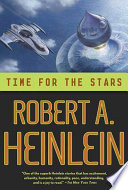
Travel to other planets is a reality, and with overpopulation stretching the resources of Earth, the necessity to find habitable worlds is growing ever more urgent. With no time to wait years for communication between slower-than-light spaceships and home, the Long Range Foundation explores an unlikely solution--human telepathy. Identical twins Tom and Pat are enlisted to be the human radios that will keep the ships in contact with Earth, but one of them has to stay behind while the other explores the depths of space.This is one of Heinlein's triumphs.
Robert A. Heinlein book Time for the Stars
Source: Time for the Stars (1956), Chapter 4, “Half a Loaf” (p. 44)
Robert A. Heinlein book Time for the Stars
Source: Time for the Stars (1956), Chapter 12, “Tau Ceti” (p. 122)
Robert A. Heinlein book Time for the Stars
Source: Time for the Stars (1956), Chapter 8, “Relativity” (p. 82)
“Learning isn’t a means to an end; it is an end in itself.”
Robert A. Heinlein book Time for the Stars
Source: Time for the Stars (1956), Chapter 7, “19,900 Ways” (p. 70)
“I decided not to cross any bridges I had burned behind me.”
Robert A. Heinlein book Time for the Stars
Source: Time for the Stars (1956), Chapter 7, “19,900 Ways” (p. 69)
“Parents probably don’t know that they are playing favorites even when they are doing it.”
Robert A. Heinlein book Time for the Stars
Source: Time for the Stars (1956), Chapter 5, “The Party of the Second Part” (p. 54)
“I was confused. I didn’t feel telepathic; I merely felt hungry.”
Robert A. Heinlein book Time for the Stars
Source: Time for the Stars (1956), Chapter 2, “The Natural Logarithm of Two” (p. 24)


