Robert L. Heilbroner book The Worldly Philosophers
Source: The Worldly Philosophers (1953), Chapter VI, Karl Marx, p. 148
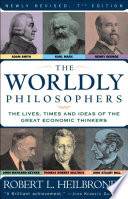
The bestselling classic that examines the history of economic thought from Adam Smith to Karl Marx—“all the economic lore most general readers conceivably could want to know, served up with a flourish” (The New York Times). The Worldly Philosophers not only enables us to see more deeply into our history but helps us better understand our own times. In this seventh edition, Robert L. Heilbroner provides a new theme that connects thinkers as diverse as Adam Smith and Karl Marx. The theme is the common focus of their highly varied ideas—namely, the search to understand how a capitalist society works. It is a focus never more needed than in this age of confusing economic headlines. In a bold new concluding chapter entitled “The End of the Worldly Philosophy?” Heilbroner reminds us that the word “end” refers to both the purpose and limits of economics. This chapter conveys a concern that today’s increasingly “scientific” economics may overlook fundamental social and political issues that are central to economics. Thus, unlike its predecessors, this new edition provides not just an indispensable illumination of our past but a call to action for our future.
Robert L. Heilbroner book The Worldly Philosophers
Source: The Worldly Philosophers (1953), Chapter VI, Karl Marx, p. 148
Robert L. Heilbroner book The Worldly Philosophers
Source: The Worldly Philosophers (1953), Chapter XI, Beyond the Economic Revolution, p. 317
Robert L. Heilbroner book The Worldly Philosophers
Source: The Worldly Philosophers (1953), Chapter VIII, Thorstein Veblen, p. 233
Robert L. Heilbroner book The Worldly Philosophers
Source: The Worldly Philosophers (1953), Chapter X, The Modern World, p. 281
Robert L. Heilbroner book The Worldly Philosophers
Source: The Worldly Philosophers (1953), Chapter IV, Parson Malthus and David Ricardo, p. 77
“Nobody wanted this commercialization of life.”
Robert L. Heilbroner book The Worldly Philosophers
Source: The Worldly Philosophers (1953), Chapter II, The Economic Revolution, p. 21
Robert L. Heilbroner book The Worldly Philosophers
Source: The Worldly Philosophers (1953), Chapter VI, Karl Marx, p. 152
Robert L. Heilbroner book The Worldly Philosophers
Source: The Worldly Philosophers (1953), Chapter XI, Beyond the Economic Revolution, p. 307
Robert L. Heilbroner book The Worldly Philosophers
Source: The Worldly Philosophers (1953), Chapter VI, Karl Marx, p. 137
Robert L. Heilbroner book The Worldly Philosophers
Source: The Worldly Philosophers (1953), Chapter IX, John Maynard Keynes, p. 269
Robert L. Heilbroner book The Worldly Philosophers
Source: The Worldly Philosophers (1953), Chapter VIII, Thorstein Veblen, p. 224
Robert L. Heilbroner book The Worldly Philosophers
Source: The Worldly Philosophers (1953), Chapter X, The Modern World, p. 278
Robert L. Heilbroner book The Worldly Philosophers
Source: The Worldly Philosophers (1953), Chapter VI, Karl Marx, p. 158
Robert L. Heilbroner book The Worldly Philosophers
Source: The Worldly Philosophers (1953), Chapter IX, John Maynard Keynes, p. 248-249
“The Wealth of Nations may not be an original book, but it is unquestionably a masterpiece.”
Robert L. Heilbroner book The Worldly Philosophers
Source: The Worldly Philosophers (1953), Chapter III, Adam Smith, p. 42
Robert L. Heilbroner book The Worldly Philosophers
Source: The Worldly Philosophers (1953), Chapter VI, Karl Marx, p. 128
Robert L. Heilbroner book The Worldly Philosophers
Source: The Worldly Philosophers (1953), Chapter III, Adam Smith, p. 62
“The distribution of wealth, therefore, depends on the laws and customs of society.”
Robert L. Heilbroner book The Worldly Philosophers
Source: The Worldly Philosophers (1953), Chapter V, The Utopian Socialists, p. 123
“He who enlists a man's mind wields a power even greater than the sword or the scepter.”
Robert L. Heilbroner book The Worldly Philosophers
Source: The Worldly Philosophers (1953), Chapter I, Introduction, p. 3
Robert L. Heilbroner book The Worldly Philosophers
Source: The Worldly Philosophers (1953), Chapter IV, Parson Malthus and David Ricardo, p. 71


