
“Sensible people get the greater part of their own dying done during their own lifetime.”
Samuel Butler book The Way of All Flesh
Source: The Way of All Flesh (1903), Ch. 24
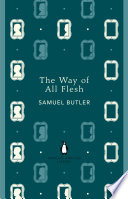
The Way of All Flesh is a semi-autobiographical novel by Samuel Butler that attacks Victorian-era hypocrisy. Written between 1873 and 1884, it traces four generations of the Pontifex family. Butler dared not publish it during his lifetime, but when it was published it was accepted as part of the general reaction against Victorianism.
“Sensible people get the greater part of their own dying done during their own lifetime.”
Samuel Butler book The Way of All Flesh
Source: The Way of All Flesh (1903), Ch. 24
Samuel Butler book The Way of All Flesh
Source: The Way of All Flesh (1903), Ch. 14
Context: Every man’s work, whether it be literature or music or pictures or architecture or anything else, is always a portrait of himself, and the more he tries to conceal himself the more clearly will his character appear in spite of him.
Samuel Butler book The Way of All Flesh
Life, xvi
The Note-Books of Samuel Butler (1912), Part I - Lord, What is Man?
Source: The Way of All Flesh
“All animals, except man, know that the principal business of life is to enjoy it.”
Samuel Butler book The Way of All Flesh
Source: The Way of All Flesh (1903), Ch. 19
Samuel Butler book The Way of All Flesh
Source: The Way of All Flesh (1903), Ch. 23; this is one of the passages excised from <cite>The Way of All Flesh</cite> when it was first published in 1903, after Butler's death, by his literary executor, R. Streatfeild. This first edition of <cite>The Way of All Flesh</cite> is widely available in plain text on the internet, but readers of facsimiles of the first edition should be aware that Streatfeild significantly altered and edited Butler's text, "regularizing" the punctuation and removing most of Butler's most trenchant criticism of Victorian society and conventional pieties. Butler's full manuscript, entitled <cite>Ernest Pontifex, or The Way of All Flesh</cite>, was edited and issued by Daniel F. Howard in 1965. It is from this edition that this quote is derived; it was excised by Streatfeild in the first edition.
“An empty house is like a stray dog or a body from which life has departed.”
Samuel Butler book The Way of All Flesh
Source: The Way of All Flesh (1903), Ch. 72
“Youth is like spring, an overpraised season.”
Samuel Butler book The Way of All Flesh
Source: The Way of All Flesh (1903), Ch. 6
“The best liar is he who makes the smallest amount of lying go the longest way.”
Samuel Butler book The Way of All Flesh
Ch. 39 http://books.google.com/books?id=wZAEAQAAIAAJ&q=%22The+best+liar+is+he+who+makes+the+smallest+amount+of+lying+go+the+longest+way%22&pg=PA190#v=onepage <br class="br">The Way of All Flesh (1903)
Samuel Butler book The Way of All Flesh
Ch. 67 http://books.google.com/books?id=wZAEAQAAIAAJ&pg=PA338 <br class="br">The Way of All Flesh (1903) <br class="br">Context: As the days went slowly by he came to see that Christianity and the denial of Christianity after all met as much as any other extremes do; it was a fight about names — not about things; practically the Church of Rome, the Church of England, and the freethinker have the same ideal standard and meet in the gentleman; for he is the most perfect saint who is the most perfect gentleman. Then he saw also that it matters little what profession, whether of religion or irreligion, a man may make, provided only he follows it out with charitable inconsistency, and without insisting on it to the bitter end. It is in the uncompromisingness with which dogma is held and not in the dogma or want of dogma that the danger lies.


